The Rabbit Triad – a little known bunny’s tale

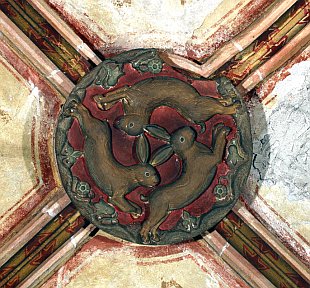
Medieval Roof Boss Wissembourg France, Three Hares Project

The secret is not great when one knows it.

But it is something to one who does it.

Turn and turn again and we will also turn,

So that we give pleasure to each of you.

And when we have turned, count our ears,

It is there, without any disguise, you will find a marvel

–   1576 Dutch engraving from a book by Jurgis Baltrušaitis
I unearthed another interesting rabbit fact while doing my research.

In 1991 archaeologist Tom Greeves wrote about the Three Hares symbol found in Dunhuang, China.  He noted a similar symbol was used in European churches.  Over the next decade, photographer Chris Chapman and art historian Sue Andrews joined Greeves on a worldwide rabbit hunt.

Map of locations where The Three Hares were found

The Three Hares were not as elusive as one might imagine.  The trio discovered a trail of the trinity rabbit along the Silk Trade Route.  The earliest Three Hare symbol found in China was encircled in a sacred lotus.

The Tao-Te Ching says

“The Tao produced one, one produced two and two produced three.”
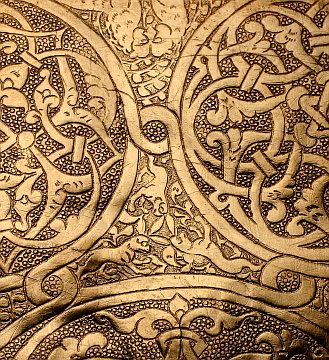
Baseplate detail found in Trier, Germany. Three Hares Project

To the Chinese three was the perfect number representing wholeness and fulfillment.

Three, the triad, and the triangle are universally regarded as a fundamental number or even a perfect number expressing the divine order in the cosmos and mankind.

Buddhists find fulfillment in the Triple Jewel – Buddha, Dharma and Sangha.

Hindus view the threefold manifestation of the Godhead as Brahma, Vishnu and Shiva.

In the Great Work, alchemist used the three elements sulfur, mercury and salt.

Ancient Persians had a threefold motto: “Good thoughts, Good words and Good deeds.”

And the Christian trinity – Father, Son and Holy Ghost – is an example of a sacred triad.

Emmanuel Swedenborg’s angels told him,

“For love, wisdom and usefulness are three things that cannot be separated…. Nothing is complete or perfect unless it has this trinity…You can see why the number ‘three’ in the Word can be understood spiritually to mean ‘complete and total’.”

Conversations with Angels, pg. 144 and 145

A child reveals the presence of a mother and a father.  A tree trunk reveals the presence of leaves above and roots below.

The Three Hares are both a puzzle and a perfect symbol.
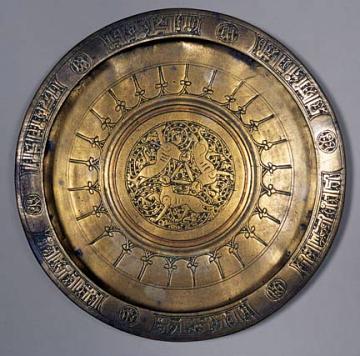
Iranian Tray, Three Hares Project

Each TWO-eared hare gets its second ear from another hare.  It is only when the THREE are gathered together as ONE that they are whole and complete.

You can join in the rabbit hunt.

When traveling the world if you find a Three Hare symbol, you can forward your photo with the details to Sue Andrews, Chris Chapman or Tom Greeves at The Three Hare Project.
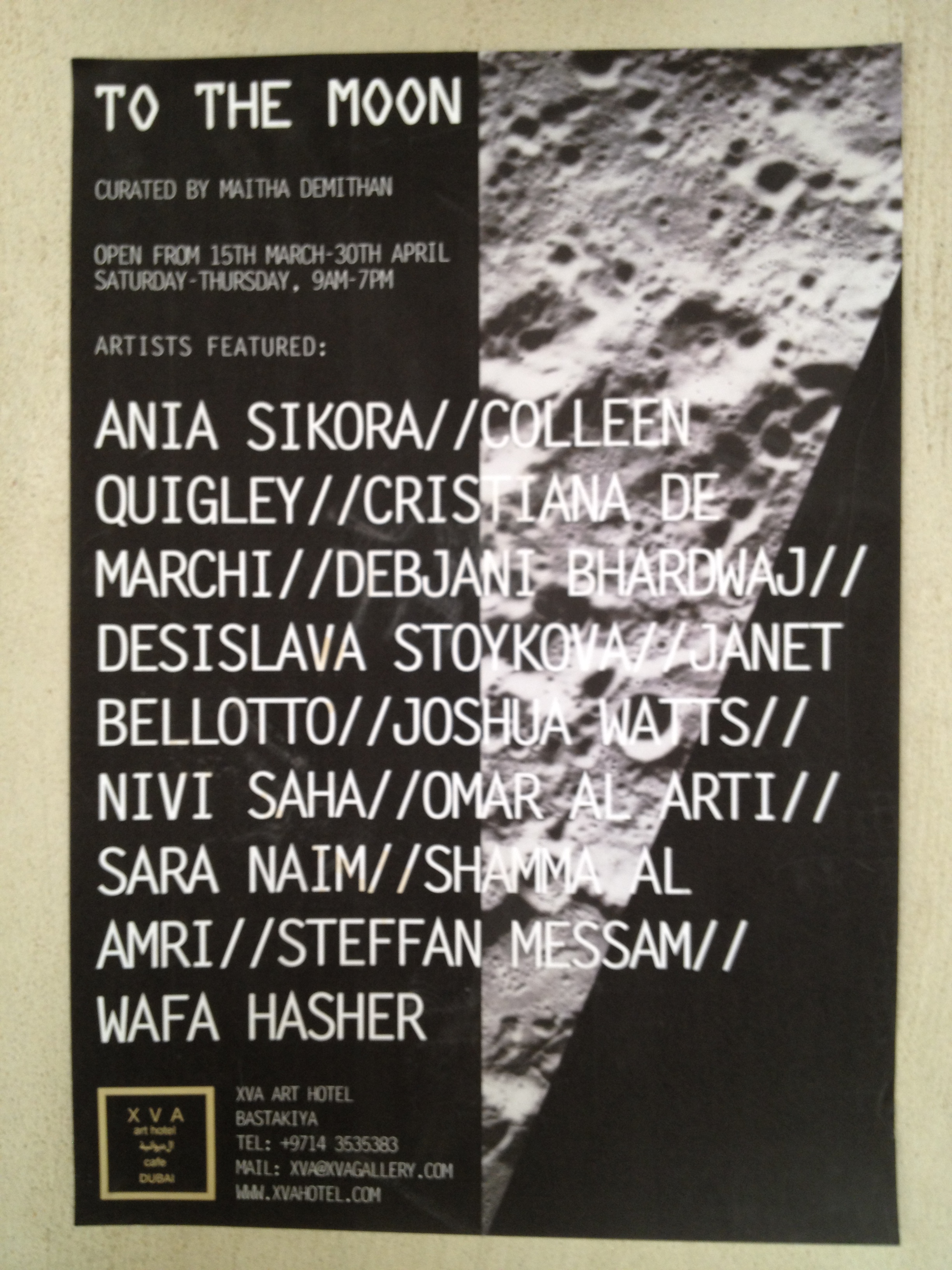
The Rabbit Moon

To The Moon Exhibit

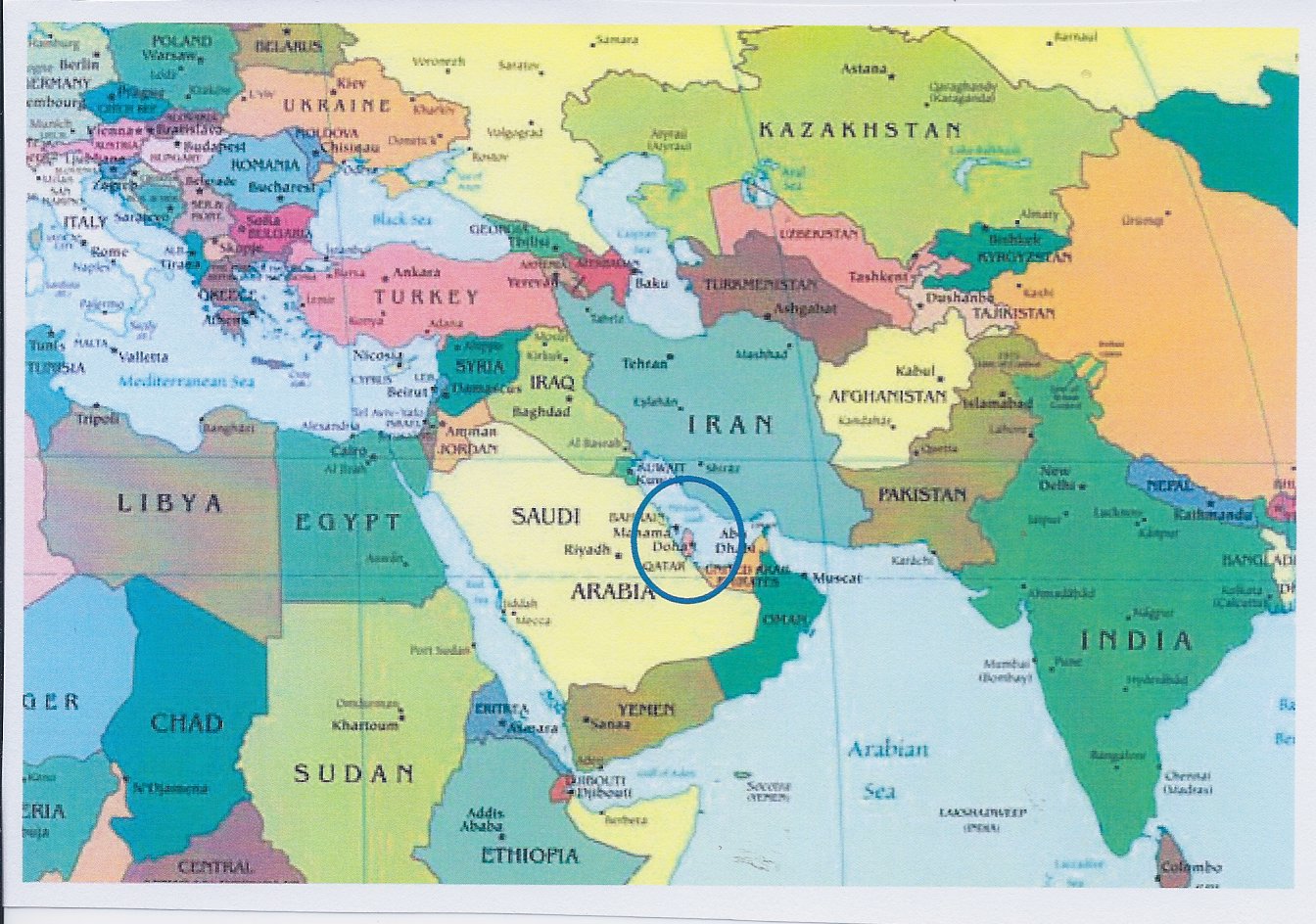
While working on a rabbit sculpture for my daughter, I did a little research on rabbits and the moon.  I was reminded of an exhibit we attended in Dubai at the XVA Gallery.

Featuring fifteen artists, the exhibit TO THE MOON explores our relationship with the moon in oil and ink paintings, digital prints, metal and ceramic sculptures.

Our closest celestial body, the Moon’s twenty-eight day cycle of disappearance then reappearing holds deep archetypal meaning in all religions and traditions.  Twenty-eight was the number of days Buddha meditated under a fig tree.  Indian Brahmans teach there are twenty-eight angelical states above the human condition.  In Islam the moon is a sign of Allah’s power and its twenty-eight day cycle is the calendar for all canonical activities.

Faces of the Moon by Shamma Al Amri

Associated with the unconscious, water, dreams and the imagination, the moon is feminine and denotes fertility.  The goddesses Isis, Ishtar, Artemis, Diana, Heng-ugo, Ixchel and Hecate were associated with the moon in ancient myths, legends, folklore and poetry.

What I find amazing is that globally rabbits or hares are associated with the moon.

The Rabbit that Nibbled Soft Moon Cheese by Debjani Bhardwaj

Aztecs (Central Mexico) believed the moon was the daughter of the rain-god Tlaloc.  The moon was depicted as “crescent-shaped water receptacle with a rabbit silhouette”.

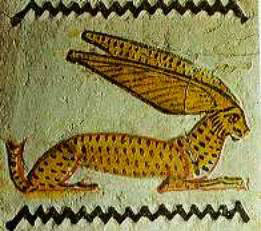
Egyptian Hare

Osiris (Ancient Egypt) was in the shape of a hare before being torn to pieces and thrown into the Nile to ensure the seasonal cycle of renewal.  The Chinese jade rabbit pounds the medicine of immortality in a mortar under a fig-tree.   The goddesses Ostara (Anglo-Saxon), Eostre (Celtic), Freya (Norse) and Kaltes (Siberia) either rode rabbits or had them as their companions.

The Algonquin, Ojibwa and Sioux Winebago Indians’ (North America) mythic ancestor Menebuch, the Great Hare, came to earth to teach humans the skills they have today.  After the Great Flood, Menebuch left the earth anew and went away.

The TO THE MOON exhibit proves the adage that everything old is new again and speaks to the moon’s influence on the collective human psyche.  The exhibit might still be hanging although a new exhibit TOY STORY was to begin April 19th.

During my research, I discovered the Endicott Studio.  Writer, artist and founder Terry Windling wrote an article on The Symbolism of Rabbits and Hares.  I also relied heavily on one of my other favorite resources, The Dictionary of Symbols.

How Much is That Pearl in the Window?

Coming out of the Newport Beach post office last summer, this Golden Retriever pulled up in his chauffeured Bentley.

We started chatting and I asked him how did he get his car.

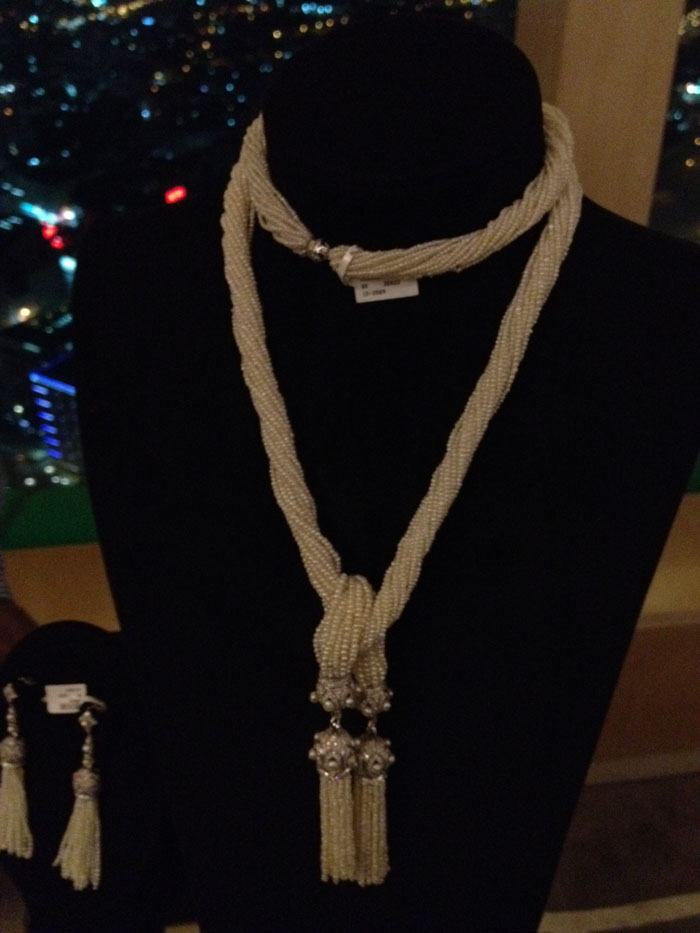
Bahraini Pearl Necklace

He said “I inherited my Mistress’ pearl necklace.  Those Bahraini pearls were a good investment.”

At least that’s the way I told the story to Ace and Mark when they asked me what I wanted for Mother’s Day.

Island Fever

Every country has its pluses and minuses.

Living on a small island means the people and places become very familiar and comfortable.  It’s cozy.  But after a few months when these same people and places become a bit over-seen, we need a break.

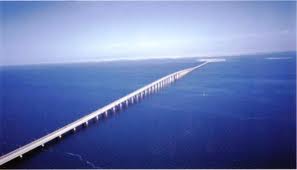
The only way to drive off the island is to cross the causeway into Saudi Arabia.  Unless you hold a GCC passport, you need a visa to get in there.  If the Saudis do allow you in, you have to cut through miles of desert to end up in the same desert under a different government.

We could take a boat.

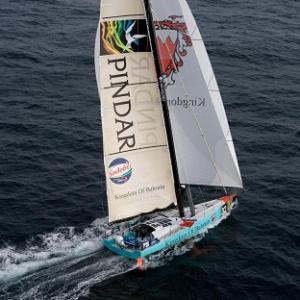
A successful water escape requires a knowledgeable captain otherwise we might be like the first Bahraini sailboat to participate in an international regatta.  A couple of years ago as Team Pindar maneuvered their brand-spanking new “Kingdom of Bahrain” yacht towards Dubai, they cut too far east and ended up getting arrested by the Iranian Revolutionary Guard.  After being held for a week, the government negotiated their release but the team missed the race.

Even if we didn’t have “evil intentions” to infiltrate Iran, a spyglass is a top ten necessity to scan the sea for pirates.  And we don’t have one.

So generally an island vacation requires a flight.

Should we fly one hour and still find ourselves in the Gulf? Different place, same flies.

Should we fly three hours and find ourselves in a regional skirmish?

Should we fly seven hours and find ourselves in freezing cold Europe?

ABOUT BETWEEN TWO SEAS

Photographer Andrew Weaver published a gorgeous coffee table book with many inspired and humorous photos about Bahrain.  Between Two Seas can be purchased in the large bookshops or at the Bin Matar House in Muharraq.  The great news is it was printed in different sizes so you can tuck one in your handbag for a gift or use it to decorate your coffee table and make your friends at home jealous.

Water, Eco-Tourism and the Westerner

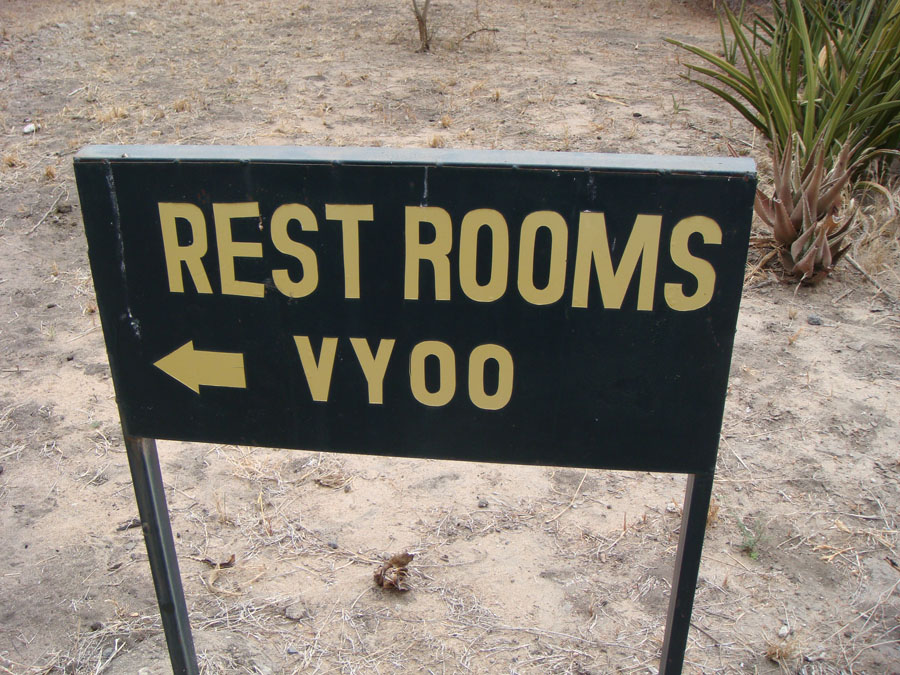
Restroom in Swahili, Tarangire National Park, Tanzania

Eco-tourism is a popular travel option now.  But one area I feel the eco-tour operators fail to educate their customers about is water and toilets.

Developing countries rely on cash-rich tourists to visit.  But to create an infrastructure that will support large numbers of tourists, finite resources such as water are shifted away from the local population to appease the nearly insatiable tourist palate.

When I moved to the Middle East, I was as guilty as most Westerners complaining about how inefficient the toilets were.  I did not know why women filled the wastebasket next to the toilet with toilet paper.  Nor did I understand the signs that said “Do Not Throw Paper Towels in the Toilet.”

To me paper towels meant the heavy type used in the kitchen or to dry your hands.  I did not realize the owners were talking about toilet paper, or toilet tissue, or Kleenex or whatever else you might call paper used to wipe our bottoms.

It was after the Sewerage Truck backed into our driveway and began to pump out our villa’s septic tank that I began to understand the bigger issue – we live in a desert.  Water is scarce.

Masai Village in Tanzania

In Tanzania where we took sneaky snapshots of tall Masai herding their boney cattle across the nearly desert landscape, their lack of water hardly affected us.  We could pay for airlifted bottles of water ported in our van’s cooler and flushing toilets in air conditioned guest rooms.  The Masai’s daily search for water never touched our experience.

At the Tarangire Game Reserve I popped into the government supported latrine before we embarked on our four hour safari.  A busload of American tourists followed me.

The modern, made-for-tourist bathrooms had several stalls, sinks, and mirrors.  The toilets had just enough water to clear the bowl.

Next door to me I heard the woman flush the toilet several times.  She came out of the stall and apologized to her waiting friend,

“Sorry I could not get the toilet to flush the paper down.”

I could not hold my tongue.  I said to her and the dozen other women waiting,

“There is hardly enough water here for the people to drink let alone flush a toilet.  Just carry your used toilet paper out with you and throw it in the trashcan.  And only flush the toilet when it is absolutely necessary.”

Coming from America where we reclaim toilet water making it drinkable again, the idea had never crossed their minds.

“Thanks for telling us,” one woman said genuinely grateful.

Why am I writing about this?

Because when I see a clean toilet bowl clogged up by a mass of toilet paper, I realize another uneducated Westerner has been there.  Is it necessary to flush the toilet after a pee?  And why throw masses of toilet paper in the bowl?  It takes two or three flushes to clear the paper and taxes the septic system.

Unlike the West where we are unaccustomed to using bidets, I believe the Arabs and the Indians wash with the water hose next to the toilets.  Then they use a small amount of paper to dry themselves and throw that in the trash bin next to the toilet.

Masai walking alongside of the highway, Tanzania

I am uncertain what the best method is, but in desert countries like Bahrain where water reclamation does not exist and 98% of the sewage is pumped just offshore into the ocean, introducing less garbage into the water system seems like the best solution.

National Geographic did a great story on “Water: Our Thirsty World” in April 2010.

Looking Up for New Ideas

Ants Walking, Dana Reserve, Jordan

Perhaps I’ve been a bit too much like the ants, head down and just going about my assigned task.  I haven’t looked up to see what the other world is doing.

I flippantly wrote about UFOs hiding in the Sarawat Mountains the other day.  I decided to Google UFO sighting in Saudi Arabia to see what came up.  And there are a lot of them!

But more interestingly I discovered that last year on January 23-25, 2011 the Saudi Arabian General Investment Authority (SAGIA), sponsored its 5th Annual Global Competitiveness Forum.  It is held in Riyadh under the patronage of HM King Abdullah Bin Abdulaziz, the Custodian of the Two Holy Mosques.

Sandwiched between panel discussions on Social Media, Cities of the Future and Innovations in Healthcare, was “Contact: Learning From Outer Space”.  Apparently Tony Blair and Bill Clinton did not attend this panel, but I find it very interesting that the Saudi Government sponsored five UFO experts.

“Open your mind that we will one day make contact with an intelligent civilization from outer space.”

I found out about this conference on a UFO blogger’s posting of the five speakers’ videos.  Jacques Vallee is a computer scientist, venture capitalist and long-time UFO researcher.  Two physicists, Dr. Michio Kaku and Stanton Friedman were on the panel.  Author and journalist, Nick Pope, who worked for the UK Ministry of Defence investigating UFOs, and  Dr. Zaghloul El Naggar, a professor of earth sciences also spoke.

In response to the devil’s advocates who say if there is intelligent life out there, why aren’t they speaking to us, Stanton Friedman said,

“I don’t talk to the squirrels in my backyard.”

Dr. Michio Kaku shared a similar view.  He said

“When I see an ant hill, do I go over and offer them beads, trinkets or nuclear energy?  Do you ask them ‘Take me to your leader?’ or do you step on them?”

Dr. Zaghoul El Naggar an Islamic Earth Scientist said the Koran has 12,000 cosmic verses that are scientifically precise descriptions of the universe.

I understand if these speakers are popular at UFO conferences but I find it very interesting that the Saudi government is sponsoring them.

And I wonder what are they seeing that I am not?

This year on January 24th for the 6th Annual Forum, they had a panel on Disruptive Technologies – Life Extension and Other Emerging Sciences.  The presenters will discuss the emerging technologies of nanotech, biotech, genetic engineering, solid freeform fabrication (“3D printing”), aerogels, commercial space travel, new power sources, etc., to create disruptive applications and new industries.

Scenes from Zamalek in Cairo

View of Zamalek

Zamalek is located on the 4 kilometer long and 1 kilometer wide Gezira island in the middle of Cairo.  On the map, The Gezira Palace (Marriott-Zamalek) is the pink building just south of the 15th of May Bridge.  It is across the street from the Gezira Sporting Club, aka The Nadi, similar to New York’s Central Park.  The Nadi is a featured venue in many Egyptian movies so is well known throughout the Arab world.

Fifteen of May Bridge over Nile River

View of 15th of May Bridge over the Nile, opposite of Zamalek.

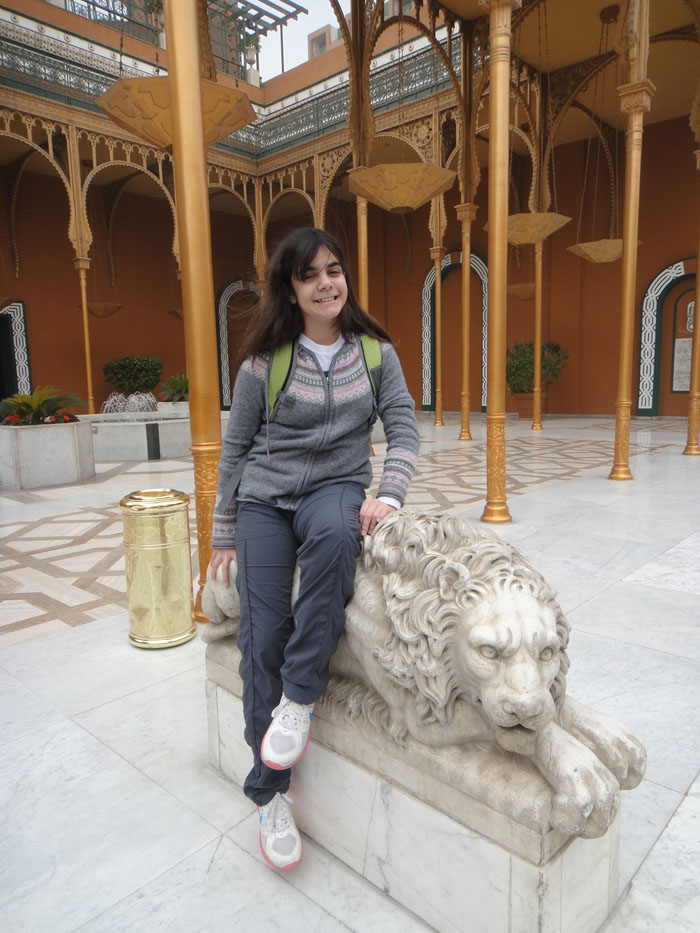
Arriving at the Gezira Palace in Zamalek, the children again remarked about much smaller the lions were than they remembered.  And Ace thought they were gold, not marble.

Ace blending in with the Egyptian royalty to welcome Empress Eugenia

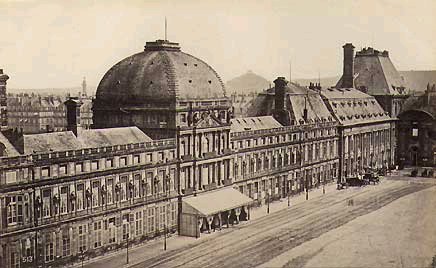
I wonder whether the Empress Eugenie of France felt the same way when she arrived in 1869. Her guest bedroom in the palace was designed to be identical to her own in Tulleries, France.  But with a full name of  María Eugenia Ignacia Augustina de Palafox-Portocarrero de Guzmán y Kirkpatrick I can only imagine despite the Khedive Ismail’s attempt to impress her, the Gezira Palace looked small compared to the renovated Tulleries Palace.

Les Tuileries before 1871 when it was burnt down.

This visit it was too cold to while away the hours sitting in the palace garden.  Instead, Mojo and I spent a little time walking around the shopping district.

Azza Fahmy Store showcasing her Pharonic collection

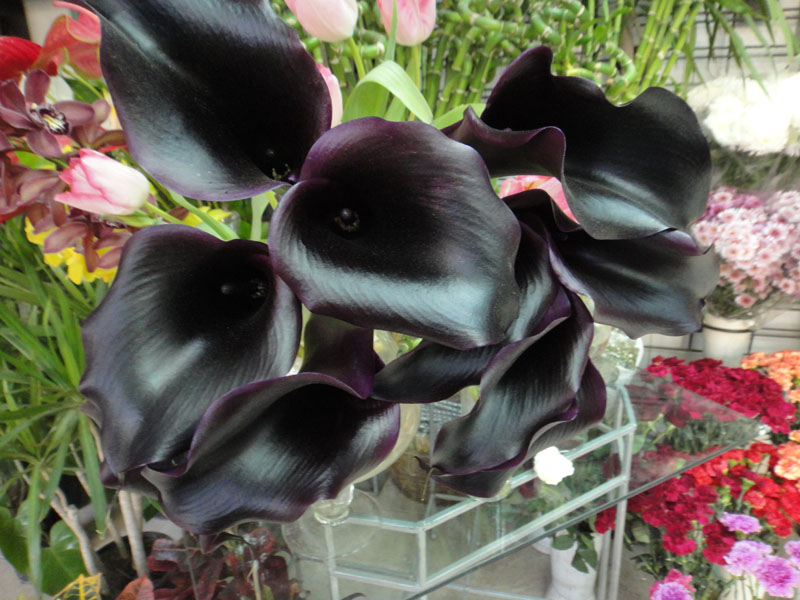
Black canna lilies

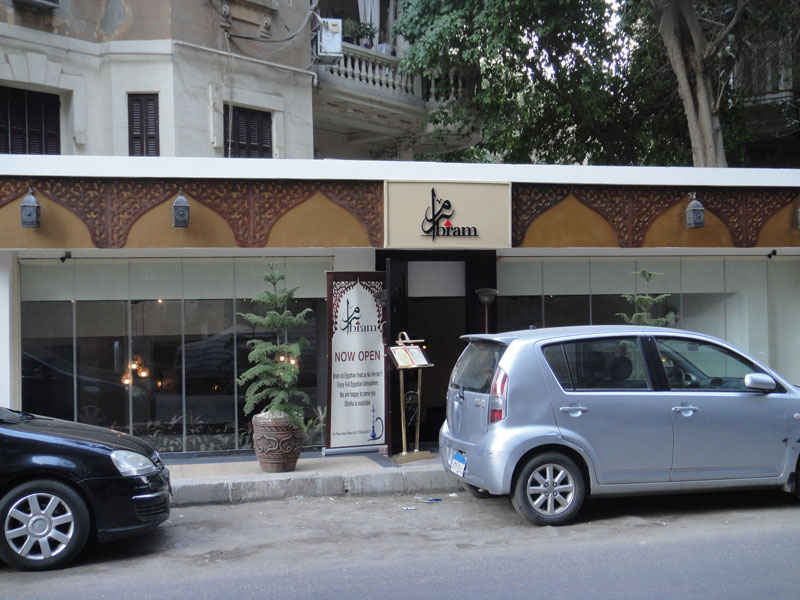
New Arabic Restaurant in Zamalek

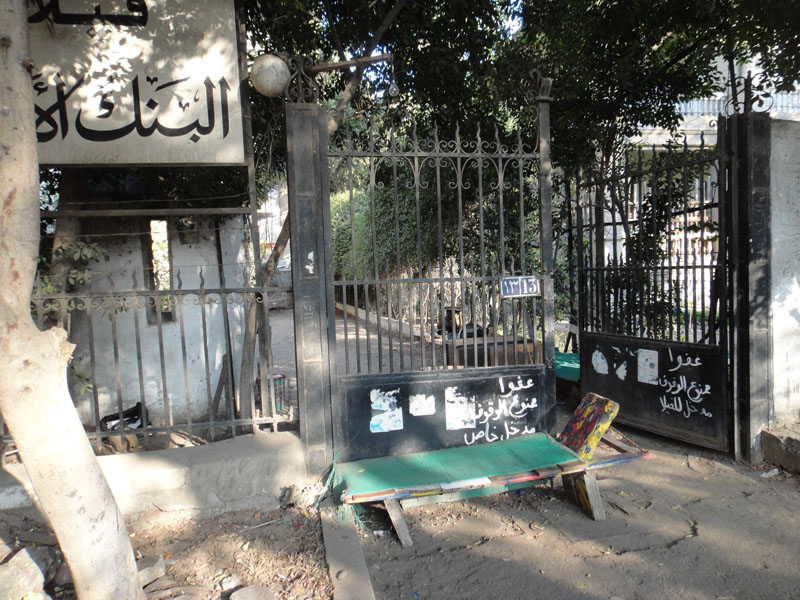
Residence in Zamalek

Even in Zamalek the buildings’ exteriors suffer from neglect.

But people are still walking around, buying their bread from the street vendors and having coffee with their friends.

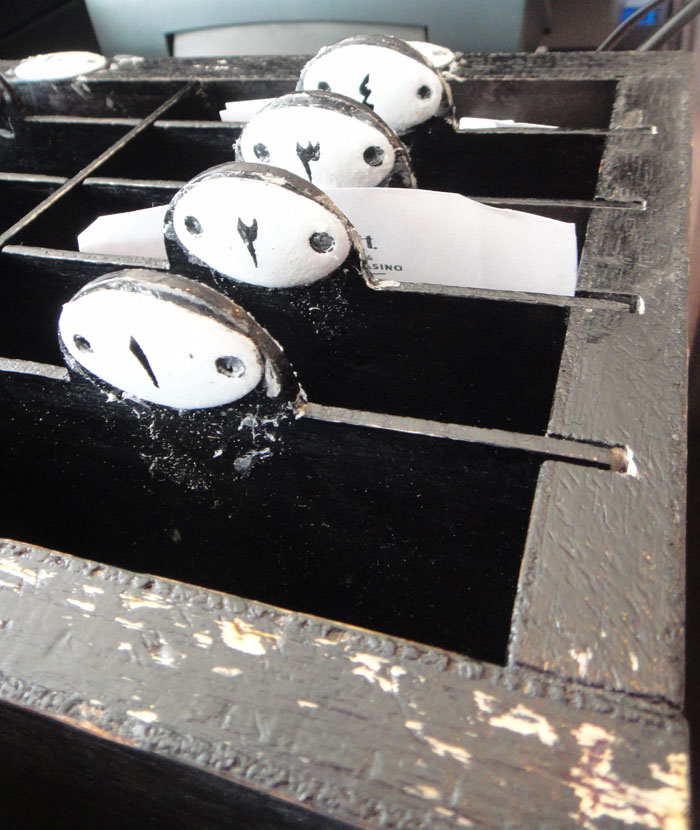
Coffee Shop Receipt Holder in Cairo

Previous Older Entries Next Newer Entries

Archives

Tales by Chapter