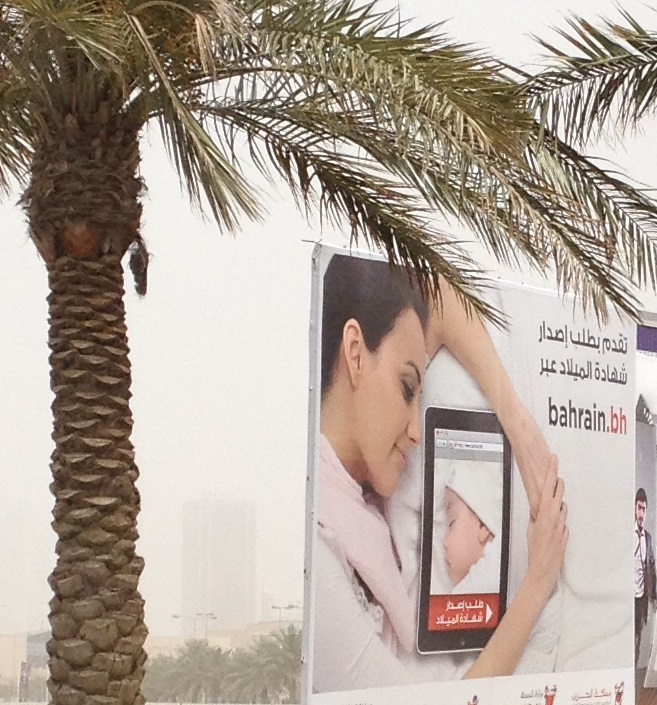
A local ad for the new generation of babies. All you need is an Ipad.
Images of the Republic of Gilead come to mind. What is the Ministry of Health saying?
Exotic Locales, Family, Humor and Iowa
10 May 2013 2 Comments
in Food for the Mind - Books Tags: A Handmaid's Tale, babies, Bahrain, compassion, Ipad, Margaret Atwood, Science Fiction, Technology, the Future
A local ad for the new generation of babies. All you need is an Ipad.
Images of the Republic of Gilead come to mind. What is the Ministry of Health saying?
08 May 2013 Leave a comment
in Eye Candy - Art, Island Tales - Expatriate Living Tags: Art, Art Exhibits Middle East, Bahrain, Bahrain Financial Harbor, Capital of Culture, Events in Bahrain, Giuse Maggi, Jody Peck, Loraine Todd, Louise Greenfield, Waterline Gallery

Artist Loraine Todd will host an informal discussion at the Waterline Gallery Thursday, May 9th at 6:30pm. She will chat about her inspiration for her pieces included in the RE exhibit .
My relationship with Loraine began over clay. You might have met her behind a camera, dressing a mannequin or digging through salvage yards. You see, Loraine’s creativity is only constrained by her day job. It seems she has her fingers in a bit of everything.
Her eye has a way of taking what already is and reflecting it back into the world through a different lens. For Thursday evening, she has chosen a few excerpts from John Berger’s Ways of Seeing to help explain how she came to view Art.
Come to the Waterline Gallery Thursday evening for a chat. You may leave with a changed perspective about …. everything.
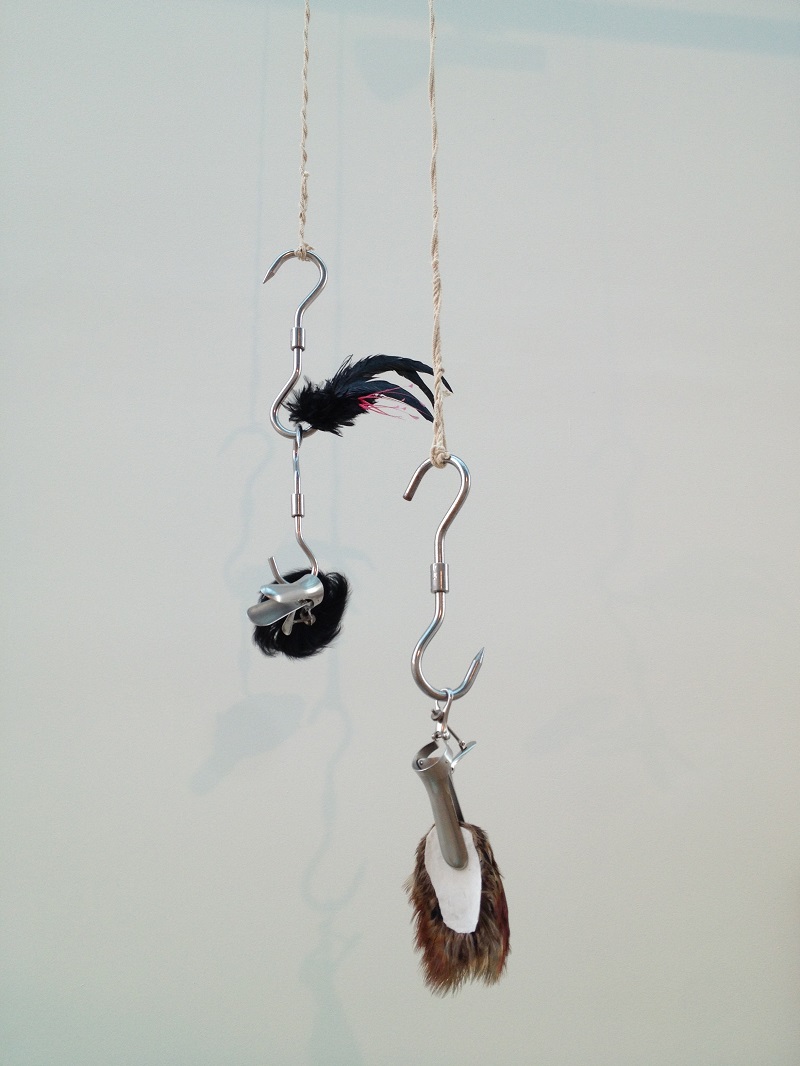
Originally from Glasgow, Scotland, Loraine has traveled extensively and lived in numerous countries worldwide. Loraine studied photography at Auckland University. She then went on to study textiles and ceramics as well as Art Therapy at Goldsmiths University, London, UK. She has taken part in exhibitions as both a curator and/or an artist as well as set/ prop design for various theatrical productions.
“John Berger’s Ways of Seeing is one of the most stimulating and influential books on art in any language. First published in 1972, it was based on the BBC television series about which the (London) Sunday Times critic commented: “This is an eye-opener in more ways than one: by concentrating on how we look at paintings… he will almost certainly change the way you look at pictures.” By now he has.” – Penguin Books
“Controversial at the time – its focus on the tacit ideologies of Old Masters and led one critic to liken it to “Mao’s Little Red Book for a generation of art students” – it’s now regarded not only as a landmark work of British arts broadcasting, but as a key moment in the democratisation of art education. Its 40th anniversary has been marked at a series of public talks and at a major Berger conference at King’s College London.” – Guardian
3rd Floor of the Harbour Mall, Bahrain Financial Harbour. To enter Visitor Parking, follow the road as it circles ALL the buildings back around to the front. Keep asking security for directions.
28 Apr 2013 4 Comments
in Island Tales - Expatriate Living Tags: Art, Bab Al Bahrain, Bahrain, culture, gold souqs, Manama, May Events in Bahrain, souq, things to do in Bahrain, Tourism
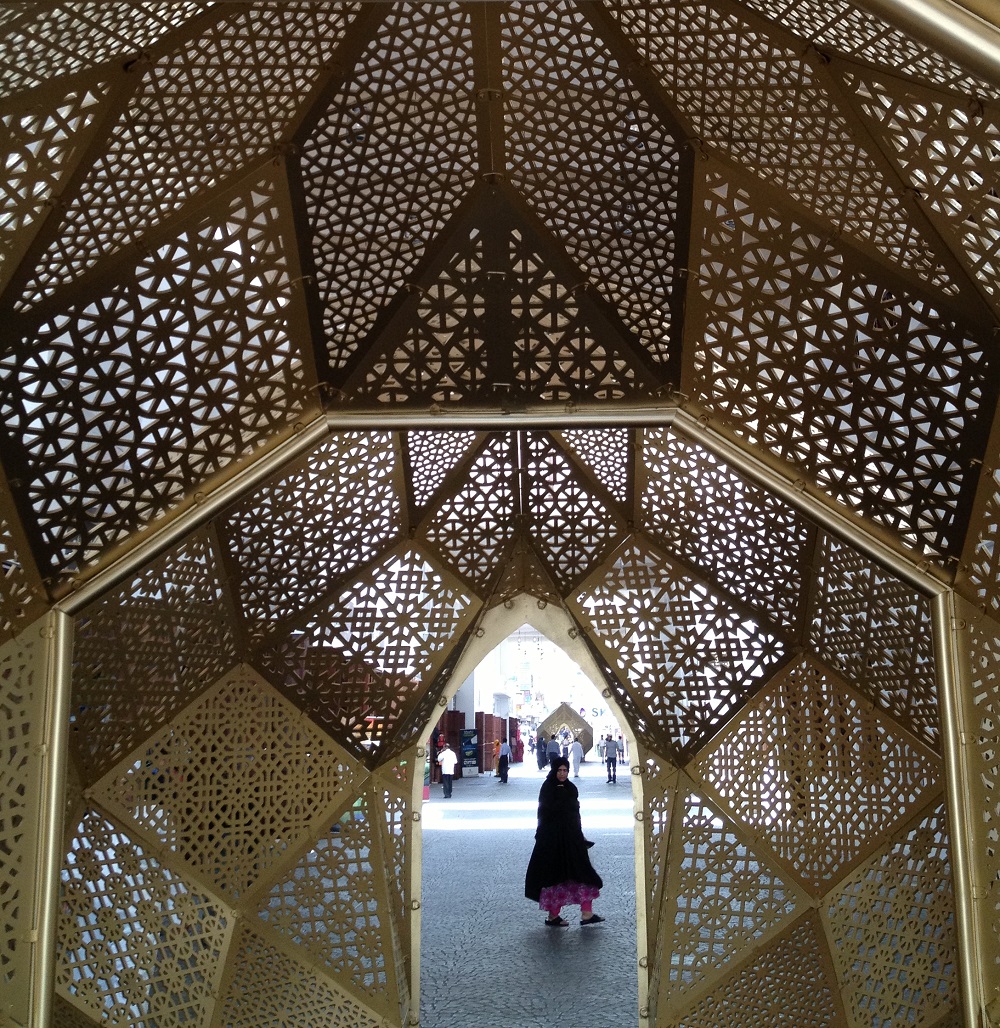
Bab means gate in Arabic.
The Bab Al Bahrain was the entrance gate into old Manama’s market place. Thirty years ago, outside the gate, there was not land for an asphalt lot with one hundred, parking spaces and pigeons. The turquoise sea lapped around the fisherman’s harbor. Like the rest of the world, man’s technology has literally changed Bahrain’s landscape. Dredgers reclaimed the Arabian Gulf, extending the island nearly a half a kilometer beyond its original edge.
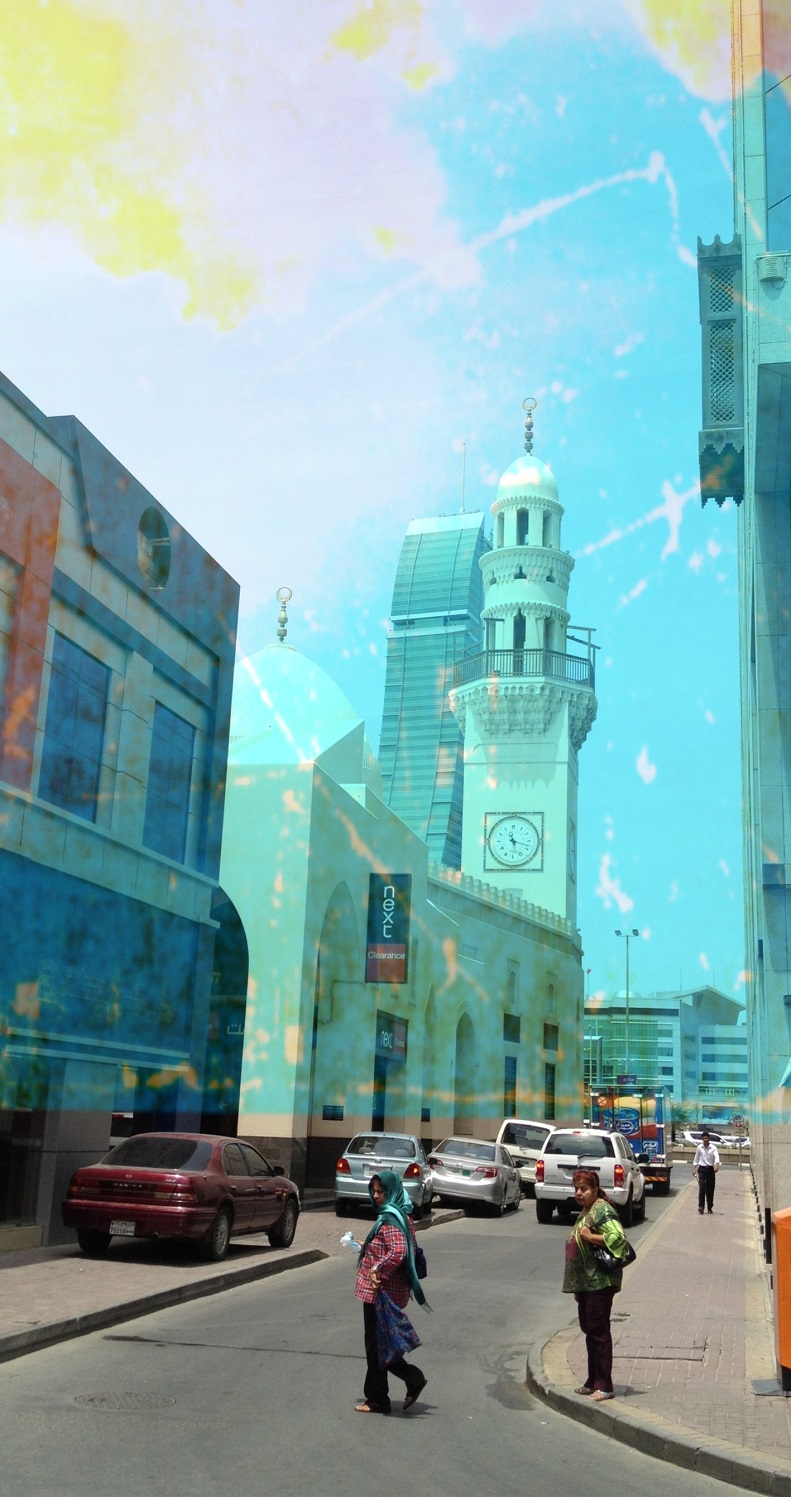
Today, Bahrain is no longer a harbor for fishermen or pearl divers. Pushed by the first discovery of Gulf oil in 1932, Bahrain became the Gulf’s original, industrialized country. Oil brought Europeans who brought air-conditioning. Air-conditioning, Bahrain’s cultural openness and the Saudi-Bahrain causeway created the right environment for foreign banks, insurance companies and the first Gulf tourism.
In 1999, we visited Bahrain and stayed at the downtown Sheraton. Carrying my six-month old baby, I did not want to walk the few blocks to the gold souq. I hailed a taxi cab and explained I wanted to go gold shopping.
The taxi driver said, “Madame, I know where to take you.” And he drove away from Manama.
I wondered whether or not I was being kidnapped as I felt like he was taking me out into the hinterlands. In the distance, the Meridian Hotel sat on the ocean shore. He turned in its direction and dropped me off at the Marks and Spencer entrance at the new Seef Mall.
“Here is where you want to go,” he informed me. “You will find the gold shops inside.” He was correct that the gold shops were there. But I was looking for the souq experience and haggling with the shopkeepers.


Bahrain’s several malls have threatened the old souq with extinction. To save the souq, the government recently invested in a roof and air-conditioned the Bab’s main street. Old-time shopkeepers were given the opportunity to be part of the new souq, but many could not afford the increased rent.
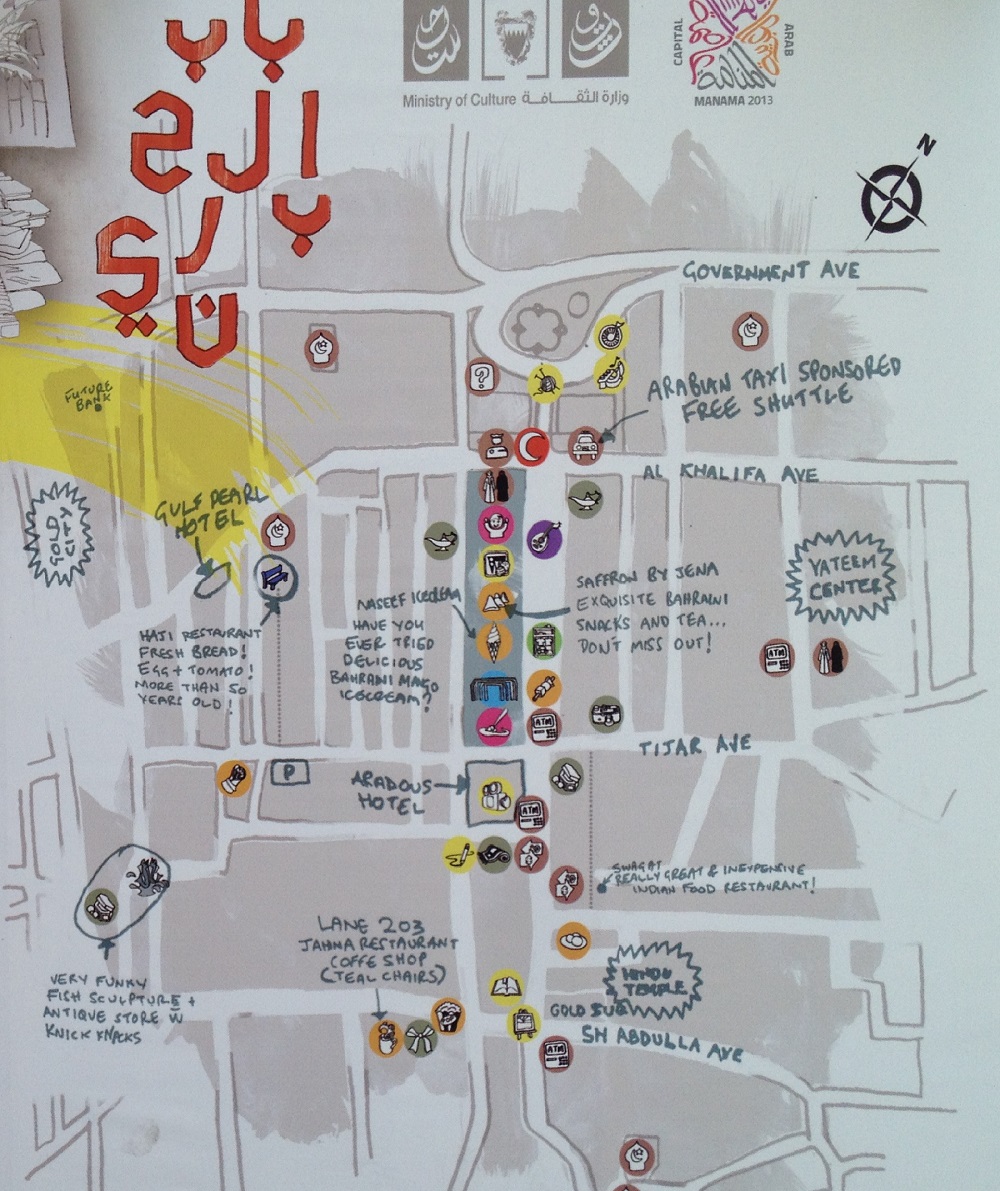
Despite the ongoing, souq arguments published in the local paper, it is fun to go down to Bab Al Bahrain. I drove over last week while everyone else was at the Formula One. The weather was not stifling. The streets have been cleaned. The parking lot car washers and taxi drivers were friendly. Throughout April and May, the Ministry of Culture is promoting small, local businesses by sponsoring art and musical events in the “BAB”.
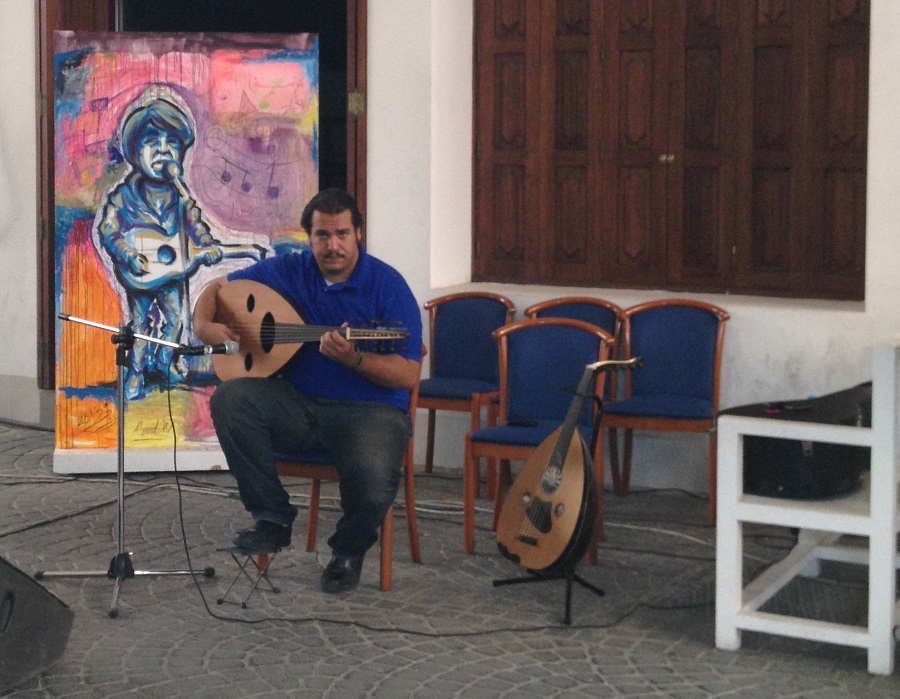

Don’t let the soldiers carrying machine guns intimidate you. The Bab guards have been carrying guns for awhile. Unfortunately, all over the world, the guns, like the landscape, have changed.
23 Apr 2013 Leave a comment
in Island Tales - Expatriate Living Tags: Bahrain, British School of Bahrain, competitions, James Arthur, music, Music Festival 2013, St Christopher's School, students, third culture kids, x-factor UK

As Susan readied her school backpack Sunday night, she mentioned feeling anxious about their Monday morning concert.
“What are you talking about it?” I asked.
“Tomorrow our guitar ensemble performs at the Music Festival.”
SURPRISE!
Although all the technology exists, there are so many calendars, schedules and websites to consult, things still manage to creep up on me.
Mojo and I wanted to see whether our guitar lesson investments have paid off. We reorganized our morning and made it over to the Senior School in time to see the eleven Senior Ensembles play.

The ensembles ranged from classical flute and strings to rock and roll and were equally divided between St Christopher’s School and the British School of Bahrain. St Chris students are known for their success completing the British ABRMs’ programs. While BSB’s music program recently gained momentum on the international stage.
James Arthur, the 2012 British X Factor winner, began his musical career at the British School of Bahrain. During the X Factor, he talked about his four, golden years of living in Bahrain. After his mother and step-father divorced, he and his mother moved back to the UK. Like many Third Culture Kids, their return to “regular life” was a shock, and he became difficult. His mother kicked him out of the house. He credits music to turning his life around and getting him off London’s streets.
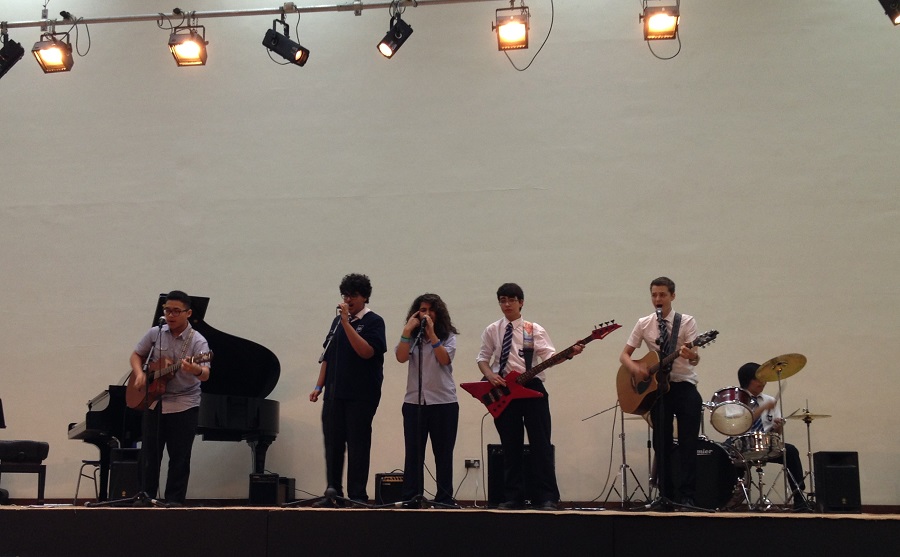
BSB is mentoring more, potential X Factor stars including Gershom, the young man with over-sized Ray Bans, who sang and accompanied every group on either the guitar or the piano. Under Lydia Martin’s musical leadership, BSB played songs by White Stripes, Swedish House Mafia, FM Static and Luminate. Each ensemble also had a catchy name: Against the Tide, 50/50, Noise Pollution, Ehsan and the Rest, and The Getaway.

On the other hand, St Chris’ ensemble entrants performed as Senior Flutes, String Trio and Saxophone Ensemble covering a range from Haydn, Gershwin, as well as traditional English and Arabic pieces. The closest thing to a rock band was the guitar ensemble who played Coldplay’s Paradise.

Our whole clan was part of the Paradise performance. Mark happily surprised us playing a lead part. Although, we got a kick out of the St Chris’ brass ensemble’s rendition of the 1976 Muppet Show theme song, admittedly, BSB’s pop and rock numbers were crowd pleasers and had the audience clapping and snapping photos.
After the eleven groups played, the two adjudicators put their heads together. I wondered how they would view the different song choices.
Coming up, they said, “As always, the variety of music makes it hard to judge.”
They said, “We looked at little things like ‘communications between the group’ and ‘looking at the audience’.
So the Winner was?
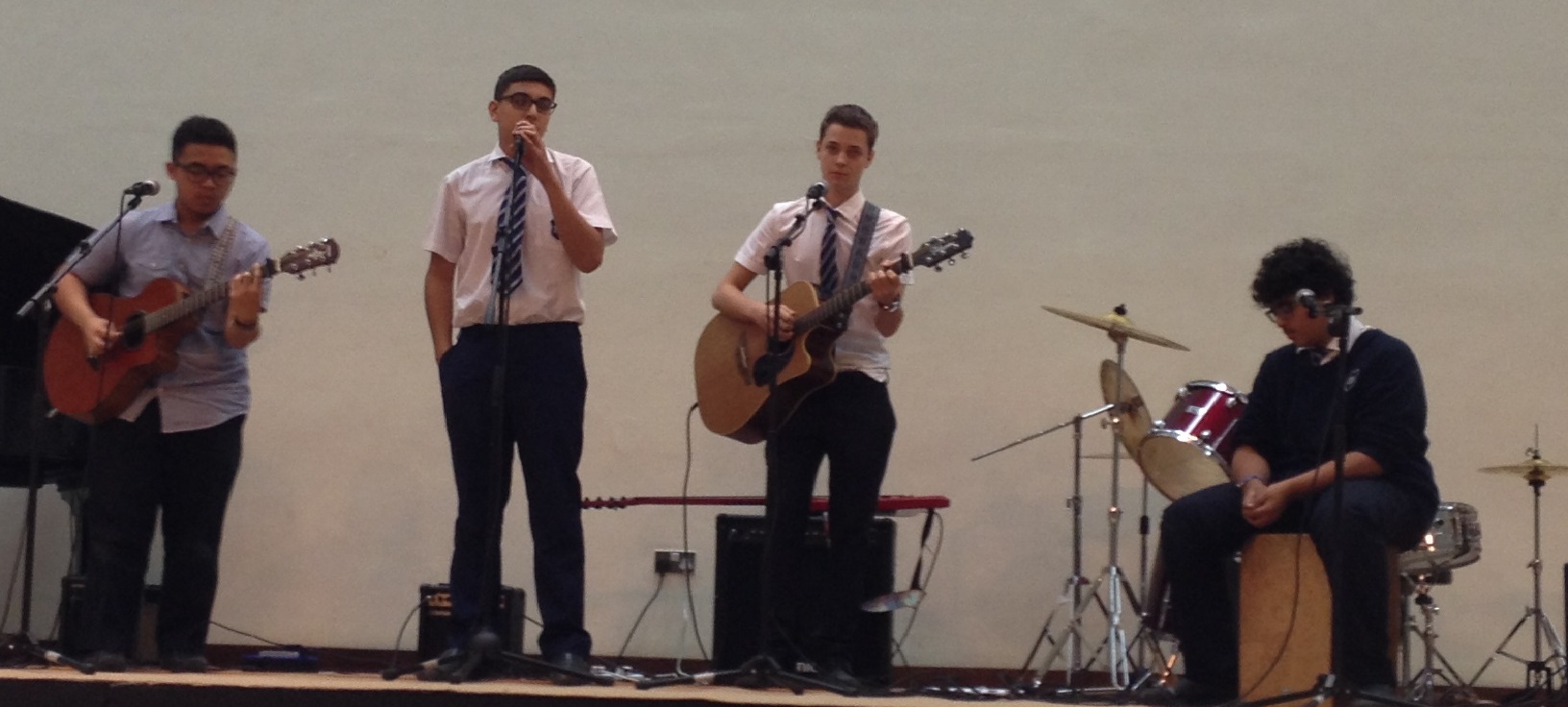
Gershom, Yannis, Daniel, Paul and Saiyf, also known as BSB’s Noise Pollution, for their original song, Ocean Wave.
ROCK AND ROLL!
Second place was a tie between St Christopher’s Arabic Drummers and Arnold Brass.
Third place was BSB’s Getaway who played My Heart Says Go
The four ensemble finalists along with the finalists from the other twelve categories will be playing Wednesday at 2:30 at St Christopher’s Junior School. Come and see the new generation of X-Factor contestants.
Each year St Christopher’s School hosts three music festivals plus several musical productions. The Music Festival open to schools in Bahrain has started and leads into next month’s Young Musicians of the Gulf which is an international competition.
This year’s participants include the British School of Bahrain under Lydia Martin, Nadeen School, Sacred Heart, Al Hekma, the Japanese School, New Millennium School, AMA International School, Amna Bint Wahab School, Ibn Khuldoon and Hidd Secondary Girls’ School are all participating. There are 233 entries grouped by Junior and Senior Ensembles, Instrumental, Vocal and Piano.
At the conclusion of each category’s performances, the winners are named. The Grand Finale takes place this Wednesday at 2:30pm at St Christopher’s Junior School in Sar.
21 Apr 2013 2 Comments
in Island Tales - Expatriate Living Tags: Ahmed al-Fateh Islamic centre, Bahrain, Formula One, Grand Mosque, humanity, Mary the Mother of Jesus, spirituality, Tourism, travel

The Formula One brings in enthusiastic tourists who slap down millions of dollars in the host countries. In Bahrain, between races, or when the spectators’ palms and pockets are empty, this ad points out there is another place to visit which offers free Love – the Al-Fateh or Grand Mosque.
Recently, an Italian friend was visiting Bahrain. A group of us met at the Grand Mosque, left our sandals at the door and donned the required abayas and head scarves. Our guide, an Egyptian woman named Ghada, gave us the half-hour, building tour. Knowing my friend loves the Virgin Mary, I asked Ghada to explain Mary’s place within Islam.
Looking at our smiling faces, Ghada suggested, “Why don’t we sit?”
We made a circle of chairs and she pushed up her glasses, smiled and set her hands in her lap.
“In Islam, Mary, Mariam in Arabic, is considered to be a very righteous woman just like Fatima, the Prophet Mohammed’s (PBUH) daughter. Mariam is the only women mentioned by name in the Koran.”
“Can you tell us how many times she is named in the Koran,” I asked.
“In the Koran, there is an entire surah (chapter) about Mariam, number Nineteen. She is mentioned about forty-five times in the Koran.”
“More times than in the Bible,” I added.
Ghada nodded in agreement. “She was the perfect woman, if not the greatest woman of all time.”
We had a lively discussion about Mary’s virginity, divinity, and dreams. Several among the group made positive comments about Ghada’s informed and open views.
“Because I want to understand what all people believe, I have read the Bible, both the Old and the New Testament. After reading them, I still felt more drawn to Islam,” she said.
As we ended our visit, she told us, “You are an unusual group. Normally, I do not have such discussions.”
“It is because we are women, and we all love Mary.”
The Formula One, which attracts people from around the globe, is a great opportunity for us to meet others who share a common passion. I go to the F1 to watch the people as much as the race. I believe events like this help break down cultural stereotypes.
Every time I have visited the Grand Mosque, I have had a delightful docent and have learned something wonderful about Islam. Visiting the mosque is an excellent way to understand Christianity’s, Islam’s and Judaism’s common beliefs. It is a quieter venue that, similar to the F1, highlights our common humanity.
The Grand Mosque in Juffair is one of the places I always take my visitors. It is often the one chance people visiting the Middle East have to see a mosque. Most mosques in the Gulf limit admittance to Muslims. The al-Fateh Mosque is open to people of all faiths. During Ramadan, al-Fateh hosts free events. During the rest of the year, it is easy to pop in any time and find a multi-lingual docent who will take you on a tour.
There is a library and free materials about Islam. A good representative for Islam, Ghada has written several interesting pamphlets which are available at the mosque.
Women must wear an abaya and a head scarf to enter. The mosque has a closet full you can borrow. Or you can bring your own.
The Grand Mosque is opposite the Gulf Hotel Complex. Sitting near the sea, it is easy to see from the main ring road. The trip can be combined with visits to the new Islamic library, the National Museum and the new, National Theater.
16 Apr 2013 1 Comment
in Eye Candy - Art, Island Tales - Expatriate Living Tags: American Women's Association, April 2013, Art, art exhibits, Bahrain, Formula One entertainment, La Fontaine Centre for Contemporary Art, The extraordinary Orginary, things to do in Bahrain, Tourism, Waterline Art Gallery, World Beat Fitness
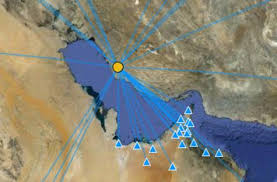
Iran’s 6.3 earthquake and the 7.8 “after-shock” today were felt all the way around the Gulf.
“Why are we feeling them? What’s does this herald?,” people are asking.
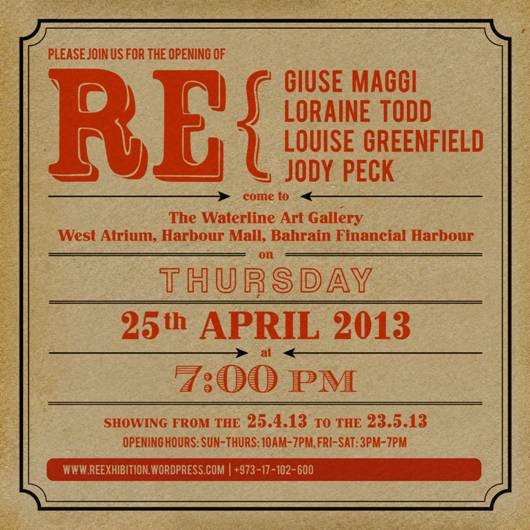
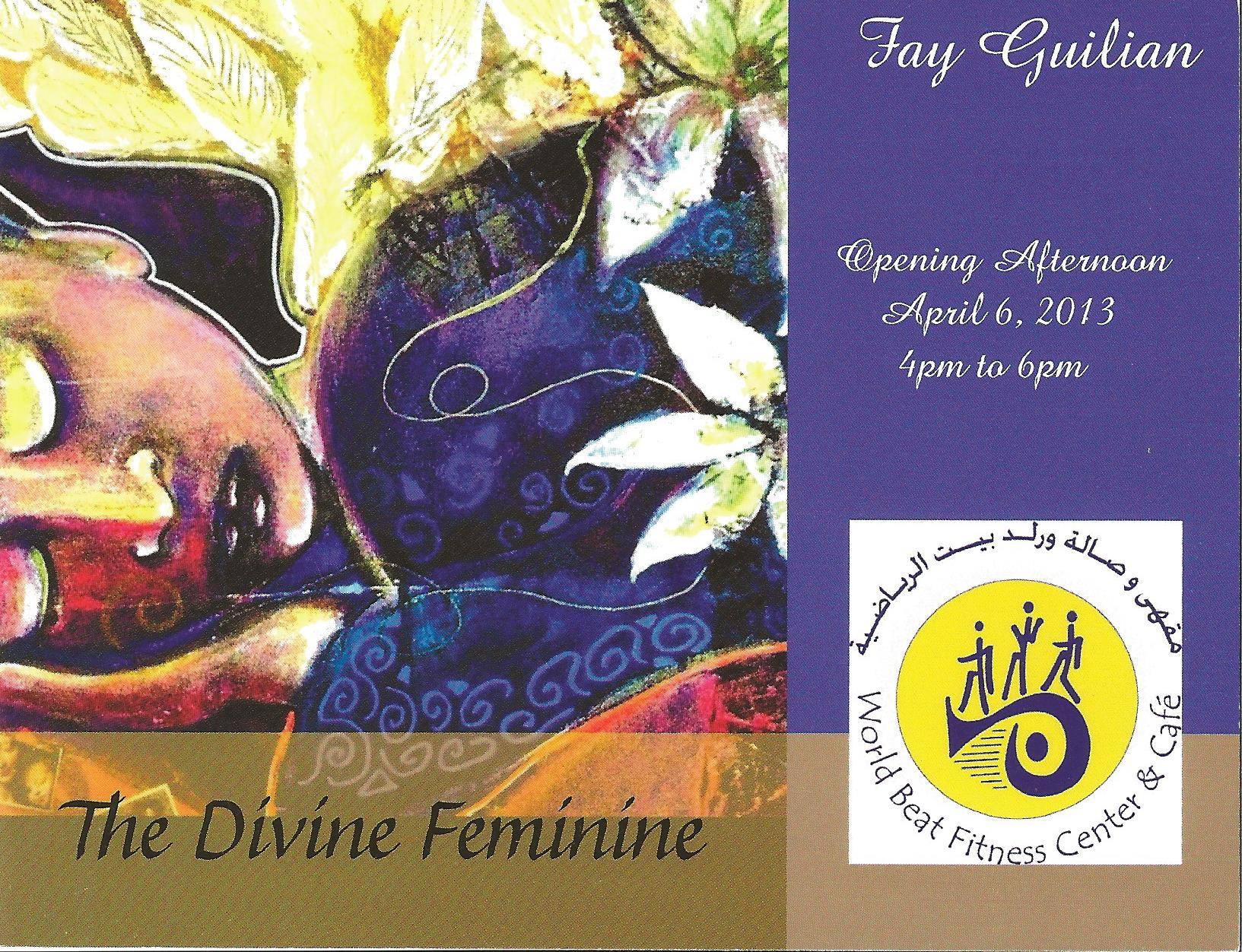
Focusing on the positive, perhaps all the art exhibits opening this month in Bahrain are causing the excitement.



15 Apr 2013 1 Comment
in Island Tales - Expatriate Living Tags: Bahrain, being in love, love, migrant workers, plants
For the decade we have lived on our compound, our Nepalese gardener has trimmed the trees and mowed the playground’s lawn. Like ranch hands in the West, he and the other men labor and live together, sharing a kitchen. If he does have a family, he sees them every two years when he returns home for a vacation.
Gardening is a euphemism for what he does. The lushest gardens are tended by residents’ hired help. His real, money-making job is after hours when he washes cars. During the day, this man silently wanders between the garden walls, chatting on his phone, avoiding his boss. Often I find him crouched in the shade, half hidden, behind a tree. Lately, he has been particularly preoccupied.
I think he is in love.
There are a few, tell-tale signs.
He has been strutting, not just shuffling, between the houses with a smile on his face.
Known for “supervising” his younger co-worker, who lifts the heavy trashcans onto the trolley and wheels it out the front gate, he has been seen carrying plastic shopping bags for a sari-clad woman.
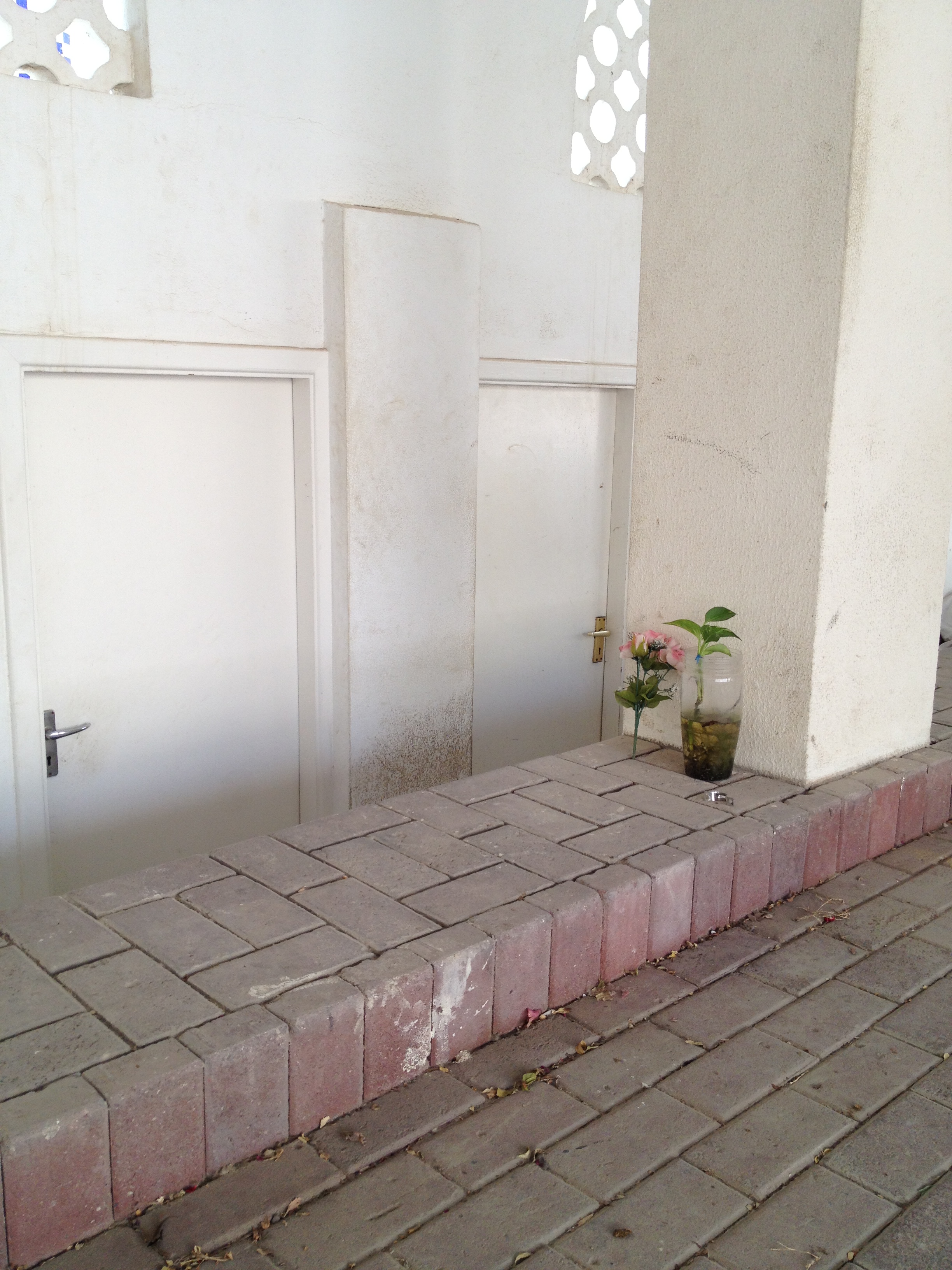
A silk flower was planted between the bricks outside his door.
And someone placed a vine stem in a vase, hoping it will grow roots.
 Tales of Dragons, Rabbits and Roosters