On to Aqaba

On to Aqaba south on the desert highway

Inspired by Peter O’Toole’s portrayal of Lawrence of Arabia, “On to Aqaba” became our cry as we headed south on the Desert Highway.
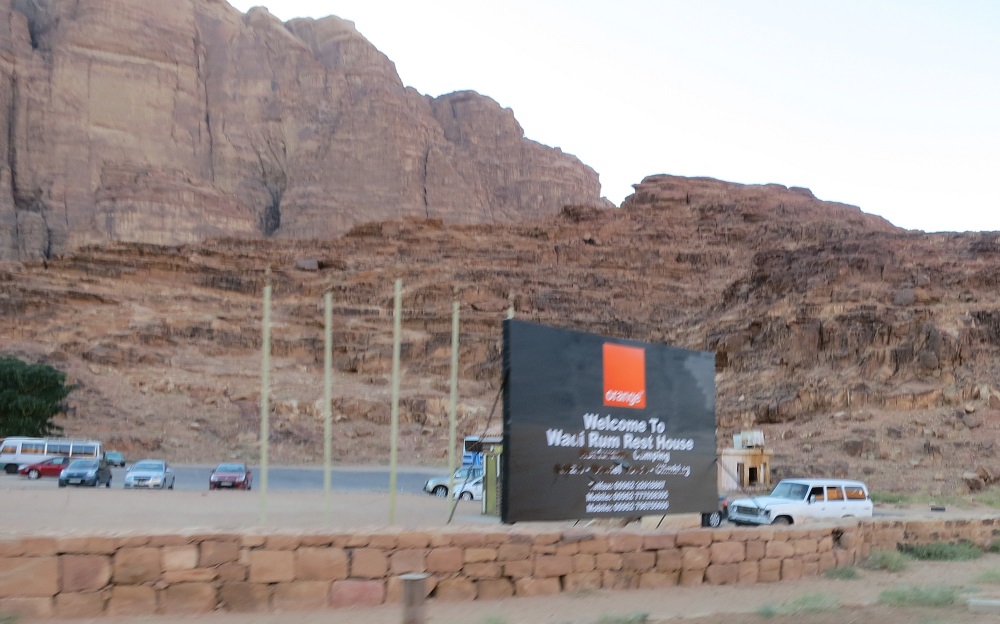
WAdi rum rest house v2

After parking our SUV at the Wadi Rum Village Rest House, a young Arab pulled up behind us.

“Mohammed Mutlak camp?” he inquired.  “Welcome,” he said pointing to the back of his Toyota pick-up.  “Please get in.”

The padded seats did not look too comfortable to me.

“Why don’t I drive my car,” I suggested.

Abdullah shrugged, “If you want but you will miss breathing the fresh desert air.”  He waved his hand in the air.

“I think I should drive,” I told my waiting friends.

“Thelma,” my friend counseled, “They do this all the time.”

I relented, and we hefted our luggage into the back of the truck.

As Abdullah sped through the deep, red sand, our hair was mussed.  Our noses were filled with pink dust.  Dogs chased us.  Our teeth rattled.  Still, it was better that I had not attempted to drive.

We officially arrived at our camp just before the sun set.  We had enough time to do some yoga before cracking open a bottle of white wine and toasting our driver and our lovely camp.

To be continued……

ABOUT MOHAMMED MUTLAK CAMP

Mohammed Mutlak Camp is found in the southern-most tip of Wadi Rum.  It is a lovely camp.  You can contact them via email or call Mohammed directly at 00 962 7 7721 5675.  My review is on TripAdvisor.

ABOUT ARRIVING IN WADI RUM

Driving south on the Desert Highway, just past the town Ar-Rashdiyya, (past Ma’an) there is a big petrol station on the left.  You pass it and the road to Wadi Rum, then make a U-turn.  You turn right (east) onto the Rum road.  It is about 12 kilometers to the Wadi Rum Visitor Center.

There you will be greeted by a hoard of young Arab men offering taxi rides or camps.  If you have made reservations, one of them will announce himself as the Mohammed Mutlak representative.  You pay him the entrance fee to the reserve.  20JD for a four-wheel drive and 5JD per person.  Do not despair, there does not appear to be any “official” manning the ticket counter at the center.  Wadi Rum is run by the Bedouin.  They all know each other.

He will direct you to drive to the Wadi Rum village and to park at the Wadi Rum Rest House.  There someone else will pick you up.

ABOUT WINE IN JORDAN

Jordanians grew grapes and make wine.  However, the only places I have noticed wine or alcohol for sale is at the airport or in higher-end hotels.  We bought our own bottles at Bahrain Duty Free and carried them on the plane, car and camel as we traveled.
Jordan – The Holy Land Museum

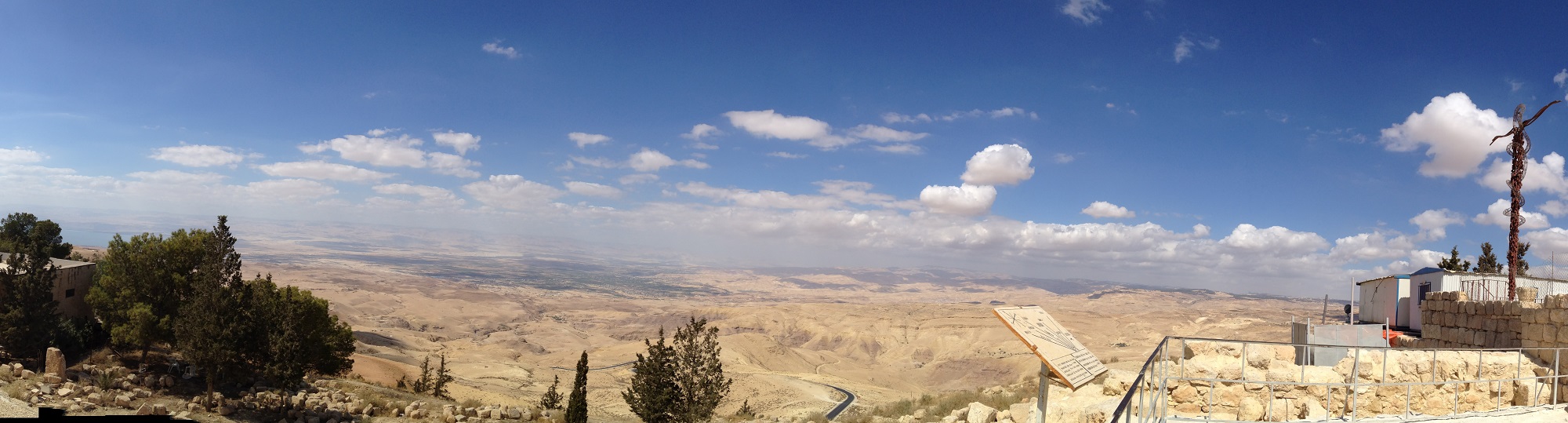
view of holy land from mount nebo jordan by Eva the dragon

“If you put a fence around Jordan, it would be the world’s largest museum,” the archaeologist told me.

Most Westerners visit the Holy Land by flying into Israel to see Jerusalem and, perhaps, Bethlehem.  Jerusalem is important, and Bethlehem is central for the Christians, but if you want to travel the Old Testament, then Jordan is the place to go.

national geographic human migration-990_32314_600x450

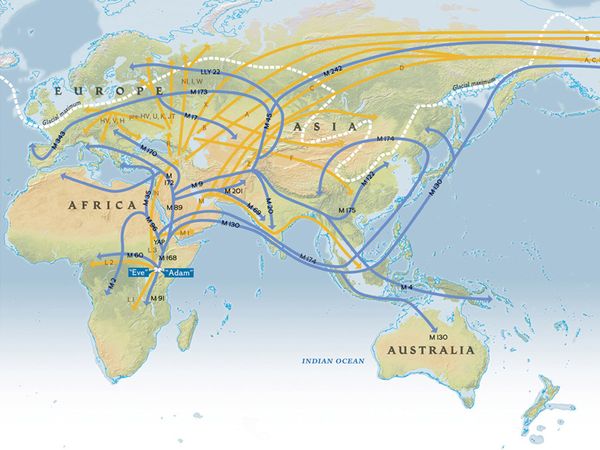
According to National Geographic’s Genographic Study, about 50,000 years ago, a large “second” migration out of Africa occurred. These became the first, large settlements in the Fertile Crescent.

Biblical map of Jordan king's highway petra

Modern Jordan is smack dab in the middle of recorded, human history.  Jericho, located on the other side of the Jordan River in occupied Palestine, is considered to be the oldest city on Earth.  But the ancient Nabataean city of Petra, inhabited by Bdouls, has been dated to the same era – 9000 BC.

From 9000 BC onward, Jordan houses remains from every era.

Copper Age (4500-3000 BC)

  • Copper mines are found at the Dana Reserve.

Bronze Age (3300-1200 BC)

  • Egypt’s influence is noted in pottery and jewelry.
  • Canaanites in the Jordan Valley were first mentioned in Genesis 9:22 when Noah cursed his son Ham, the father of Canaan.
  • Abram and his brother Lot, Genesis 11:21, split up.  In Genesis 13:10, Lot choose to move to Jordan to live among the wicked Sodomites.
  • 2300 BC Sodom and Gomorrah destroyed.  Lot and his daughters found a cave to live.  The cave is along the Dead Sea Highway (Highway 65), a bit south of the Dead Sea.

Iron Age (1200-330 BC)

  • Starting with Numbers 21:31, the Old Testament included stories about the three kingdoms of the dreaded poly-theists: the Edomites in the south, the Moabites and the Ammonites.  They occupied the eastern desert of Jordan.
  • These Old Testament tribes occupied Umm Al-Rasas, Theban, Ma’in and Arnon in Jordan.
  • It was the Edomites who blocked Moses and the Israelites.  To get north, they resorted to the mountains along a road which for millennia has been called the King’s Highway.  You can still drive the King’s Highway today.
  • When Moses finally made it north, Deutoromony 34:1 says Moses went to Mount Nebo in Jordan where God showed him the Promised Land.  At the foot of Mount Nebo is Moses’ spring where he is reputed to have opened a rock for his people.

850 BC Israelite Empire was defeated by the Moab king named Mesha.

  • Numbers 32:38 talks about King Mesha who lived in Ma’in, Jordan.
  • The Moabites worshiped Baal Maon which means God of Water and Asherah whom the ancient Sumerians called the Great Goddess.

333 BC Alexander the Great stormed through northern Jordan which became part of the largest empire ever seen.  After his death, Ptolemy I became the ruler and Greek became the common language.

  • During the time of Jesus the Christ, southern Jordan was controlled by the Nabataeans from their capital in Petra.
  • On top of Machaerus, aka Mukawir, is Herod Antipas’ castle.  Here is where Herod imprisoned then beheaded John the Baptist as Salome requested.
  • The Greek Orthodox Church in Madaba has a 6th century map depicting the entire Holy Land.
  • St. John the Baptist Church in Madaba is dedicated to Saint John and a running well dated to the Moabite era.

64 BC Rome conquered Syria.  The Romans began looking south towards the Nabataean capital, Petra, and its wealthy trade routes.

  • 106AD Emperor Trajan finally annexed the Nabataeans and renamed the province Arabia Petraea making Petra its capital.
  • The Roman city of Jerash, north of Amman, is the best preserved Roman city in the world – better even than Rome.

324 AD Byzantine Emperor Constantine made Christianity the official faith of the Roman Empire.

  • At Bethany on the Jordan, a church has been excavated marking the place where Jesus was baptized.
  • Old temples were transformed into Byzantine churches.  These original churches can be seen in Madaba, Umm ar-Rasas and Petra.

632 AD Prophet Mohammed’s death.  His followers began expanding north out of the Arabian desert.

  • 629 AD Islamists lost first battle against Byzantine army near Karak castle.
  • 636 AD Islamists won Battle of Yarmouk.  638 Jerusalem fell. 640 Syria was taken.  Islam became the dominate religion and Arabic replaced Greek as lingua franca.

661-750 AD Umayyad Dynasty.  During this time the Umayyad Mosque in Damascus and Dome of the Rock in Jerusalem were built.

  • Desert castles were built in Jordan: Qasayr Amra in 711AD and Qasr Kharana 710 AD.

700 AD the Holy Wars between the Christian and Islamic armies started. 1099 Christians took Jerusalem. 1187 Islamists took Jerusalem. 1517 Ottoman Turks took Jerusalem.

  • In Jordan, you can see the Qala’at ar-Rabad at Ajlun and the Crusader Castles at Karak, Petra and on the Pharaoh’s Island offshore of Aqaba.

WWI the Ottoman Turks and Germans fought against the Egyptian-based British in Jordan’s southern desert.

  • The Hejaz railway bombed by TE Lawrence, Lawrence of Arabia, and the Arab Revolt is still in existence.
  • In Wadi Rum’s desert, there is a house and a spring both attributed to “Lawrence”.
  • Further south, Lawrence stayed at both the Aqaba Fort and the Azraq Fort.

There was no way we could cover all of Jordan in five days and enjoy the trip.

the monastery by david roberts petra jordan

Instead we focused on the romance of TE Lawrence’s Arabia in Wadi Rum, the Rose-colored city Petra that David Roberts painted, and the easy to reach, high-points in Christian history – Mount Nebo, Bethany by the Jordan, the Dead Sea and Madaba.

ABOUT BOOKS ON JORDAN

Lonely Planet’s Jordan is the book I rely on and carry with me.

My friend Louise also found Jordan: Past and Present published by Vision Roma in Petra.  This is a super fun book which helps you envision the old ruins as they looked in the past.

To Hire a Man or Not

Sign to Wadi Rum Desert Highway Jordan

Planning our excursion into the Wadi Rum desert of southern Jordan and Petra, we debated whether three women traveling alone in Jordan should drive or hire a male driver.

One advantage would be having someone who speaks Arabic.  However, that advantage was greatly offset by my experience with male drivers who drove too fast.  Too fast meaning 120 kph through tunnels marked for a 50 kph speed limit.  Even when asked to slow down, many pretended not to hear me.

None of us smoked.  Not only does the car smell, but I’ve had drivers who, after a couple of smokeless hours, light up even after I asked them not to.

The final advantage was freedom to manage our daily schedule.

When we decided to drive ourselves, my husband officially named us Thelma and Louise.

I booked a mid-size car since the SUVs were double the price.  I figured if the highway was good enough for broken-down Corollas, we would be fine.

Obviously the Eurocar manager felt differently.

Handing over our confirmation and my driver’s license, he looked at me.

“You are driving?” he asked.

“Yes, I am a very good driver” I said smiling.  “We are driving down to Wadi Rum.”

“I am going to drive too,” Louise said handing over her passport.  “Here is my license.”

Reviewing our documents, he made a phone call.

“I upgraded you to a SUV,” he said.  “No extra charge.”

After all the paper works was completed, he gave me his personal mobile number.

“If you have any trouble, please call me directly,” he instructed.

“What a lovely man,” we said, as we walked to the car.

“I was praying we would be upgraded to a bigger car,” Louise said.

Our SUV was an old Pajera that looked like it had been in at least three accidents.  It took nearly fifteen minutes to carefully walk around the car to note every single scratch and dent.

Driving out of the airport, the Pajero rattled so much, I stopped to check whether the back gate was open.  On the dashboard, a yellow light came on but I could not get the manual out because the drawer was broken.  Within a half an hour, the A/C turned off.  We could not seem to get it back on and after an hour pulled over at a restaurant.  I called Mr. Eurocar while Louise checked out the restaurant.

Three, roaming-charged telephone calls, I figured out the problem.  The A/C button had gotten turned off.  By then I was certain Mr. Eurocar’s confidence in our driving skills had gotten even lower.

To be continued…….

ABOUT THE NEW ALIA AIRPORT

The new airport opened on Mother’s Day in 2013.  It is a breeze to float through immigration and collect the baggage.   I think the visas are 20JD.

In baggage claim, if you are facing the Duty Free shops, there is an ATM in the right corner – something Investment Bank.  I withdrew 250JD and was given a mixture of 10s, 20s and 5s, not just large bills.  I thought that was fantastic as most taxis want small change.

The rental car companies – Eurocar, Budget and National? are outside Baggage Claim.  There are a couple more banks and ATMs in that area.

You can book your car reservation online.  You can also book a car and driver through them.  Eurocars has an office in Aqaba also.  If you hire a driver, they will send one up from Aqaba to pick you up in Wadi Rum.  Drivers were 75JD a day.  Whether or not they would be amenable with our dozen photo stops or detours to sites was a question.  You can also book a driver through the Movenpik in Petra.  It was also 70JD.

Note the return time is 6am.  If you arrive later, then you will be charged an extra day.  That became a negotiating point when we returned the car.  Otherwise renting a car was relatively easy.  There are petrol stations all along the Desert Highway (Highway 15).  Coming from the Gulf, the gas seemed expensive.  42JD for 55Liters.

ABOUT THE CARAVANSERAI RESTAURANT

In Sad As-Sultani, about an hour and a half south of the airport, we pulled over into the Caravanserai Restaurant.

This tourist gift shop cum restaurant was clean and set up for large groups.  We ate their “plate” with the choice of chicken or lamb.  It included a huge plate of bread, hummos, rice, spicy salad and cooked vegetables.  We ordered water and coffee.  It all came to 10JD and was very acceptable.  I am comfortable recommending it.

Taxi Arranged

Horse drawn carriage in Jordan by Eva the Dragon 2009

Off to Jordan tomorrow.

Between my travel companion, Tanya, and me, I think we have all the necessary transportation arranged.  I just hope my hair doesn’t get too mussed up.

On the one hand, when traveling as tourist who is trying to pack in as much as possible, it is nice when the journey and transitions are as painless as possible.

On the other hand, a completely smooth and beautiful trip results in fewer stories to tell.

So the question is – do I set my intention for ease?  or a good story?

Thelma and Louise in Jordan

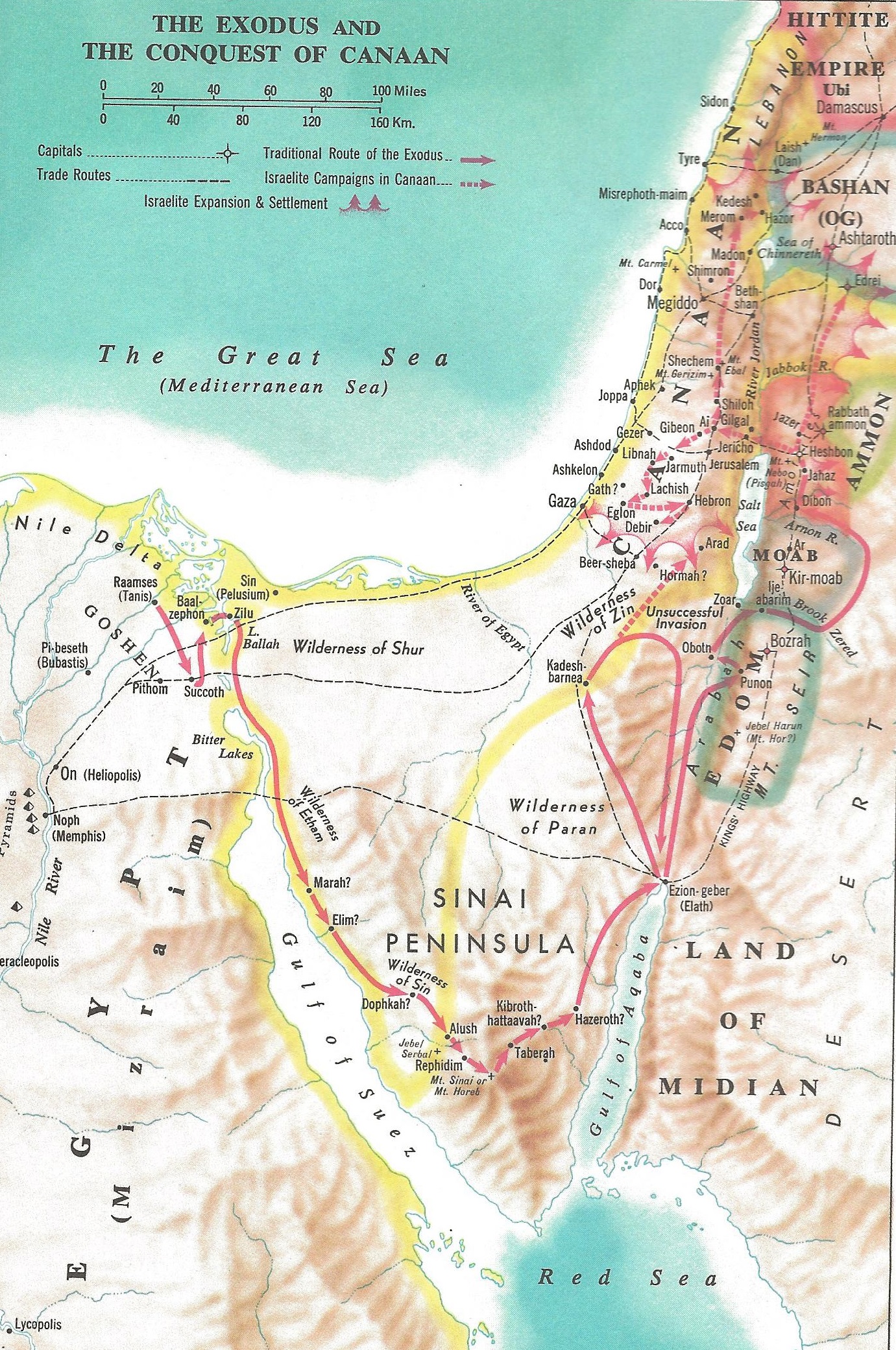
Biblical map of Jordan king's highway petra

My friends, Real in LA and the Irish Princess, Tanya, and I are meeting up in Jordan for a little Thelma and Louise adventure in the desert.

Acting as tour guide, I pulled out my Bible, the RSV version Pastor Dell gave to me for my confirmation.

Looking through the maps at the back of my Bible, I choose The Exodus and The Conquest of Canaan because it outlines the King’s Highway.  This trade route has been the primary link between Damascus and Egypt for thousands of years.  We will follow it south as my friends want to visit the Nabatean capital, Petra.

Although the incense traders’ Rose City is noted, we will follow the King’s Highway south to Aqaba, then turn left into the Land of the Midian.  Calling around, I found a man who will provide us with some camels and tents once we get there.  He promised to meet us in Rum for a cup of tea before heading out into the desert.

The highway will take us through the kingdoms where the dreaded polytheists – the Ammonites, Moabites, and the Edomites – lived.

But I am not worried.

If we get in a tricky spot, I will follow this guy’s lead and sing Carrie Underwood’s Jesus Take the Wheel.

Girls, Dogs and Gratitude

give a girl a break film video Jenny Laura dog training school mentor

Last night, during dinner with my writer-friend, I raised the issue about which medium tells a better story – writing or video.

A reader since childhood and now a writer, I cannot imagine life without printed words.  My kids’ generation, the Millennial generation, don’t know an Internet-less world.

We live in a country where public libraries do not exist and books cost more than most people’s daily salary.  YOUTUBE is free and pirated DVDs can be purchased for less than a cup of coffee.  Instagrams to family 2,000 miles away are cheaper than a phone call.  Twitter is the source for local, breaking news.

Visual and graphic communication are the future.

Inspiring stories about young women who overcome emotional and financial barriers to creatively express themselves are the topic for the GIVE A GIRL A BREAK contest.

Through video, three, young females filmmakers offer their stories both as an artistic expression of themselves as well as highlighting how a small bit of support helps other reach for their dreams.  Created in Los Angeles, these girls had access to lights, cameras, computers, actors and great locations to create their short-films.

On the other side of the planet, a smaller exhibit highlighting women and communication took place.

IMG_3652

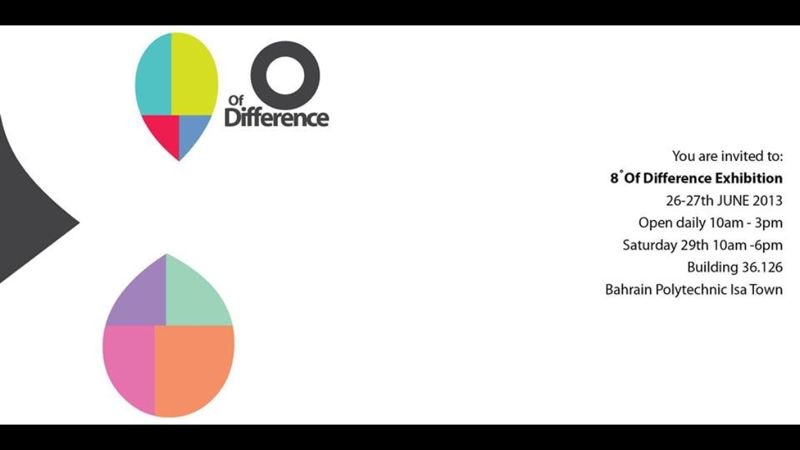
Graphic communication was the focus of the EIGHT DEGREES OF DIFFERENCE exhibit in Bahrain.

Eight, Bahraini women presented their graphic design, video and digital photography projects.  They focused on life-affirming topics such as gratitude, family communications, healthy eating, and imagination and on clear communications through maps, typography, signage and even graffiti.

Milling with the audience composed of Bahrainis, Pakistanis, Africans, and Europeans, it became obvious to me that the women’s messages transcended culture.  Whether one spoke English or Arabic, the visual exhibits spoke a language everyone could understand.

ABOUT GIVE A GIRL A BREAK

team alana matching making skills

My best friend Jenny is featured as the inspiring mentor to Laura, a young woman in this film TO THE RESCUE.  Watch TO THE RESCUE and the other two finalists and vote by JULY 2nd.

Always is sponsoring Give a Girl a Break.  Three aspiring female filmmakers are vying for a Talent Grant to help them pursue a career in film.

ABOUT EIGHT DEGREES OF DIFFERENCE

IMG_3651

June 26-27, eight, female students at the Bahrain Polytechnic Institute displayed their third year projects.  The depth and quality of their work was evident.  I was so pleased to see how Bahraini women envision effectively engaging others using modern methods.

New Beginnings at the Museum of Islamic Art

al sufi serpentarus

In a time when our political leaders are quite polarized and much of science is funded for private gain, it is good to be reminded that where we are today was because great thinkers worked to across language and distance barriers to share their knowledge.

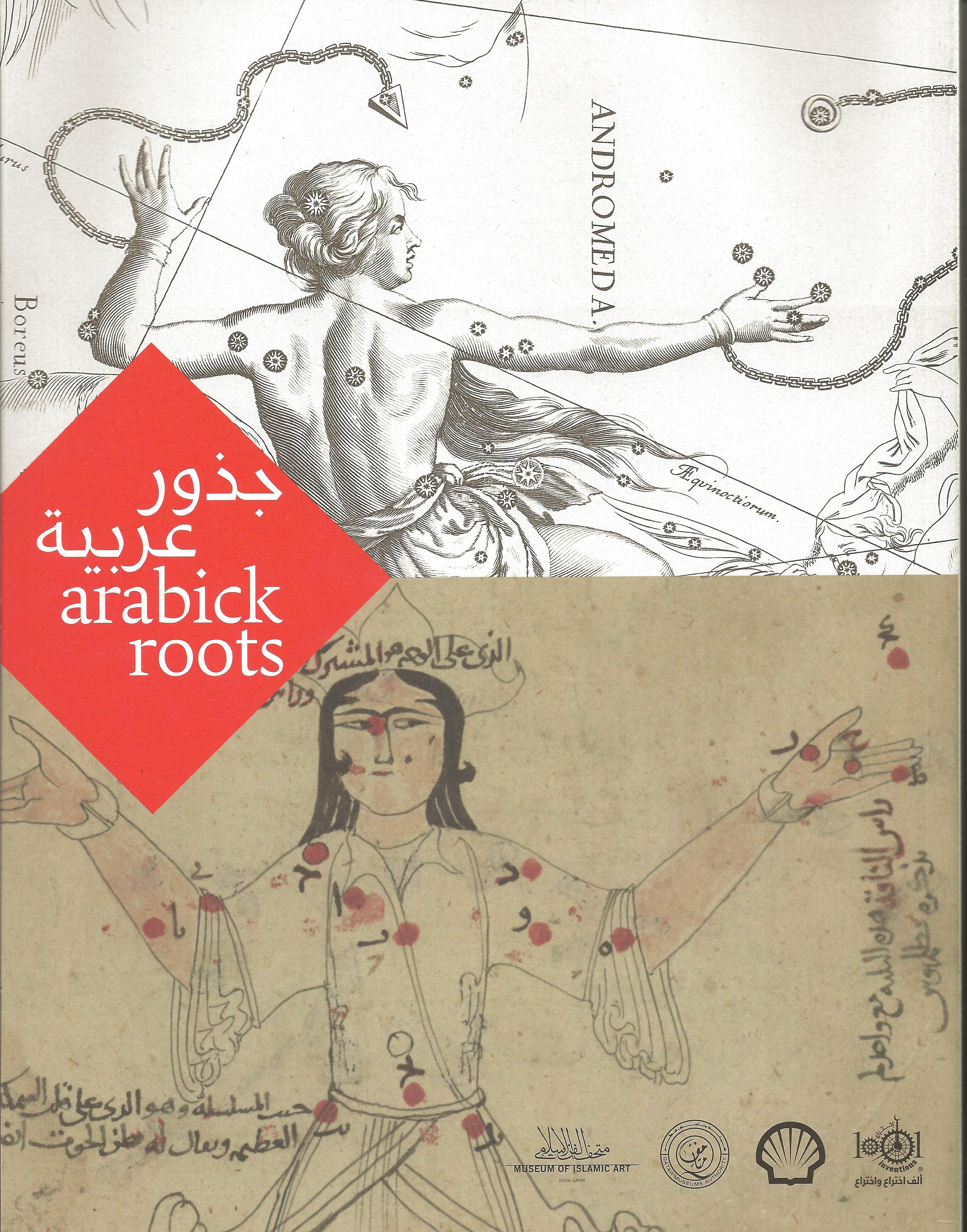
Arabick Roots catalog from Islamic Museum Doha Qatar curator Dr. Rim Turkmani

The Islamic Museum in Doha recently held an exhibit called Arabick Roots.  While Europe was in its long medieval age, the Muslim “Golden Age” was from the 8th to the 16th century.   Much has been written about Europe’s 17th century Renaissance, the enlightened period where new philosophy relied on mathematical demonstration, proof and experimentation.  But Muslim science, medicine and culture’s influence on the West in the 17th and 18th centuries has not been highlighted extensively.

In the 17th century, Arabick meant languages written in Arabic letters such as Arabic, Persian and Ottoman.  Books, ceramics, paintings, astronomical compasses, and more books, demonstrated Europe’s interest in the scholarship of Iran, Iraq, India, Turkey, Syria and Egypt.  Much of the knowledge was spread using the British Levant Company’s trade routes with the east.  European astronomer Edmond Halley, chemist Robert Boyle, and mathematician John Wallis all knew Arabic so they could translate the Arabic texts directly.

The following were my favorite insights from the exhibit.

The Persian, Al-Razi (died 925AD), a pioneer in many areas, was the first doctor to describe and write about measles and smallpox.  Smallpox inoculation was used in the east.  Cassem Aga introduced the Royal Society to the practice in 1728 .   Although smallpox was never eradicated, Al-Razi’s book was still being translated into English as late as 1947 (by Dr. Richard Mead).

One book, out of the 10th Century physician, Abul Qasim Khalaf ibn al-Abbas al-Zhrawi’s (Abulcasis) 30-volume, medical encyclopedia, was displayed.  It was translated into Latin in the 15th century and in high demand by 17th century physicians.

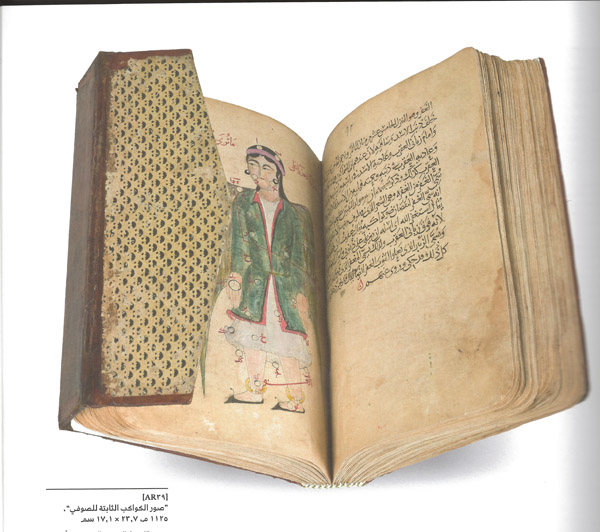
Fixed Stars in the Constellation, Islamic Museum Doha v2

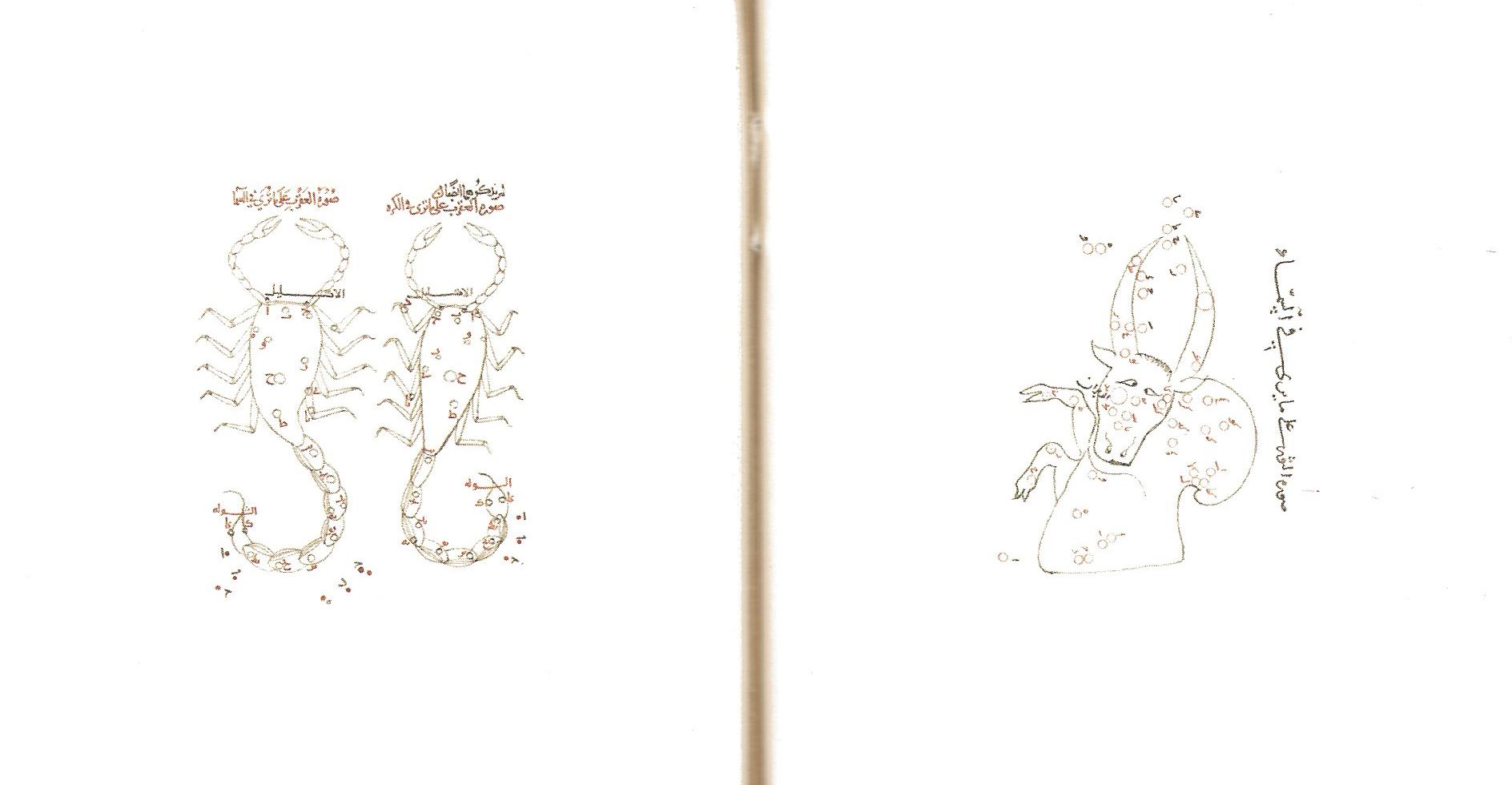
A copy of Abd al-Rahman al-Sufi’s 10th century star catalog, Forms of the Fixed Stars, was on display and compared to astronomer Johannes Hevelius’1690 constellation guide.

Al Sufi scorpio and taurus constellations

Lucky for me, the museum shop sold souvenirs with al-Sufi’s Taurus and Scorpio constellations drawings.

The Arabick exhibit pointed out something I did not read anywhere else on the internet.  Although al-Sufi  initially wrote Forms of the Fixed Stars, it was finished by his daughter, Arajoza Bint al-Sufi (Arajoza the daughter of al-Sufi), after his death.   That tidbit of information was pointed out by the exhibit’s curator, a woman, Dr. Rim Turkmani.

The Arabick exhibit was sponsored by Museum of Islamic Art and the Qatar Museum Authority, both are chaired by women.

To me, the exhibit not only emphasized the 17th century’s interest in Muslim science but it demonstrated that Muslim women have much to contribute in the areas of science and culture.  I thought making these points were good steps towards new beginnings.

Post Script.

I told my friend who used to live in Qatar about this post and asked whether she agreed it was a positive step.

She said, “I have a friend who still lives in Qatar.  She told me the other day that someone decided all perfumes with alcohol should be banned.  Can you imagine?  Only Arabic perfume will be left.  All the Dior perfumes those same, rich Qatari women buy will not be available now.  It will all be become black market.”

Perfume kiosk at Qatar Duty Free highlighting upcoming Chinese New Year of the snake

“But you can buy it in Duty Free.”

“Only on the way out of Qatar.  When you come back, that perfume becomes illegal.”

Okay – you can have the museum, but we’ll take your perfume.

Previous Older Entries Next Newer Entries

Archives

Tales by Chapter