Getting Ready for the New Chapter

November 14th will be the start of the new Islamic year; January 1st for the West; the Chinese Year of the Snake in February; but September 1st is the first day of my new year.

The end of summer vacation signals the final chapter of a yearlong story.

September begins with a week-long adjustment to the eleven hour time difference.  Between naps, suitcases are unpacked, name tags ironed into new uniforms, emails are returned, the annual closet cleaning takes place and, if I am lucky, the mess on my desk disappears.

Among the books and papers, a copy of SAYIDATY, Saudi Arabia’s Vogue equivalent, lay buried.

Thumbing through the pages, I remembered reading the magazine back in the summer of 2008.  As I poured over the celebrities and fashion exposes, I noticed EVERYONE was wearing leggings.  Even Dior’s Barbie-doll models wore them on the runways.

Silly me – for a moment I forgot where I was.
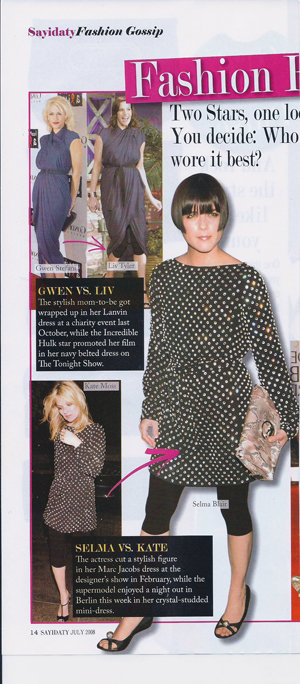
The women were not wearing leggings; the editors were self-censoring and had photoshopped the offending appendages, covering them in black.

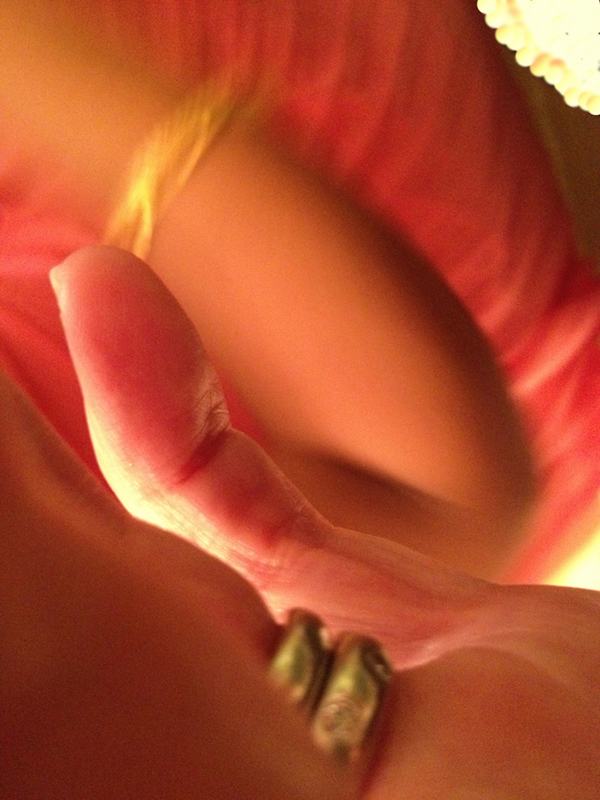
What a change.  “Before”, every magazine that arrived in the kingdom was reviewed by a legion of men with black markers.  Photos of women used to look like this:

Or the page was completely ripped out.
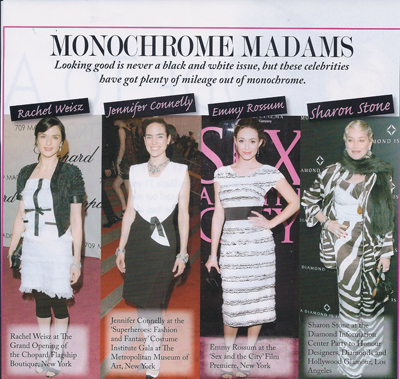
The fact that photos of women with “leggings” and bare arms are allowed is progress.

Shway, shway – slowly, slowly – as we say.

Today I prayed “Please God, Continue to Bless Abdullah bin Abdulaziz al Saud, Custodian of the Two Holy Mosques, with good health and wise leadership.”
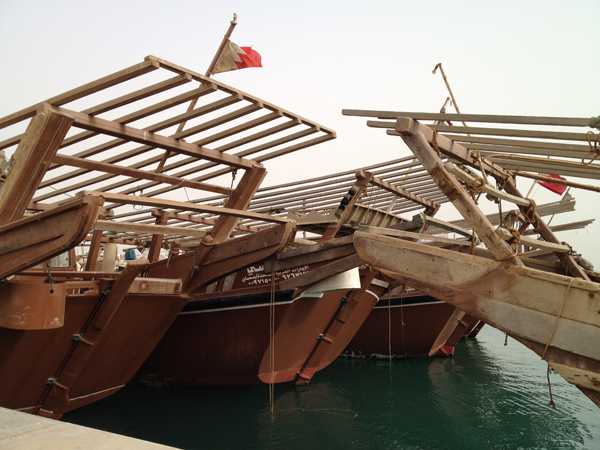
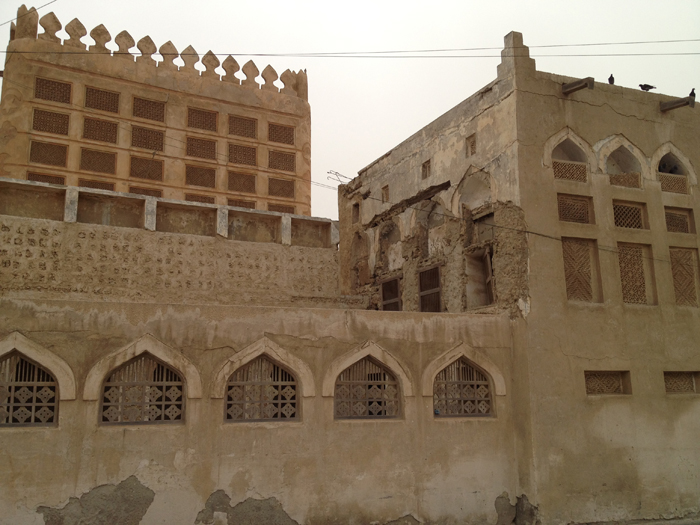
The Old Kangaroo Route

“I’m forwarding my Bahrain tourism article published in The Australian today,” the former Bahrain-resident and ancient history scholar wrote to me.

Deborah Hope’s The Keys to the Kingdom  highlights why a Middle East Tourist should follow the the Kassite kings’ and Hormuz Princes’ examples and take at least two days to stop in Bahrain.

While Deborah lived here, she not only studied the ancient archeological sites at Sar and Barbar but she was part of the team who wrote Bahrain’s application to UNESCO for its “Pearling Heritage” in Muharraq.

On Saturday, the same day the article was published, Sheikha Mai was in St. Petersburg for the UNESCO announcement that Bahrain’s Pearling Heritage corridor had been added to the World Heritage List.

The irony was I read Deborah’s article on my Iphone while sitting in my car.

I was stuck for an hour and a half in a huge traffic jam as the blue-flashing lights of the police and civil defense vehicles maneuvered through cars to put out the fire set across the freeway.  Much of the delay was caused by drivers who tried to push their way to the front by driving on the shoulder, leaving no space at all for the emergency vehicles.

Deborah did mention that during the evenings a visitor would be wise to avoid Budaiya Highway as it is the area where many demonstrations take place.    I will add that the last week around 8pm the Northwest area of the island, after the Yum-Yum Tree Roundabout in Mahooz and just after the Geant/Seef Mall area just before Karranah, was plagued with fires across the highways.

At least they follow a schedule.

A big Shout-Out to these Queens of Bahraini History, Architecture and Culture for their hard work.  With time, the positive voices will drown out the negative ones.

Salmon Fishing In The Yemen

When I mentioned the movie Salmon Fishing in the Yemen at dinner last night, three people piped up that they had read the book by Paul Torday.

The premise of salmon fishing in the desert made everyone ask, “is this a true story?”

Almost any story about bringing water thus life to the desert seems to be preposterous.  But did you know in the Egyptian desert are whale fossils with legs?  Have you read there are signs that Sahel, a semi-desert zone along the Sahara, is becoming green?

Tim Mackintosh-Smith, the British writer and Yemen expert, wrote in his review that twenty years ago he came upon a man fishing with a pole and a string in a wadi.  Like this man, he said Torday’s book is about the belief in the impossible and belief itself.

The Arabian Peninsula is a land guided by faith.  Every year HRH King Abdullah, Keeper of the Holy Mosque, and his men perform their Islamic rain dance.

While growing up in Saudi Arabia, my step-father told us they were discussing the idea of towing an iceberg from Antarctica across the Indian Ocean into the Arabian Gulf.  Granted half of it would melt, but if the iceberg was large enough ….

There was also an idea for a kind of desert terrarium that people could live in.  The ideas never materialized but simply knowing these ideas existed made me believe the movie’s premise that desert sheikhs will try impossible things.

Actor Ewan McGregor plays the British fisheries-expert who is hired by the Yemeni-Sheikh to figure out how to populate the Yemen with British salmon.  As it turns out the very, very, VERY rich Sheikh loves fly fishing in which he finds many metaphysical lessons.

As soon as I saw McGregor I fell under the movie’s spell.  For I remembered him as the young Albert Finney in the movie Big Fish, the story of son who discovers the people in his father’s “tall-tale” life were real.  And whose father believed that all myths and legends stem from some truth.  How that truth is interpreted by future generations depends on the stories men craft around it.

If you would like to see a movie about possibilities that pokes fun at politics and has romance, I suggest Salmon Fishing in the Yemen.  In Bahrain, it is currently playing at City Center.

Camel Caravan on Block 338

فأكل الجمل وعلى كل ما قامت.

He ate the camel and all that carried.

 To eat someone out of house and home.

– From the delightful Apricots Tomorrow by Primrose Arnander and Ashkhain Skipwith

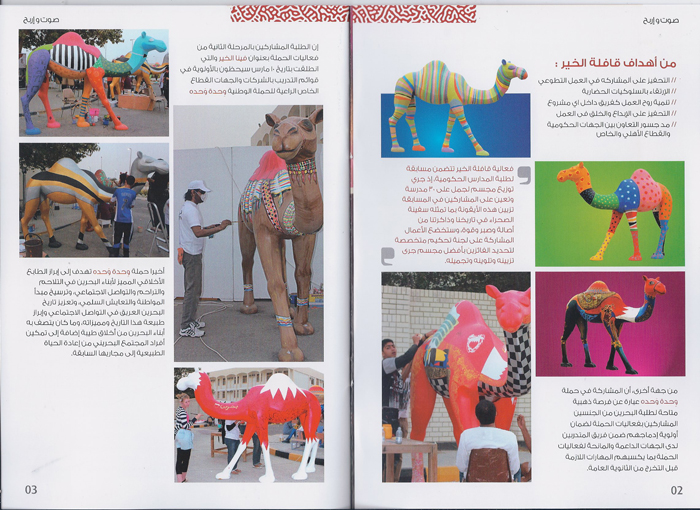
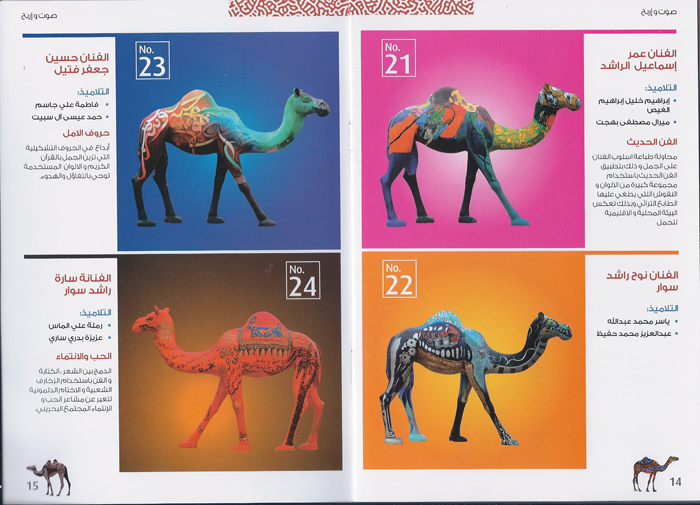
To compete with the donkeys and elephants in Washington DC and the Arabian horses of Dubai, Bahrain has created a caravan of camels to enliven Block 338 and the Seef Mall Entrance.

In a bid to encourage the local artists’ paints to beautify the community, the government sponsored a camel painting contest.  Personally I liked number 23.

If you have always wanted a camel but were put off by having to feed it, then these are the camels for you.  They are up for auction.

Although real Bedouins will wonder what is the use of such a camel, for the city dweller, they are a perfect reminder of their ancestral past.

Tonight – Colours of Light Poetry Festival


7:30 tonight the Poetry Festival takes place at the Bahrain Fort Museum.

Many of the poets who contributed to My Beautiful Bahrain and others who did not will be presenting their original poetry in both English and Arabic.

Directed by David Hollywood this promises to be in interesting evening.

Admission is Free.

The Colours of Life – Poetry Festival

When we say, “Let’s hear from you,” she advances to us

chanting fluently, her glance languid, in effortless song.”

– final verse from “The Ode of Tarafah” by Tarah ibn al-Abd

Bahrain’s earliest recorded poet was Tarafah ibn al ‘Abd born in 549AD.  But to simply call him a Bahraini poet belies his importance.  He was one of the seven Mu‘allaqāt, or the Hanging Ones, poets whose words were so highly prized they were written in gold onto Coptic linen and suspended over the Ka’ba in Mecca.

Bahrain’s sweet and salty sea, fishing dhows, pirates and pearls did not provide enough inspiration for Tarafah.  He left the island to roam the desert and write.    Although he did not travel as extensively as Ibn Battuta, he managed to journey through the Arabian Peninsula to Hira, in modern-day Iraq.    His poetic abilities preceded him but his uncourtly manners and satirical verses about King Amr ultimately led to his chosen execution – being filled with wine then bled to death.

Fifteen hundred years later, modern Bahraini poetry is attributed to Shaikh Ebrahim bin Mohammed Al Khalifa (1850-1933) for whom the Center for Culture and Research is named after.  An advocate for formal education including for women, Shaikh Mohammed bin Isa Al Khalifa (1876-1964) known as Al Waeli’s poetry had the greatest influence on the progressive movement.  Contemporary poetry grew with the founding of the Bahrain Writers Association in 1969 and with the “70s” and “90s”, poets who emerged in the 1970s and the 1990s.

It is quite an honor for the Second Circle, a poetry group guided by David Hollywood, to be invited by the Ministry of Culture to perform their poetry at Qal’at al-Bahrain (the Bahrain Fort) on the shore of the Arabian Gulf

The Colour of Light Festival will take place this summer solstice, Thursday, June 21st at 7:30pm.  The event is free and open to the public.

Part of the 2012 Manama Arab Capital of Culture events, this poetry festival will feature the poets reading their original works in both Arabic and English.  It is not quite the equivalent of a Hanging One, but being invited to perform at a UNESCO World Heritage site is not such a bad stage to star on.

It was from this spot, the capital of ancient Delmun, the Sumerian verses for Enki the Water God said,

“Let the city of Delmun become the port

For the whole world.”

Signs of Change – Promises to Our Mother


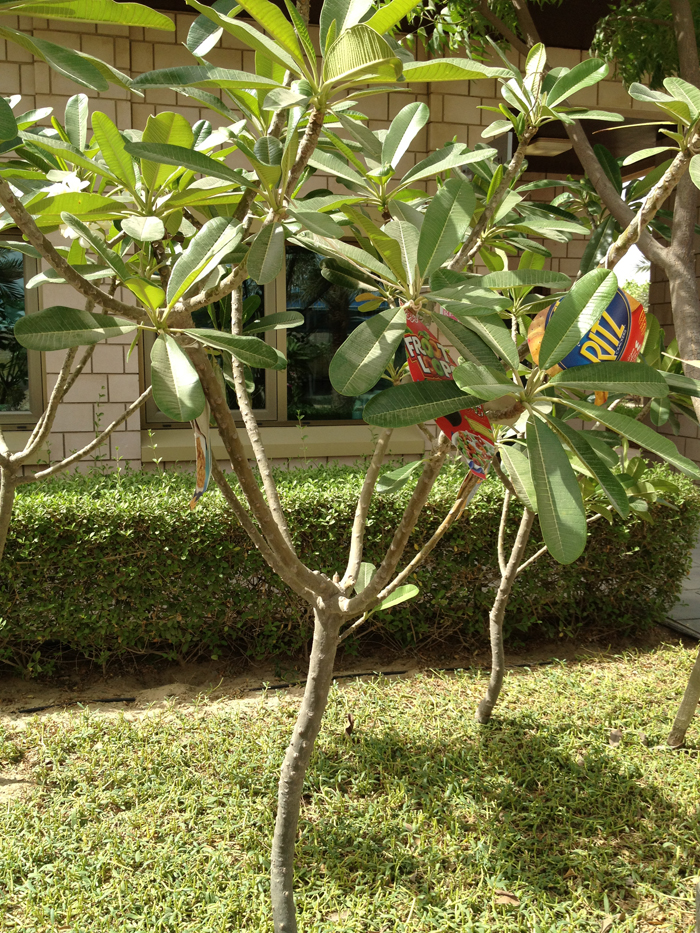
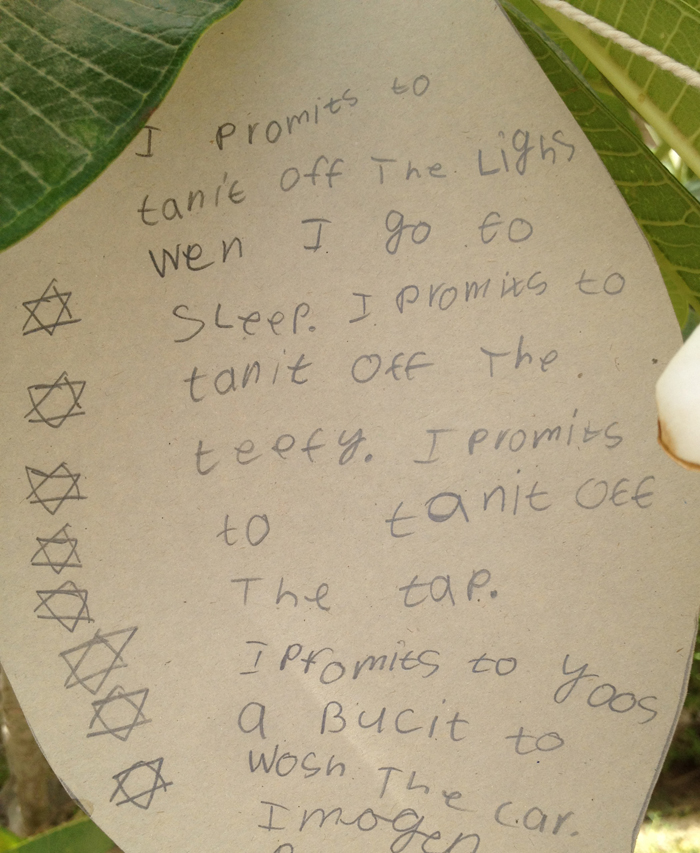
Walking out of St Christopher’s Art Exhibit I noticed a Ritz Cracker box hanging in the frangipani tree.


Carefully stepping on the ice plants, I leaned in for a closer look.  The cardboard were cut in the shapes of leaves.  On the blank side, children pledged to become more conscious consumers – although it was probably not taught to them using those words.


Teach the children so they will bring their lessons home.

There is still time to see the annual Student Art Exhibits at both the Junior School in Sar and the Senior School in Isa Town.

Previous Older Entries Next Newer Entries

Archives

Tales by Chapter