Married to a Bedouin

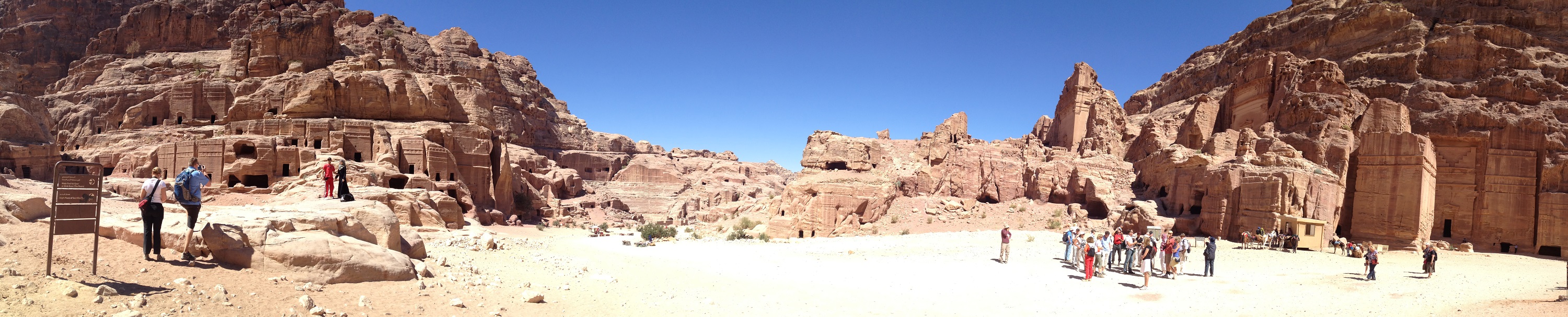
Petra streets and tombs jordan by eva the dragon 2013

Leaving the Treasury behind, we followed a young, Jordanian couple.  Wearing city attire, they looked like tourists, not Bedouin.

I assumed they were newly-married since the man could not stop taking pictures of the young woman wearing hijab.  At the amphitheater, we caught up with them.  They asked us to take their photo together, and we did, insisting that they do all sorts of fun poses.

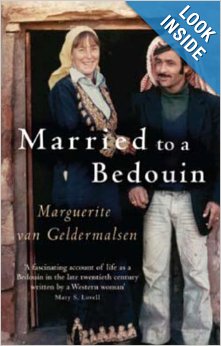
Across the street, I recognized the stall selling Marguerite’s book,  Married to a Bedouin.  A little higher than the road, it sat next to the WCs carved out of the red cliff.

Marguerite lived in Petra with her husband, Mohammed Abdallah Othman for twenty-four years.  After his death in 2002, she returned to Sydney where her family lived.  At the end of her book, she wrote,

I might go back and see if I can find a Petra I can live in without Mohammed…..Without Mohammed to hold me I am no longer married to a Bedouin and, despite all the things we have accumulated, I have become a nomad once again.

I pointed out the stall.  There, dressed in western clothes, was Marguerite!

We rushed towards her, gushing.

“We met you in Dubai.”

“We loved your presentation.”

“I’ve been reading your book.”

“What are you doing here?  Where are your children?”

“Where was your cave?”

When Marguerite smiled her gold tooth, a present from her father-in-law, gleamed.

Time healed her broken heart, and, once again, she found herself living with the Bdouls near Petra.  Her children were grown with families of their own.  No longer a nurse, she was a published author and “doing something fun” – creating jewelry.  Inspired by the Nabataen carvings, local women smithed the silver jewelry.  The Amarat Jewelry Workshop helped support eleven families.

As much as we wanted to talk, Marguerite was busy.  She only had seconds to entice the dusty, hot tourists walking by to either purchase a book or some earrings.  As we stood there, a Mexican, then a Greek tour group huddled around her stall as she said a few words to them in their own language.

Happy to support a fellow adventurer, mother and writer, I purchased a charm – the out-lawed goddess, al-Uzza.
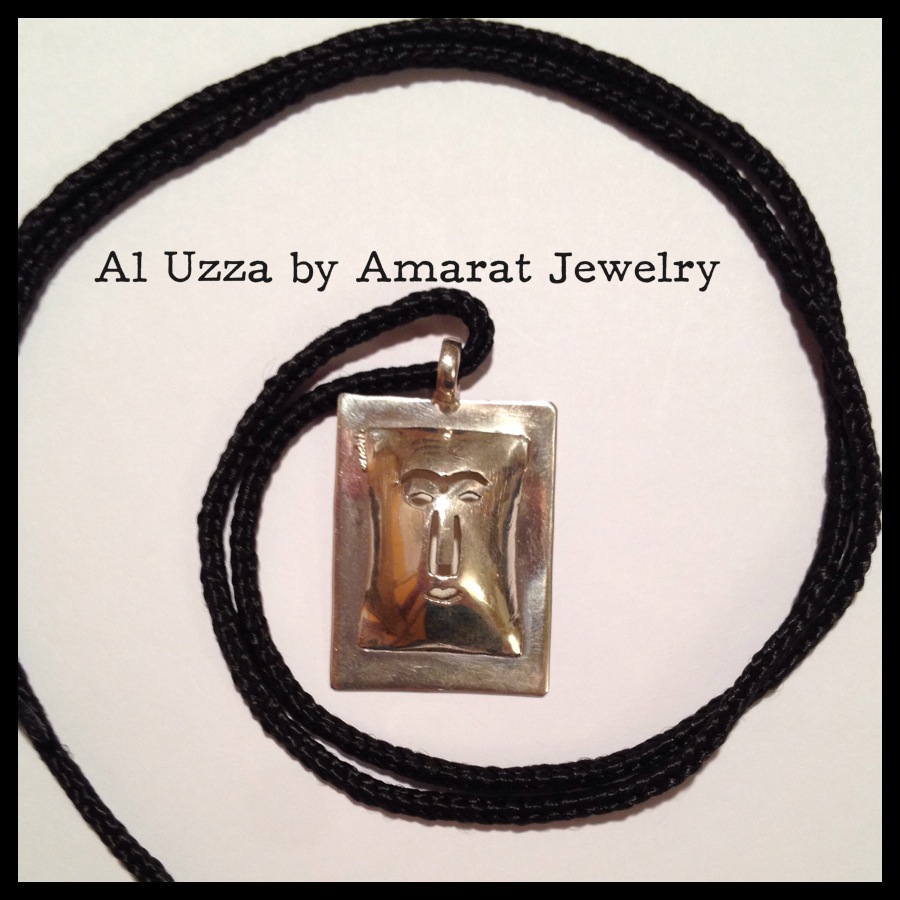
al uzza by amarat jewelry

Al-Uzza, “The Powerful One”, was part of the original, Arabian goddess triade.  Some archaeologists say she was the Nabataen equivalent to Aphrodite, but, according to Barbara Walker, she  was older than that.   Marguerite strung my Uzza on a black, braided cord.

When you go to Petra you will find either Marguerite or her handsome son tending the shop.  Like the other vendors, at night, they shuttered their stand and, guarded by The Powerful One, everything stays where they left it.

To be continued….
Plundering the Treasury

petra jordan siq entrance eva the dragon 2013 v2

Voices rumbled against the Siq’s walls.  Braying donkeys echoed through the canyon.  Camels honked and the din grew louder.

“What is going on?” Louise asked.

“We’re almost there.  Keep going.  Around the corner.”

Breaking into the sunlight, we found ourselves in a market square directly in front of the Treasury.

tourists around treasury at petra by eva the dragon 2013

Petra continues to be a thriving city.

Coffee shops and gift stalls surrounded small herds of donkeys and camels waiting to transport the weary.  Children and women peddled jewelry, scarves and souvenirs made in China.  Dirty boys walked around selling postcards.  Young men showcased their horse riding and rock climbing skills for the young women.  Even in its ruined state, the Treasury is magnificent and lively.  I easily imagined the Romans, Arabs, Egyptians and other foreigners converging and trading both goods and stories.

We snapped photos and enjoyed the scene.  However, it would have been nice to have a little distance from the hundreds of “other” tourists snapping photos.

Our plan was to be in Petra for the Wednesday night, candlelight tour to the Treasury.  When we inquired about the tour, the man behind the ticket counter told us, “It has been cancelled.”

“Why?  That is why we came today!  We are so disappointed.”

“I am sorry.  There has been trouble,” he informed us, giving us a look “if you only knew”.

Hmmm.  The Bedouin run Petra.  If there was “trouble”, it meant they were crossed.

Still, we were happy. It was a beautiful day.  There was a lot more to explore.

I sipped tea as Louise interrogated the security guards about the whereabouts of the elusive Marguerite.

To be continued…..

Follow the Brick Road to the Rose City

Starting at the Petra Visitor Center, Louise began asking me, “Is her shop here?”

The woman she was looking for was Marguerite van Geldermalsen.

married to a Bedouin

Louise was fascinated by Marguerite, a New Zealander who married Mohammed Othman, a Bedouin souvenir-seller from Petra.  She met him while on holiday.  After a whirlwind courtship, she moved into his cave where they lived for many years.  We met Marguerite in 2010 at the Dubai Literary Festival where she gave a talk on her memoir “Married to a Bedouin”.

During my previous visit to Petra I saw a stall selling her book.  But I did not think she lived there anymore.

“Do you see Marguerite’s stand?” Louise asked me for the second time as we entered the Siq.

“No, not yet.  We haven’t even entered the city yet.”

To most Westerners, Petra is the rose-colored Treasury featured in Raiders of the Lost Ark.  Every year thousands wander through the six-foot wide Siq to glimpse Petra’s most famous landmark.

To the two-thousand, local Bedouin, Petra is – or was – their home.  They literally lived in the caves the Nabataeans carved out of the sandstone over three thousand years ago.

Lived that was, until the 1980s when the Jordanian government declared Petra to be a national landmark.  In the nearby village, Umm Sayhoon, cement block apartments were built to move the cave-dwelling people out the “caves” and off the colonnade streets.  Today some caves are occupied by the poorest families while others have padlocked doors.

“I can just see Burckhardt riding his donkey through here hoping to find the lost city,” Louise mumbled as she imagined herself dressed as a Muslim holy man.  A travel writer she did her research before our trip.  Not only was she intrigued by TE Lawrence and Marguerite, but the Swiss-born, Jean Louis Burckhardt’s account of “discovering” Petra in 1812 had captured her interest.

siq sign petra jordan

Burckhardt kept his discovery of the Rose-red City secret because he was afraid Petra would be spoiled.  His journals were released after his death in 1817, and that was when the Victorian travelers, poets and archaeologists, including the famed painter, David Roberts, flocked to Petra.

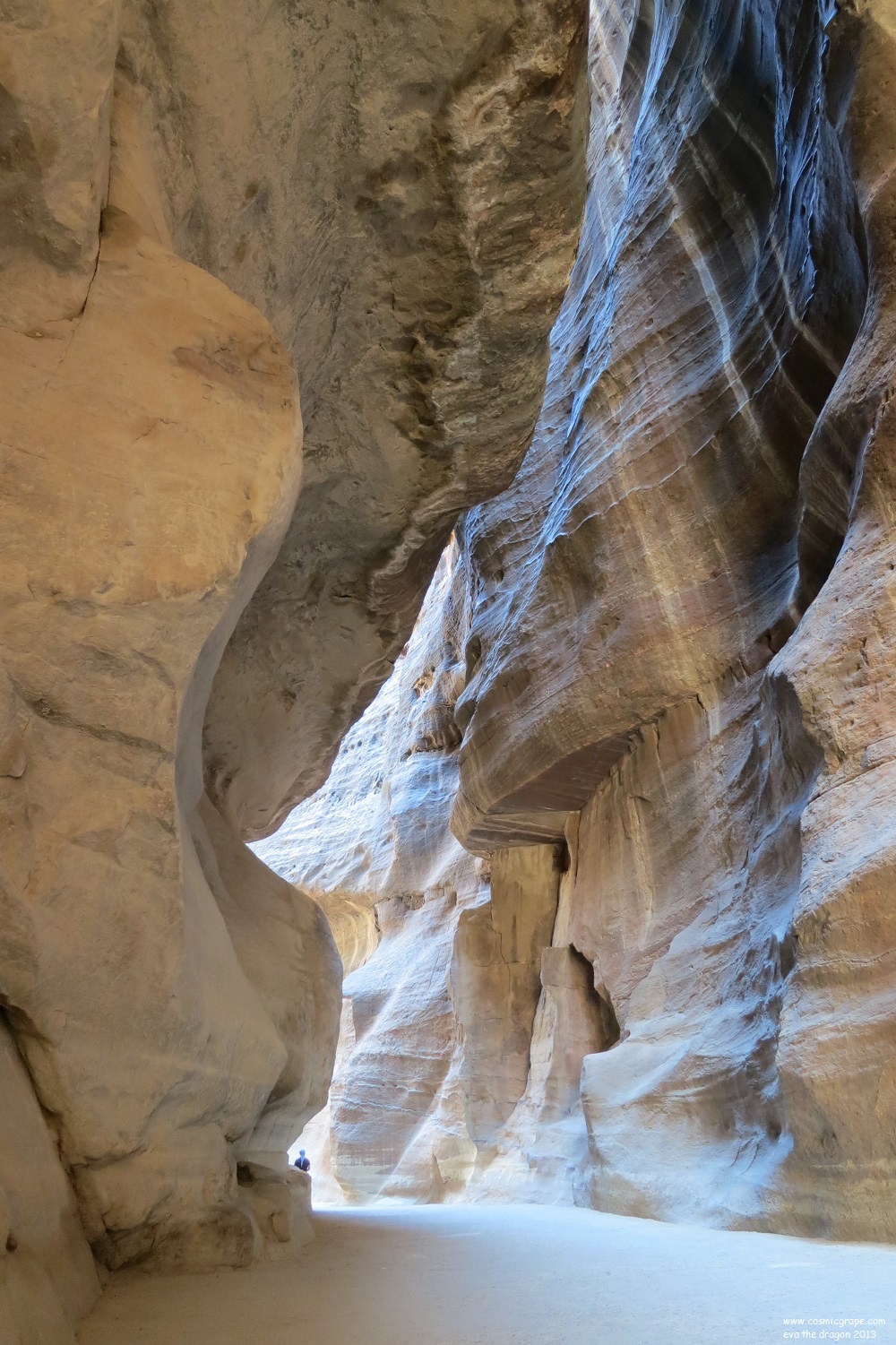
Walking through the Siq, a giant rock split apart by a tremendous earthquake, is to be transported back in time.  It is easy to imagine how impressed a desert traveler entering Petra would have been when they passed the channeled water ducts, the many shrines and the immense stone carvings of camel caravans.

As we studied the camel caravan, our American mates from the Mohammed Mutlak camp saw us and stopped to say hello.  They were in such a hurry to hike to the Monastery, had we not been there, they would have walked past the life-size, stone mural.

As we gazed at the ancient signposts, even the school children passed us.

“You want a ride.  It is included in your ticket,” the young horsemen asked us over and over.  They must have assumed we were tired since we walked so slow.

“No, thanks,” we shouted back.  “We’re allergic to horses.”

“Where are you from?”

“Bahrain,” we told them, but they did not believe us.

Without a horse and taking photos, our kilometer and a half walk took about two hours.

All along the way, Louise kept stopping the Bedouins to ask, “When Marguerite?”

To be continued……

ABOUT PETRA VISITOR CENTER

The Visitor Center has been revamped since my last trip in 2009.  The entrance is right outside the Movenpik Hotel.  Taxis congregate at the entrance.  Leaving the hotel, they asked if we needed a taxi. I was wondering where they would have taken us.

Entrance fees have doubled since 2009.  They are posted on the Petra National Trust website.  In 2013, it was for 50JD/day for one day, 55JD for 2 days and 60JD for three days.  If you did not arrive via the airport and pay for a visa, your entrance fee will include a 40JD addition.  Technically, at sunset Petra closes.

In 2009, we hired a guide who spoke perfect English and who happened to be a Petra archeologist.  Unfortunately I forgot his name but I learned so much from him.  Because of my experience, we did not hire a guide from the Visitor Center but there are many available who speak multiple languages.  I linked to Frommer’s website as I agree with what is written there.  We did not hire a horse drawn carriage, but the men told us it is included in the ticket price – perhaps that is why they tickets prices have increased.  However, if you take a horse down to the Treasury you miss exploring sites along the way.

Well – Lawrence Rode Camels

While eating our lunch in the shade of the rocks scrawled with Nabataean graffiti, we watched a camel caravan of expats cross the desert in front of us.

“We should have hired camels for the day,” Louise said wistfully.  “How can we come to the desert and not ride a camel?”

There were several reasons that came to my mind, and none of them had to do with desert romance.

After lunch, we hauled ourselves into the back of the pick-up truck.  Our enthusiasm was dampened after hours slogging through sand.  We declined Abdullah’s invitation to roll down the giant red sand dune and encouraged him to continue onward.  He pulled up next to another canyon.

“You will find more Nabataean drawings.”  He pointed to mountain.  “I wait here,” he said settling under a tent.

We walked down a small dune.  At the canyon entrance, a Bedouin was having lunch with his tourists and four camels.  Louise marched up to him.

“How much for ride?”

“Three JD.”

“Three? That’s ridiculous.  Two,” she bargained.  The Bedouin nor Louise budged.  We continued camel-less into the crevasse.

After taking photos of petroglyphs of men and women holding hands, Louise and I stopped for camel photo opportunities.

“I must ride a camel,” she insisted pulling out twenty JD bill.  The Bedouin did not have change.

“Here,” I said opening my wallet.  “I have change.”  I figured it was the least I could do after all the photos she took of me.

Perched on the camel, Louise hummed the opening score from Lawrence of Arabia.  The night before we left, she watched the entire 216 minutes featuring the young, handsome Peter O’Toole.  Her eyes looked dreamy as the Bedouin took her on a 3JD journey to our waiting truck.  I followed like the lowly, servant girl.

At the top of the dune, I found Louise and her camel surrounded by television reporters.  It was Jordan TV.

When I walked up, the camera swiveled towards me.  The lead reporter said something in Arabic, and the cameraman said to me, “Take two” before he turned away.

The reporter shoved a microphone into Louise’s face.  She began an exposition on the beauty of Jordan’s desert.  The men were astonished by their luck at having found an English woman riding a camel.  Louise finished her soliloquy and sat smiling.  The reporter nodded and turned to the Bedouin guide and spoke to him in Arabic.

Then it became clear.

The Jordanian reporter and camera men did not speak a word of English.  The Wadi Rum Bedouin had to translate for the hotshot, film crew from Amman.  When they said “take two” and turned to me, I called our Bedouin, Abdullah, to stand with me.  The reporter pushed him away.

I sent greetings to King Abdullah and Queen Rania from the people in Bahrain and blabbed on about something.  I doubt it will be aired.  Unlike Louise with her bedu guide, camel, blond hair and diamond-studded, gold hiking shoes, “take two” lacked glamour.

Left in the sidelines, Abdullah informed us it was time to go.  We said good-bye leaving the men without enough footage.

At the truck, Abdullah told me, “Tomorrow I will go back for my interview.  I told them no cameras today.  I want to wear a nice thobe.”

“It is better,” I agreed.  “Your future wife might see you on television.  You want to look good.”

To be continued…..

ABOUT TOURING WADI RUM

You can hike Wadi Rum, take a camel tour or a drive around in a truck.   We did not price the camels or walking.

The 7-hour, driving tour of all the key Wadi Rum sites cost 80JD for the three of us.  It included a sack lunch and water.

Along the way enterprising Bedouins have set up tent shops that serve tea.  Your guide will likely stop there for a drink.  He will also prefer to rest at lunch although we pressured ours to carry on. However, it is smart to be like the Bedouin and find shade in the hottest hours between 1-3pm.

HINT: If you are allergic to dust, take antihistamine in the morning and/or bring a scarf to cover your face. By the end of the day the fine red dust is in your nose and clothes.  I could not stop sneezing.

If you hike, then you must get up early to avoid the heat of the day.  Our camp mates told us the big bridge was a scramble not a hike and took two and a half hours.

In Bahrain, You Can’t See the Universe

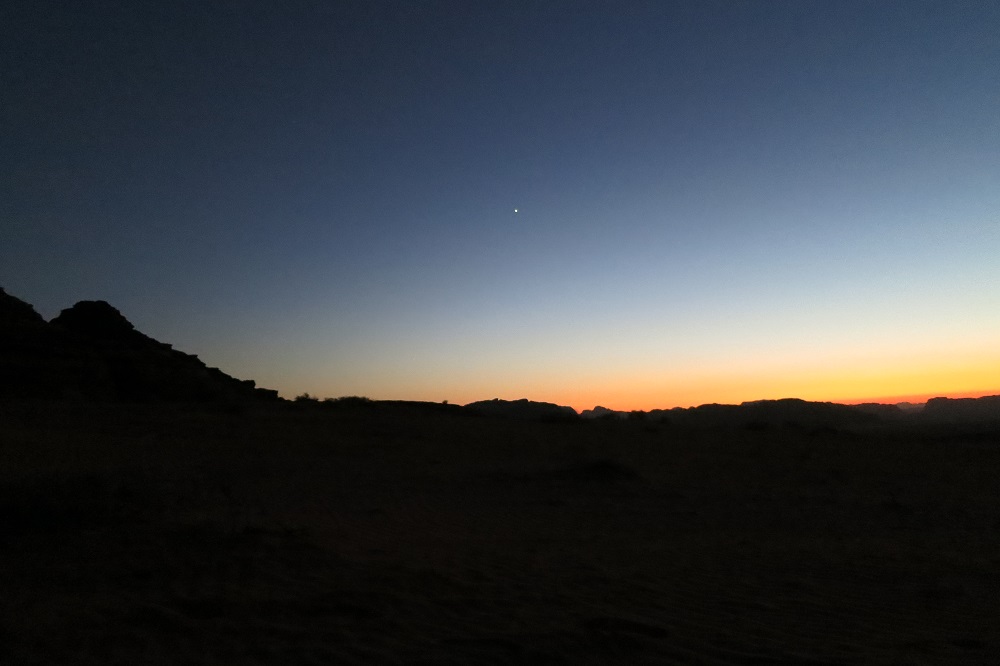
Sunset wadi rum by eva the dragon oct 2013

After our Arabic dinner in the tent, we skipped sitting around the campfire to look at the stars.

In Bahrain, it is difficult to grasp the Universe’s enormity.  Only the moon and a handful of the brightest stars shine through the light and air pollution.  We lie under a cover of orange haze.

In Wadi Rum, lying on our backs, the night sky was both a sheltering blanket and an awesome demonstration of our potential for limitless expansion.

The desert cooled and the wind kicked up.

Nearly dark wadi rum jordan by eva the dragon october 2013

After four shooting stars and a full day of land and air travel, we retired to bed.

In my warm bed, I closed my eyes.

I listened for the sounds of footsteps on the gravel, pots clanging, dogs barking and kids playing music.  There was nothing.

I listened for the wind whistling through the shrubs, voices carried from the village and animals scurrying.  There was nothing.

I listened harder.

My ears searched for a vibration to hang on.  There was only silence.

As the silence spread over me, my senses adjusted.  My eyes quit trying to focus. My ears slackened.  My skin absorbed the stillness.  My whole being relaxed.  Until, finally, I was only aware of my heart beating.

For hours I rested in that profound stillness.

And I realized our limitless potential for Peace.

On to Aqaba

On to Aqaba south on the desert highway

Inspired by Peter O’Toole’s portrayal of Lawrence of Arabia, “On to Aqaba” became our cry as we headed south on the Desert Highway.

WAdi rum rest house v2

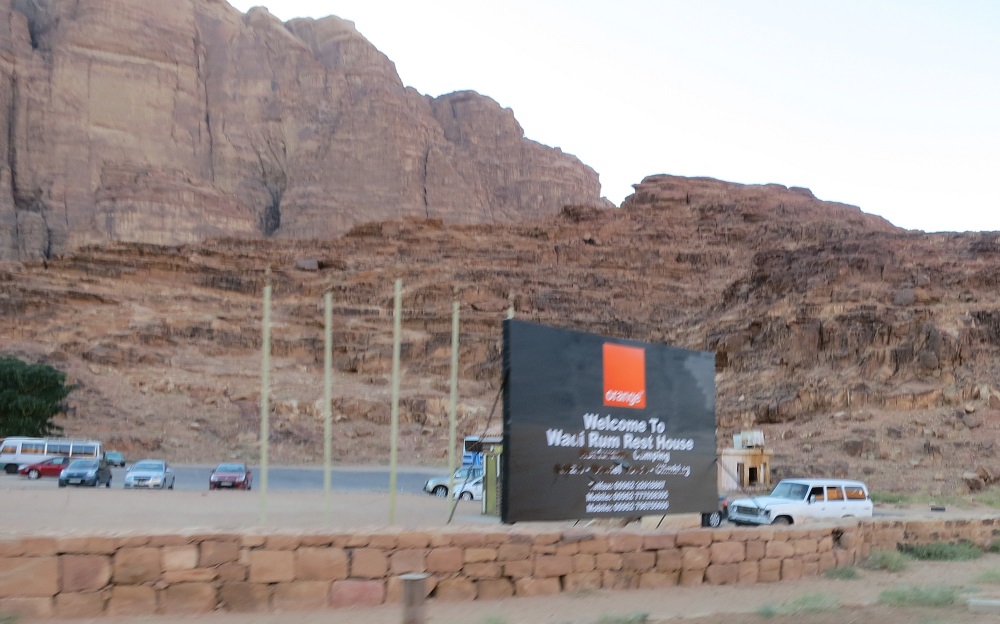
After parking our SUV at the Wadi Rum Village Rest House, a young Arab pulled up behind us.

“Mohammed Mutlak camp?” he inquired.  “Welcome,” he said pointing to the back of his Toyota pick-up.  “Please get in.”

The padded seats did not look too comfortable to me.

“Why don’t I drive my car,” I suggested.

Abdullah shrugged, “If you want but you will miss breathing the fresh desert air.”  He waved his hand in the air.

“I think I should drive,” I told my waiting friends.

“Thelma,” my friend counseled, “They do this all the time.”

I relented, and we hefted our luggage into the back of the truck.

As Abdullah sped through the deep, red sand, our hair was mussed.  Our noses were filled with pink dust.  Dogs chased us.  Our teeth rattled.  Still, it was better that I had not attempted to drive.

We officially arrived at our camp just before the sun set.  We had enough time to do some yoga before cracking open a bottle of white wine and toasting our driver and our lovely camp.

To be continued……

ABOUT MOHAMMED MUTLAK CAMP

Mohammed Mutlak Camp is found in the southern-most tip of Wadi Rum.  It is a lovely camp.  You can contact them via email or call Mohammed directly at 00 962 7 7721 5675.  My review is on TripAdvisor.

ABOUT ARRIVING IN WADI RUM

Driving south on the Desert Highway, just past the town Ar-Rashdiyya, (past Ma’an) there is a big petrol station on the left.  You pass it and the road to Wadi Rum, then make a U-turn.  You turn right (east) onto the Rum road.  It is about 12 kilometers to the Wadi Rum Visitor Center.

There you will be greeted by a hoard of young Arab men offering taxi rides or camps.  If you have made reservations, one of them will announce himself as the Mohammed Mutlak representative.  You pay him the entrance fee to the reserve.  20JD for a four-wheel drive and 5JD per person.  Do not despair, there does not appear to be any “official” manning the ticket counter at the center.  Wadi Rum is run by the Bedouin.  They all know each other.

He will direct you to drive to the Wadi Rum village and to park at the Wadi Rum Rest House.  There someone else will pick you up.

ABOUT WINE IN JORDAN

Jordanians grew grapes and make wine.  However, the only places I have noticed wine or alcohol for sale is at the airport or in higher-end hotels.  We bought our own bottles at Bahrain Duty Free and carried them on the plane, car and camel as we traveled.

Jordan – The Holy Land Museum

view of holy land from mount nebo jordan by Eva the dragon

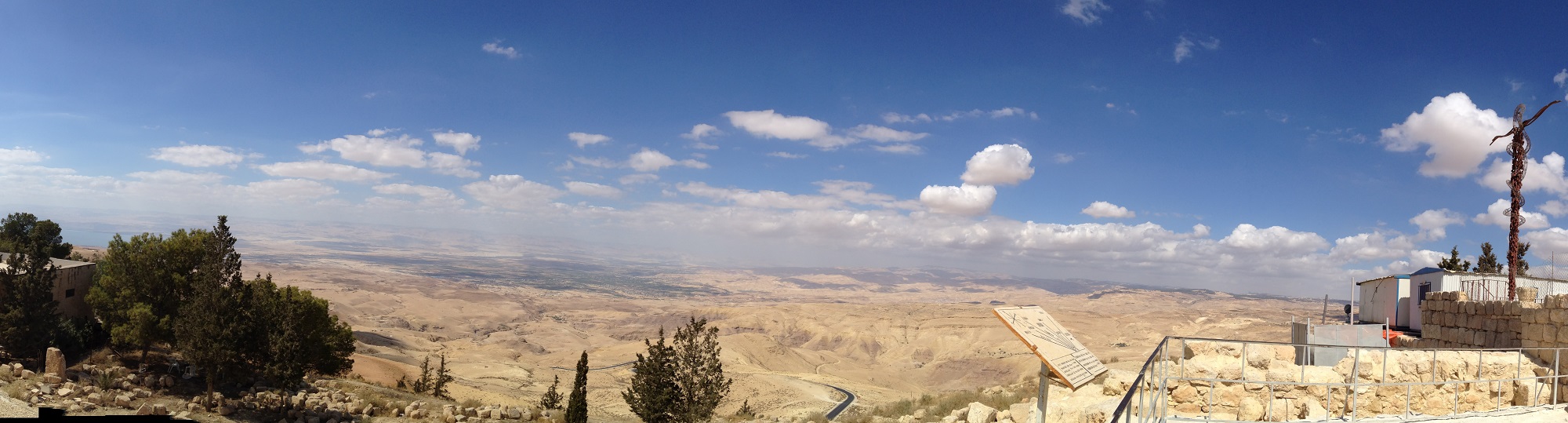
“If you put a fence around Jordan, it would be the world’s largest museum,” the archaeologist told me.

Most Westerners visit the Holy Land by flying into Israel to see Jerusalem and, perhaps, Bethlehem.  Jerusalem is important, and Bethlehem is central for the Christians, but if you want to travel the Old Testament, then Jordan is the place to go.

national geographic human migration-990_32314_600x450

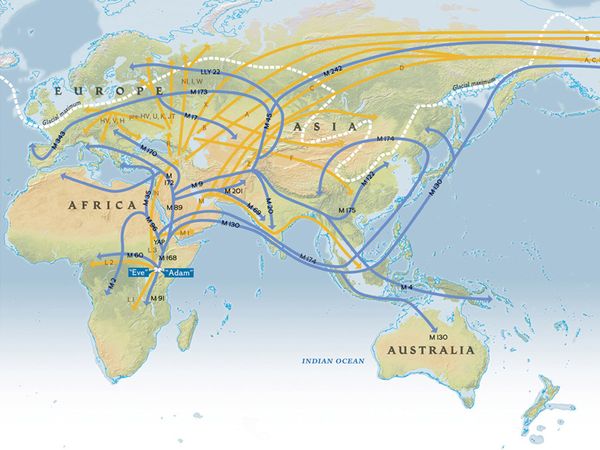
According to National Geographic’s Genographic Study, about 50,000 years ago, a large “second” migration out of Africa occurred. These became the first, large settlements in the Fertile Crescent.

Biblical map of Jordan king's highway petra

Modern Jordan is smack dab in the middle of recorded, human history.  Jericho, located on the other side of the Jordan River in occupied Palestine, is considered to be the oldest city on Earth.  But the ancient Nabataean city of Petra, inhabited by Bdouls, has been dated to the same era – 9000 BC.

From 9000 BC onward, Jordan houses remains from every era.

Copper Age (4500-3000 BC)

  • Copper mines are found at the Dana Reserve.

Bronze Age (3300-1200 BC)

  • Egypt’s influence is noted in pottery and jewelry.
  • Canaanites in the Jordan Valley were first mentioned in Genesis 9:22 when Noah cursed his son Ham, the father of Canaan.
  • Abram and his brother Lot, Genesis 11:21, split up.  In Genesis 13:10, Lot choose to move to Jordan to live among the wicked Sodomites.
  • 2300 BC Sodom and Gomorrah destroyed.  Lot and his daughters found a cave to live.  The cave is along the Dead Sea Highway (Highway 65), a bit south of the Dead Sea.

Iron Age (1200-330 BC)

  • Starting with Numbers 21:31, the Old Testament included stories about the three kingdoms of the dreaded poly-theists: the Edomites in the south, the Moabites and the Ammonites.  They occupied the eastern desert of Jordan.
  • These Old Testament tribes occupied Umm Al-Rasas, Theban, Ma’in and Arnon in Jordan.
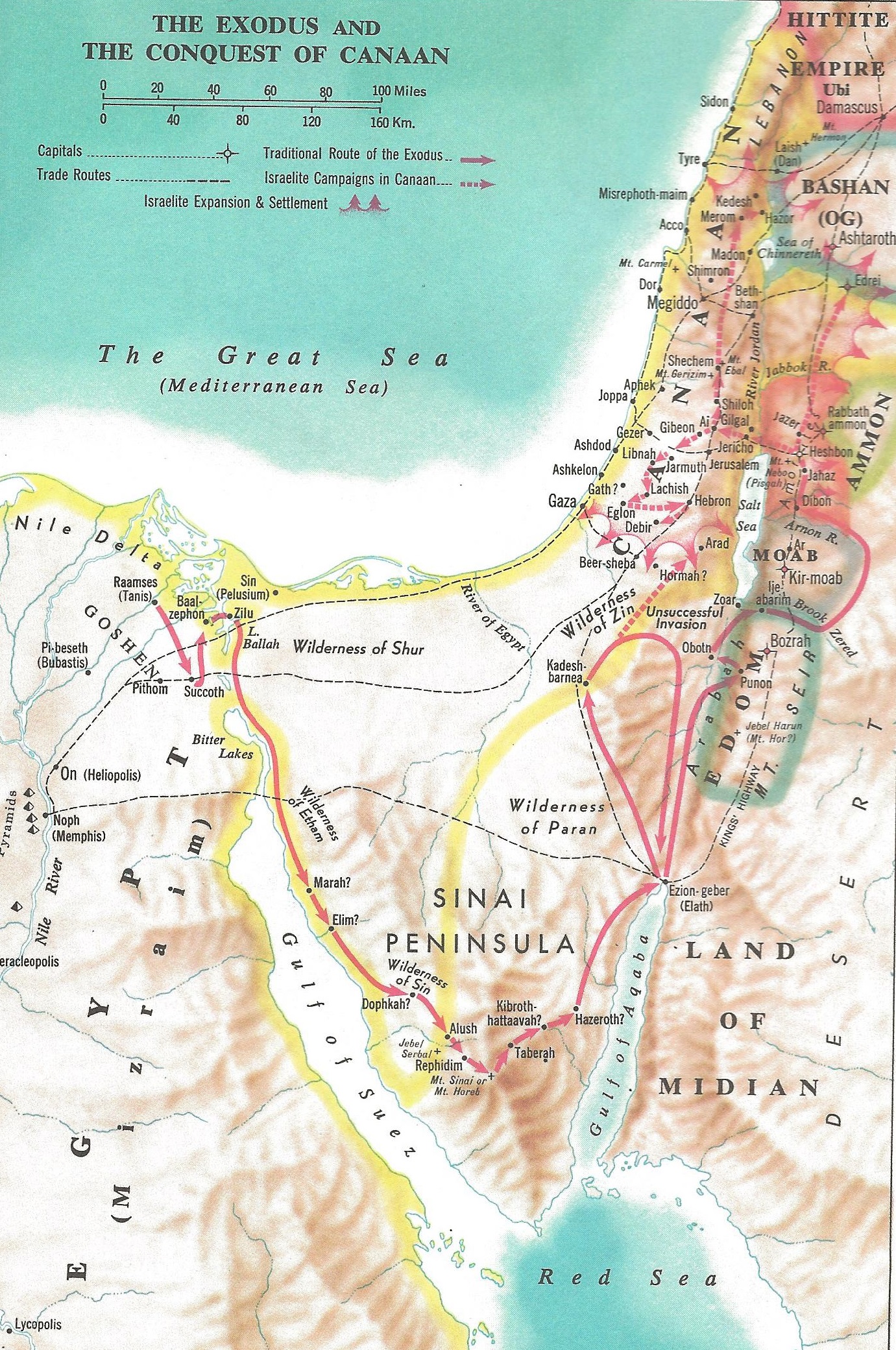
  • It was the Edomites who blocked Moses and the Israelites.  To get north, they resorted to the mountains along a road which for millennia has been called the King’s Highway.  You can still drive the King’s Highway today.
  • When Moses finally made it north, Deutoromony 34:1 says Moses went to Mount Nebo in Jordan where God showed him the Promised Land.  At the foot of Mount Nebo is Moses’ spring where he is reputed to have opened a rock for his people.

850 BC Israelite Empire was defeated by the Moab king named Mesha.

  • Numbers 32:38 talks about King Mesha who lived in Ma’in, Jordan.
  • The Moabites worshiped Baal Maon which means God of Water and Asherah whom the ancient Sumerians called the Great Goddess.

333 BC Alexander the Great stormed through northern Jordan which became part of the largest empire ever seen.  After his death, Ptolemy I became the ruler and Greek became the common language.

  • During the time of Jesus the Christ, southern Jordan was controlled by the Nabataeans from their capital in Petra.
  • On top of Machaerus, aka Mukawir, is Herod Antipas’ castle.  Here is where Herod imprisoned then beheaded John the Baptist as Salome requested.
  • The Greek Orthodox Church in Madaba has a 6th century map depicting the entire Holy Land.
  • St. John the Baptist Church in Madaba is dedicated to Saint John and a running well dated to the Moabite era.

64 BC Rome conquered Syria.  The Romans began looking south towards the Nabataean capital, Petra, and its wealthy trade routes.

  • 106AD Emperor Trajan finally annexed the Nabataeans and renamed the province Arabia Petraea making Petra its capital.
  • The Roman city of Jerash, north of Amman, is the best preserved Roman city in the world – better even than Rome.

324 AD Byzantine Emperor Constantine made Christianity the official faith of the Roman Empire.

  • At Bethany on the Jordan, a church has been excavated marking the place where Jesus was baptized.
  • Old temples were transformed into Byzantine churches.  These original churches can be seen in Madaba, Umm ar-Rasas and Petra.

632 AD Prophet Mohammed’s death.  His followers began expanding north out of the Arabian desert.

  • 629 AD Islamists lost first battle against Byzantine army near Karak castle.
  • 636 AD Islamists won Battle of Yarmouk.  638 Jerusalem fell. 640 Syria was taken.  Islam became the dominate religion and Arabic replaced Greek as lingua franca.

661-750 AD Umayyad Dynasty.  During this time the Umayyad Mosque in Damascus and Dome of the Rock in Jerusalem were built.

  • Desert castles were built in Jordan: Qasayr Amra in 711AD and Qasr Kharana 710 AD.

700 AD the Holy Wars between the Christian and Islamic armies started. 1099 Christians took Jerusalem. 1187 Islamists took Jerusalem. 1517 Ottoman Turks took Jerusalem.

  • In Jordan, you can see the Qala’at ar-Rabad at Ajlun and the Crusader Castles at Karak, Petra and on the Pharaoh’s Island offshore of Aqaba.

WWI the Ottoman Turks and Germans fought against the Egyptian-based British in Jordan’s southern desert.

  • The Hejaz railway bombed by TE Lawrence, Lawrence of Arabia, and the Arab Revolt is still in existence.
  • In Wadi Rum’s desert, there is a house and a spring both attributed to “Lawrence”.
  • Further south, Lawrence stayed at both the Aqaba Fort and the Azraq Fort.

There was no way we could cover all of Jordan in five days and enjoy the trip.

the monastery by david roberts petra jordan

Instead we focused on the romance of TE Lawrence’s Arabia in Wadi Rum, the Rose-colored city Petra that David Roberts painted, and the easy to reach, high-points in Christian history – Mount Nebo, Bethany by the Jordan, the Dead Sea and Madaba.

ABOUT BOOKS ON JORDAN

Lonely Planet’s Jordan is the book I rely on and carry with me.

My friend Louise also found Jordan: Past and Present published by Vision Roma in Petra.  This is a super fun book which helps you envision the old ruins as they looked in the past.

Previous Older Entries Next Newer Entries

Archives

Tales by Chapter