Touring Oman: Third Stop Nizwa Fort

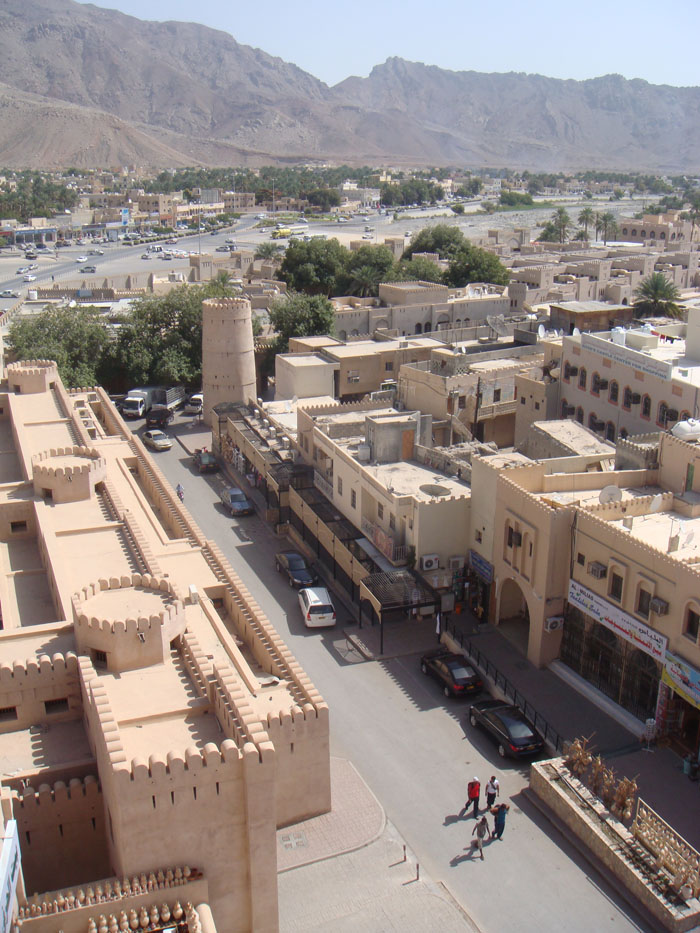
The Nizwa Fort is included in The 1,000 Places to See Before You Die list, a kind of bucket list for travelers.  It is Oman’s oldest fort.

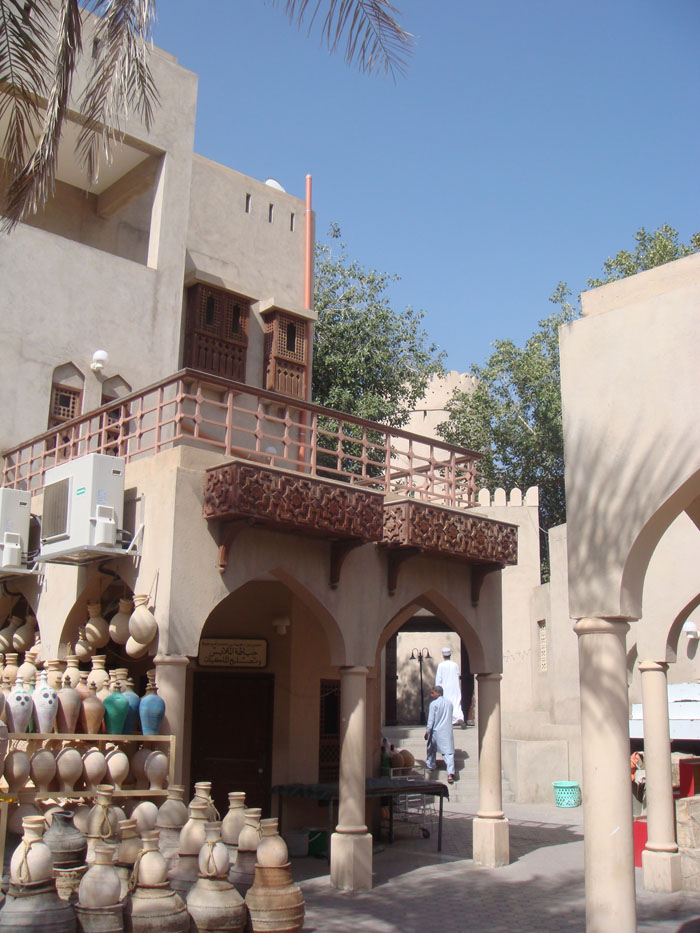
The Omani forts were built after the Portuguese started arriving in force in 1507.  Like most historical sites in the Middle East, the forts were left to ruin until the government decided to add tourism to their list of industries.  The original fort was renovated to stabilize the structure  and its original authenticity was lost.  Now it has the look of an amusement park attraction with its maze of passageways.

Nizwa Fort is a museum.  There were signs posted, describing the items presented and giving a short history of Oman.  The poorly lit exhibits depict different aspects of Omani life.

Our guide led us through the rooms and pointed out the obvious.  As we asked questions, he read the answers to us off the posted signs.

One posting discussed the Abadiyyah arm of Islam that most Omanis identified themselves as.  I had never heard of Abadiyyah before.

“Abadiyyah is different than Sunni and Shiite?” I asked Zaher.

“Yes, we are not the same.  We are not like Shiites.”  He didn’t offer more information and I returned to the small inscription.

Abdullah ibn Abadh brought Islam to Oman.  Basically Mohammed the Prophet PBUH sent him a short but sweet letter saying if you do not convert, then our swords will convert you.  A copy of the letter hung on the wall.

After Zaher guided us through most of the fort, we came to the large central tower. The stairs led upwards to the large round courtyard.  At this point he left us, saying he would go get the car and wait outside.

Goldi and I climbed the stairs and followed the instructions.

HA HA Your  pants are falling down – no – boiling oil in your eyes. HA HA

We were laughing like 12-year olds and taking pictures of where hot palm oil was poured down shafts onto enemy soldiers.

As we had fun an elderly gentleman walking alone stopped behind us.  I assumed he was taking a rest as the stairs were quite steep.

After standing awhile on the stairwell, he barked at us.

“How many bloody pictures are you going to take?”

“Enough to make us famous photographers,” I said, putting my arm for him to pass.  “Please go on.”

I did not understand why he had not simply passed as there was enough space for him.  He must have thought he was being polite waiting for us to finish.  But we were having too good of a time to hurry.  It was another instance of cultural miscommunication.

We finally emerged into the courtyard and realized why our guide had left us.

Taking photos of the surrounding town and mosque required climbing three sets of stairs.  We watched elderly European couples in street shoes and Indian ladies in multi-colored saris and sandals climb the stairs with their babies following.

“Good thing I wore my authentic REI action pants and climbing shoes,” I laughed.  I was over-adventurized for the day.  Everything was made for easy access.  With a tiny bit of fitness, all the sites were manageable.

We took photos from all sides of the fort, then headed back down.

At the bottom of the stairs was a small, heritage shop that sold frankincense, candles and other small souvenirs.  Omani Dhofar frankincense was a must buy as it is the finest in the world. It is probably the best opportunity to purchase a nice quantity of real Dhofar for only two riyals.

We continued through, passing the water well exhibit and finding ourselves at the front gate.  Zaher was waiting outside in the car.  We waved a single finger “one-minute” at him and walked into the Omani Crafts House.

Again there were shelves of pottery, bowls, incense burners and water pots.  There were some cute purses with Omani women’s dresses on the outside, swords and silver items.  We left without purchasing anything and jumped in the car.

The only place in Nizwa we didn’t try was Rose’s Castle Shopping complex.

Next Stop: Bahla
Touring Oman: Second Stop Nizwa Souq

We drove to Nizwa about 140 kilometers from Muscat.  Nizwa was the capital of Oman during the sixth and seventh centuries.  It also served as the cultural capital being known as the town of poets, writers, intellectuals, and religious leaders.

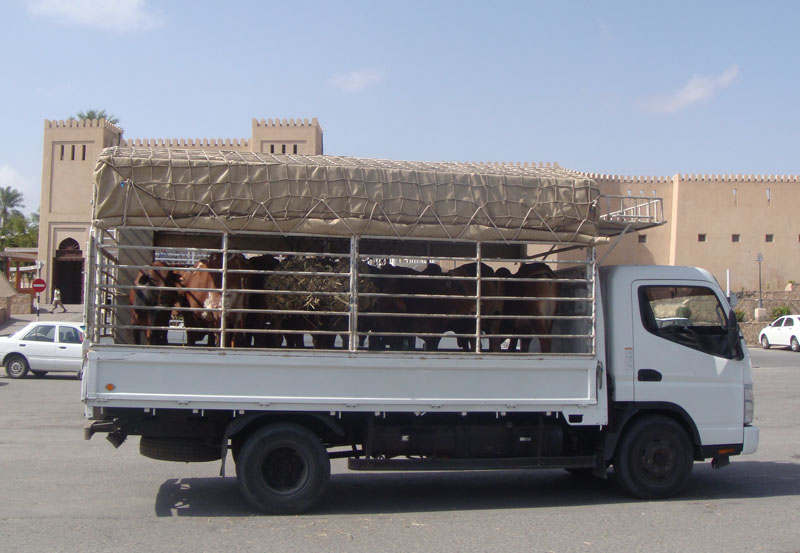
We did not stop at any libraries but instead parked in the souq parking lot.  It was Thursday the day before the big Friday cow and goat sale.  Goldi, a staunch vegetarian, had vetoed the Friday market visit as she did not want her dreams plagued with visions of what happened to the purchased goats.

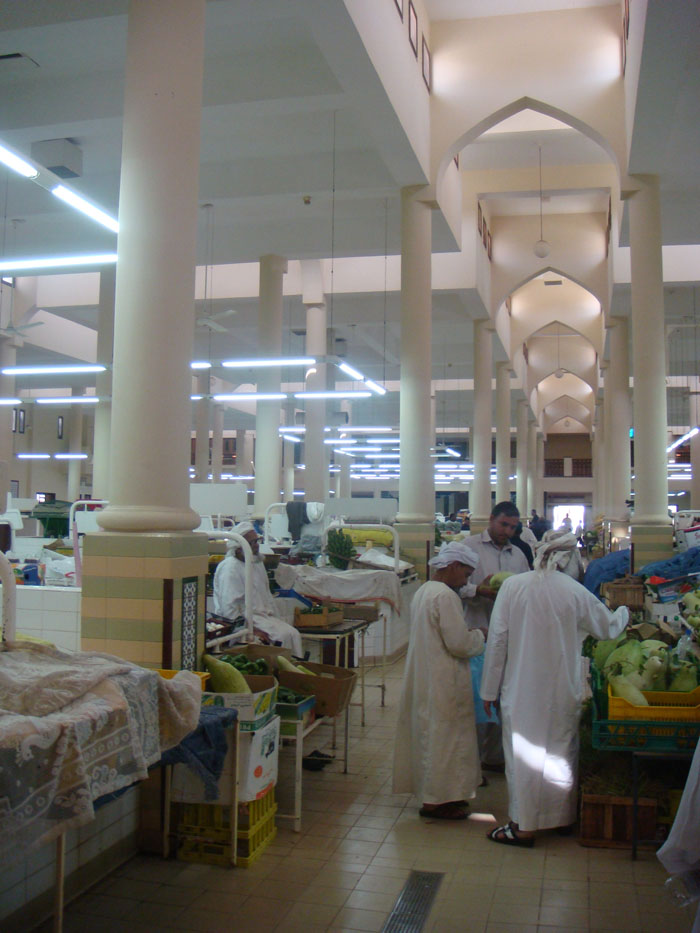
The animal, fish and vegetable souq is part of a typical tour.  However, it was very quiet when we walked through the wooden gate.

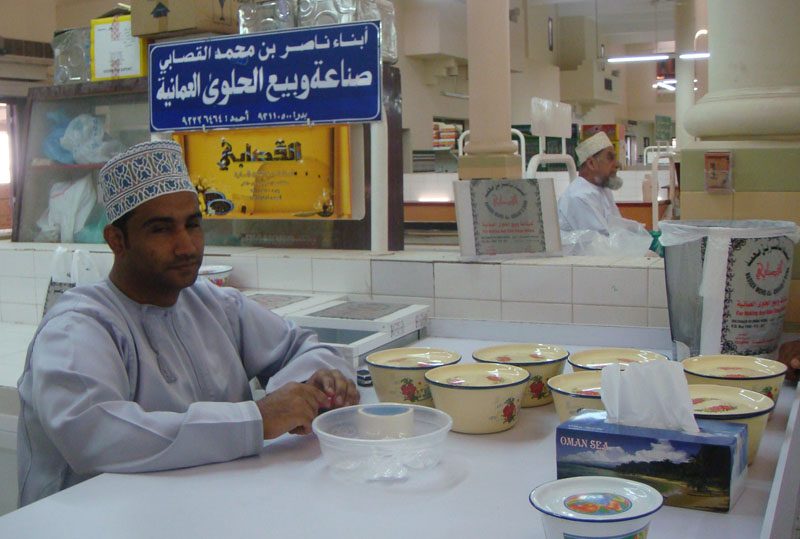
Inside the smell of slaughtered animals and blood in the street moved us quickly into air conditioned building with its brightly lit vegetable stalls.  People were not bustling about.  A few vendors sat patiently waiting for buses of tourists to come through, taste their halwa and hopefully purchase a kilo or two to carry home.

Halwa is the Omani sweet.  It is like thick paste made of dates with cardamom and decorated with pistachios.  Both Goldi and I tried a piece.  It was not overly sweet but my palate did not appreciate the jelly texture.  Neither of us wanted another bite and declined the offer to buy any.

At the next stall the man wearing the lavender thobe tempted me with his halwa.  It had a re-useable tin bowl and cover.  I nearly bought it for the container but decided carrying 5 riyals of heavy halwa in my suitcase, knowing no one in my family would eat it, was a waste of good luggage space.

We succumbed to the elderly man selling cashews.  Even after my purchase, he declined a photo.

Outside the vegetable market was the entrance to a Nizwa street store just outside the Fort/Castle’s front door.  The shelves were filled with ceramic replicas of the fort.  At first it looked enticing and we eagerly entered hoping to find the perfect souvenir.

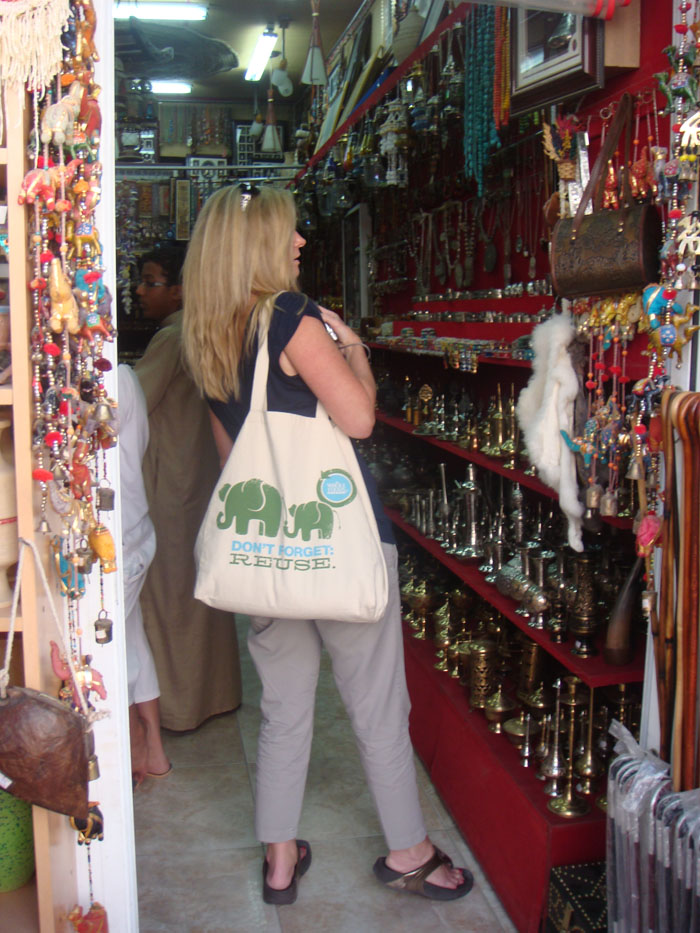
Silver daggers lined the walls. The jewelry cases were filled with traditional style necklaces made of semi-precious stones and silver beads.  At first it looked fun but upon further examination the silver jewelry all began to look like very unwanted silver jewelry that had gathered dust there for years.  The men sat bored, watching at us paw through the piles of trinkets.  We found nothing.  The jewelry was not modern enough to wear, nor special enough to hang up as decoration.  My guess was it all came from India.  We wandered outside.

The crude clay pots were handmade and fired in wood burning ovens.  They become hard but would not last forever.  Nothing appealed to us.

We walked towards the fort entrance and found another street filled with tourist treasure shops.

Goldi led me into one that interested her.

As I entered and took pictures of the camels, the shop keeper asked where I was from.

“America.”  I said smiling as I perused the shelves packed with every type of momento you could imagine.

“Hi Golden Gate Bridge!” he shouted.  His voice reminded me of Maz Jabroni, the Persian comedian on Axis of Evil.  “I love the Golden Gate Bridge.”

“In San Francisco.  I lived there.” I told him.  “But I live in Bahrain now.”

“Ah Bahrain.  My family lived there for many years until the 1970s.  We came back to Oman when Sultan Qaboos came into power.  He made many changes and brought the Omanis back to Oman.”

His Majesty Sultan Qaboos bin Said has led Oman since 1970 when he took power from his father.  Oman’s absolute monarchy had been passed down through the male line of the Al Busaidi Dynasty for the past five generations after Sayyid Turki bin Said Bin Sultan overthrew the Ottoman Turks in 1744.

“You like Sultan Qaboos?” I asked curious whether the Sultan was as popular as he seemed.

“Yes, we LOVE Sultan Qaboos.  He has made many changes to Oman.  Where are you from?” he directed his question towards my flaxen haired friend.

“California,” she nodded.

“California.  Arnold Schwarzenegger!” he shouted.  “He is no longer your governor – no?”

“Actually, I don’t know.” Goldi answered.  “I just moved to California.”

“I don’t think he is governor anymore.  No more Terminator for California,” he said.

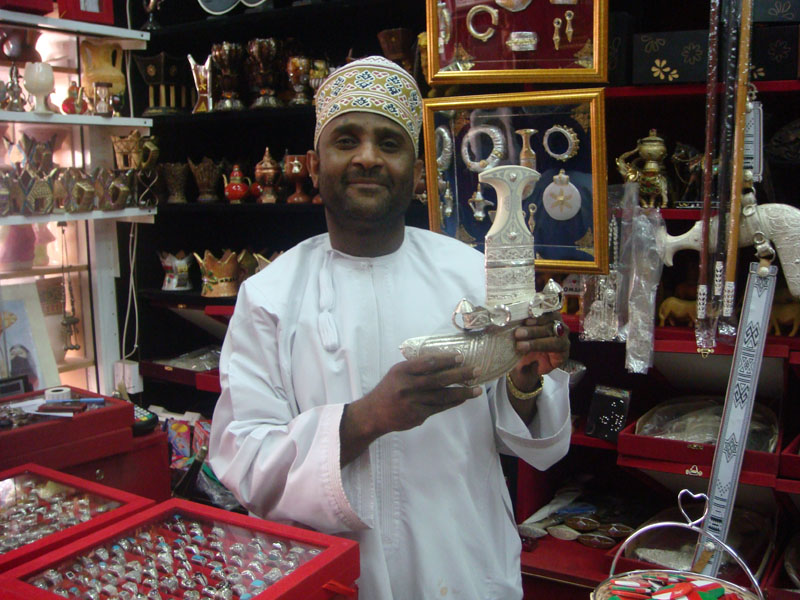
“Can I take your picture?” I asked.  I wanted to remember this man.

“Yes you can,” he said.  “First, please wait.”

He reached into his shelves and pulled out a silver khanjar.  It too looked new, probably recently made in India.  He held it next to his cheek and posed for me.

“Thank you.” I said.

No money exchanged hands but we had a good time.

Next Stop: Nizwa Fort

Touring Oman: First Stop Fanja

Oman lies south of Bahrain.  For centuries, Muscat situated on the Gulf of Oman was protected from its northern neighbors by the Hajar Mountains.  Sea-faring traders like the Bahrainis, the sprawling southern coast placed Oman directly on important trading routes between Africa and Asia.  Somewhere in the Rub al-Khali desert, Oman shares a border with Saudi Arabia.

Last year my friend Goldie visited us.  She heard the best frankincense in the world was grown in Oman.  And she wanted see Sultan Qaboos’ famous Al Alam Palace.

We decided to leave the other dragons and rabbits at home and used her snake birthday as an excuse for a long girls’ weekend.  But because she hurt her foot, we could not climb Oman’s mountains, hike through the fjords or explore its caves.  Instead I booked a driver to take us around to some of the key historical sites, planned a day in Muscat and hoped a bottle of champagne would make her birthday magical.

Just as promised, our guide met us in the hotel lobby at nine am.  He shook my hand and introduced himself as Zaher.  He pointed out our car, a small white compact, and we jumped in.  I sat in front while Goldi reclined in the back with her foot up on a pillow and latte in the holder.

We took off towards Nizwa, 120 kilometers away.  The new highway was open, the sky was clear and we were anxious to see what was in store for us – as was our driver.

“Ding, ding, ding” went a bell.

“What’s that?” called Goldie from the backseat.

“It’s a GCC speedometer alarm.  He’s going over 120 kilometers per hour so it rings.  The purpose is to keep people within the speed limit.” I said looking sideways at Zaher.

“Does it bother you?” Zaher asked looking at the beautiful Goldi in the rear-view mirror.

“No it’s fine,” she said going back to the newspaper.

“What about you?” he directed the question towards me, the front seat driver.

“I will put up with it for awhile,” I said already irritated by the incessant ding ding.  “I‘ll let you know when I can’t stand it any more.”

In Bahrain we see a few Omani.  Get about twenty Omanis together and suddenly the place becomes more exotic and filled with color.  Wearing their distinctive head dress and thobe with its small tassle hanging down to the right of the center button, Omani men are easily distinguished from the other Gulf countries.  Their ghuttras can be white, but many times they are colored and then wrapped in Omani fashion around and around the head into a kind of turban with a tail.

Their alternative to a ghuttra is a kumah, an embroidered hat with a flat top.

In the mid 18th century, the Omani empire extended all the way to Zanzibar and Mombassa in Africa and eastward into Persia, Pakistan and India.  When Sultan Said died, the empire was split between his two sons who became the Sultan of Zanzibar and the Sultan of Muscat and Oman.  The colorful attire was likely influenced by African and Indian designs.

“Can you tell us about the head gear the Omani men wear?” I asked Zaher.  “Why do some men wear ghuttras and others wear kumah?”

“Some people like ghuttra and other people like kumah.”

“Yes, we understand that.  But why do you have colored ghuttras and the other Gulf men wear black and white or red and white?”

“Omanies – we like our ghuttra and the other Gulf men like their ghuttras.”

There it was – a full explanation of the cultural differences.

“Here is Fanja”, he said pulling off to the side of the road.  “You can get out and take pictures.”

Fanja was a picturesque village with a dry wadi (river) bordering the edge.  Palm trees lined the imagined banks where the water ran during the wet season.

“People here grow palm trees for dates,” Zaher told us.  We waited for more.  There was not any more.

“The wadi is dry now,” we commented.  “When is the wet season?”

“During the mansoons.”

“When?”

“During mansoon season.”

OK.  We got back into the car and drove off.

“Are we going through the village?” I asked.  My guidebook said Fanja was renowned for its pottery, local fruits and vegetables, honey and woven goods from palm trees.

“No, no time now.  We drive onto Nizwa through the Sumail Gap.”

The highway was smooth.  The alarm dinged.  When we saw photo opportunities Zaher gladly pulled over.  He smoked as we took pictures.

The black, rocky Hajar mountains provided a stunning backdrop.  The landscape was so different from flat, dusty Bahrain.

Next Stop: Nizwa Souq

Shopping on Amwaj Island

Amwaj Island Marina Market

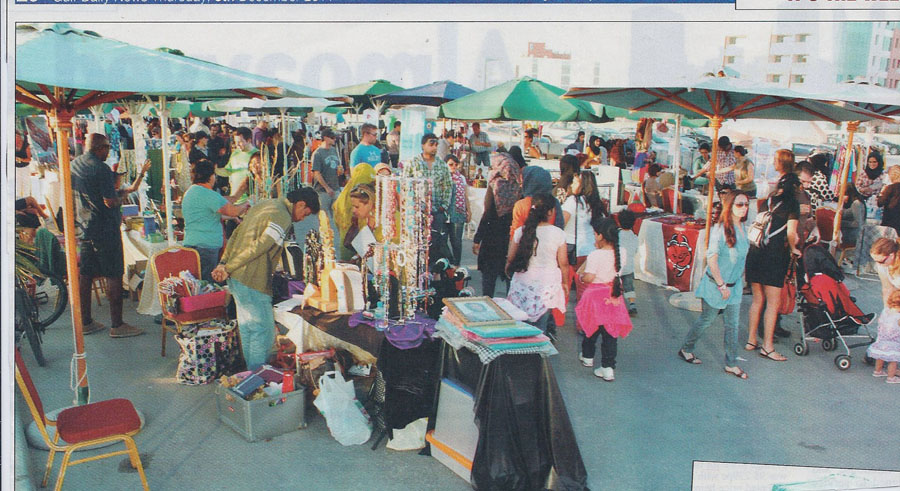
The holiday season is upon us bringing lots of festive parties and seasonal markets.  That’s where I have been the last two days.

The Flea Market at Amwaj Island Marina is tomorrow, Saturday Dec. 10th from 10am-5pm.  I haven’t been to any of their previous markets.  But yesterday I met Mairi Thomas at the World Beat Holiday Sale.  She will be exhibiting there.

Mairi Thomas is new to Bahrain but not to the Gulf.  Hailing from Oman where she spent the last five years, she brings a lot of talent.  A teacher and sculptor by training, she took up photography in Oman.  She has a fabulous collection of cards and prints featuring Middle Eastern images.   An excellent eye for design, she brings a fresh perspective to images we’ve seen over the years.

Currently her work focuses on the beautiful country and people of Oman.  But she told me she cannot wait to get out and start taking pictures around Bahrain.

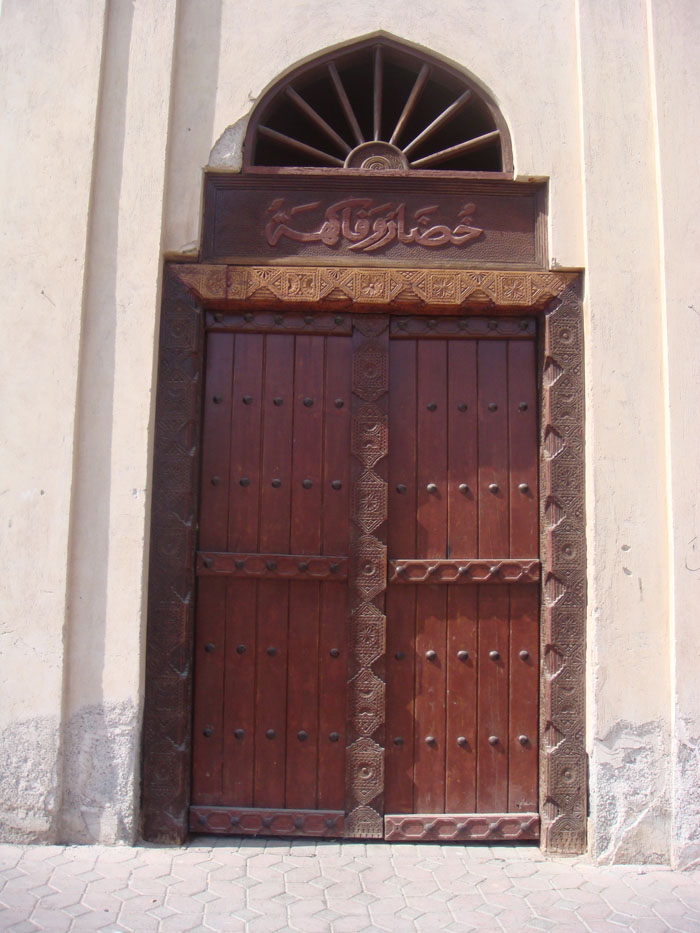
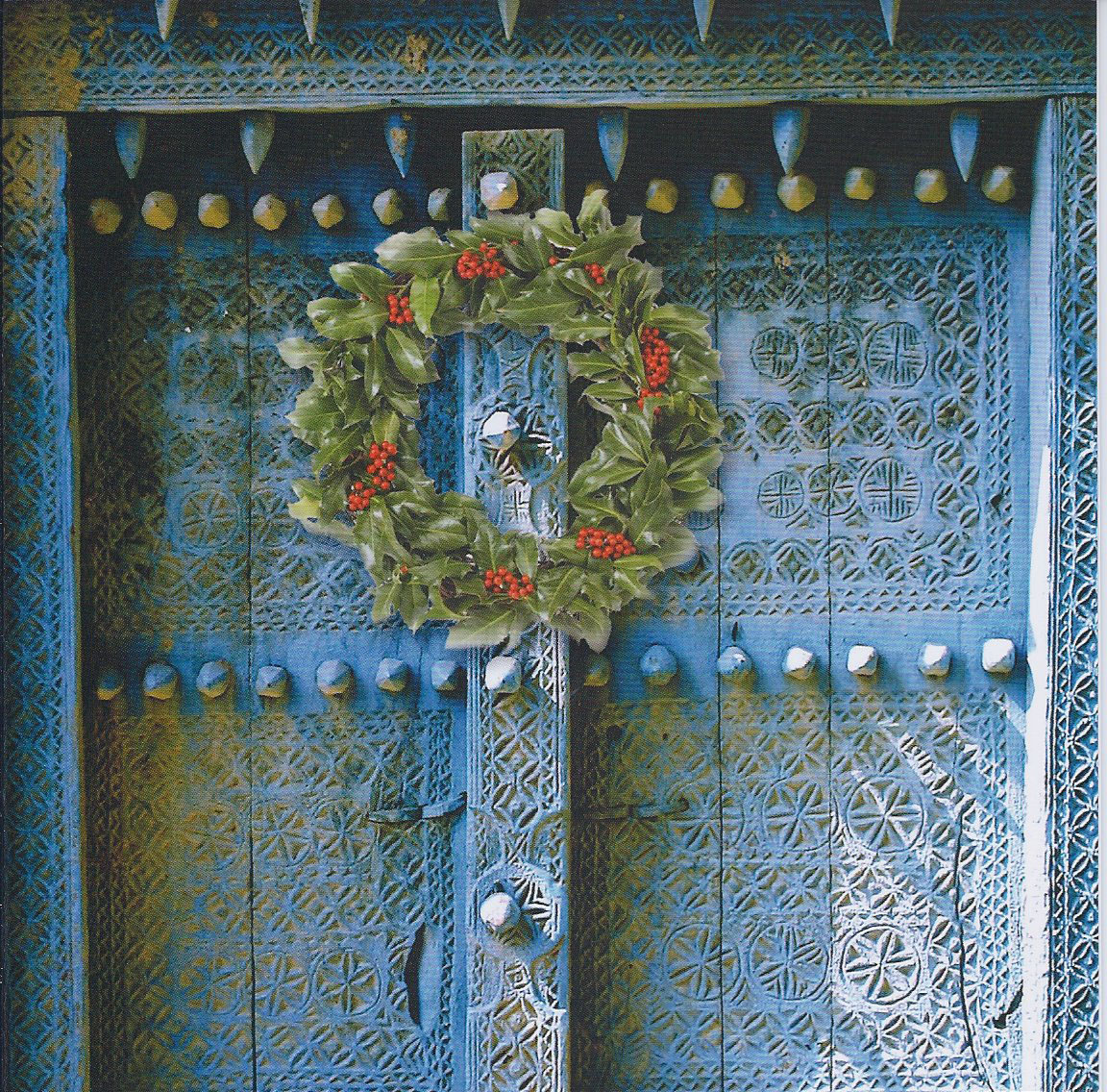
Omani Door by Mairi Thomas 2010

Mairi Thomas‘ collection is worth searching for as you walk around the market.  If you stop by her stall, her enthusiasm will draw you in.  Buy an extra coffee and take a few minutes to chat with her.

Next Newer Entries

Archives

Tales by Chapter