Touring Oman: First Stop Fanja

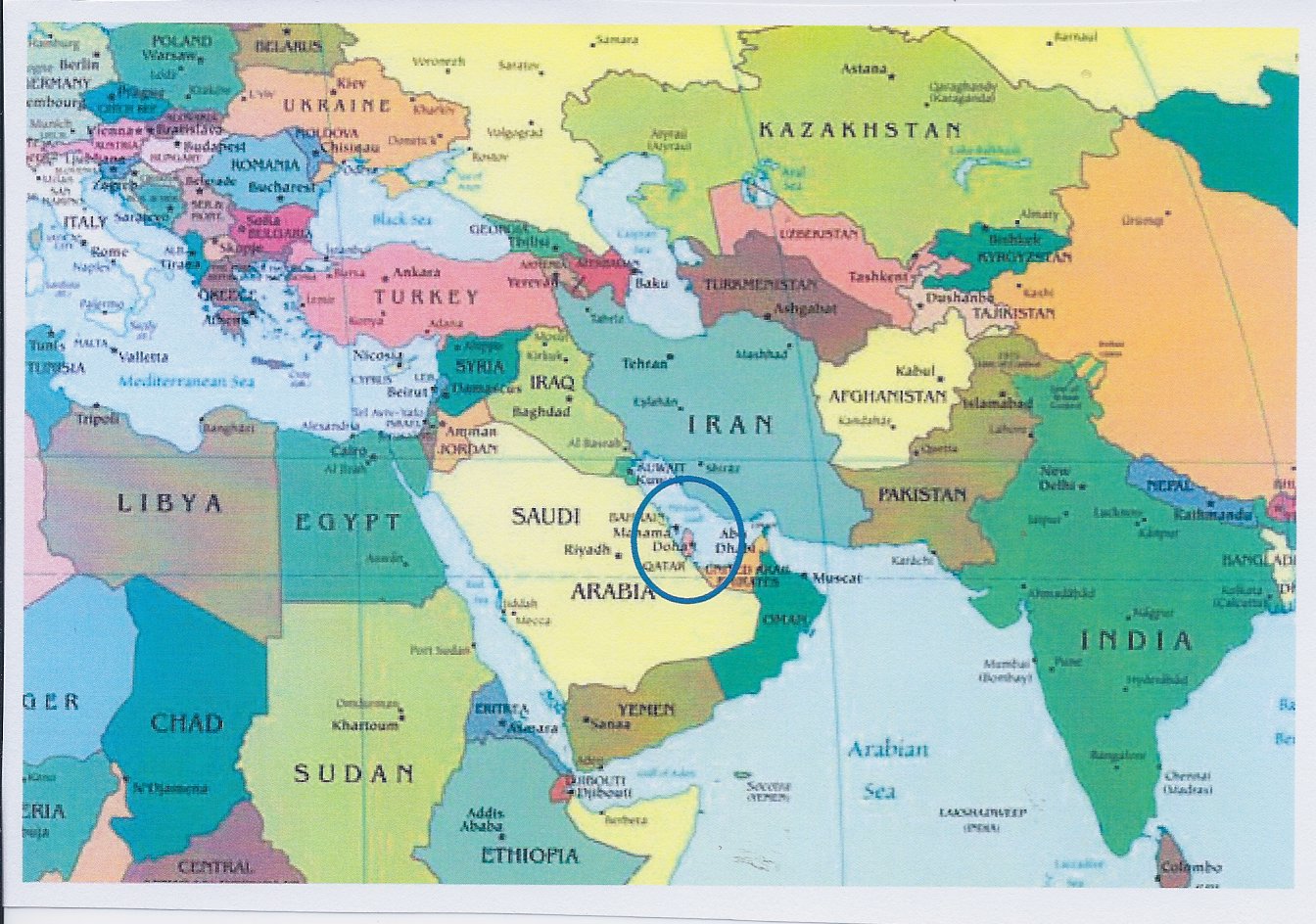
Oman lies south of Bahrain.  For centuries, Muscat situated on the Gulf of Oman was protected from its northern neighbors by the Hajar Mountains.  Sea-faring traders like the Bahrainis, the sprawling southern coast placed Oman directly on important trading routes between Africa and Asia.  Somewhere in the Rub al-Khali desert, Oman shares a border with Saudi Arabia.

Last year my friend Goldie visited us.  She heard the best frankincense in the world was grown in Oman.  And she wanted see Sultan Qaboos’ famous Al Alam Palace.

We decided to leave the other dragons and rabbits at home and used her snake birthday as an excuse for a long girls’ weekend.  But because she hurt her foot, we could not climb Oman’s mountains, hike through the fjords or explore its caves.  Instead I booked a driver to take us around to some of the key historical sites, planned a day in Muscat and hoped a bottle of champagne would make her birthday magical.

Just as promised, our guide met us in the hotel lobby at nine am.  He shook my hand and introduced himself as Zaher.  He pointed out our car, a small white compact, and we jumped in.  I sat in front while Goldi reclined in the back with her foot up on a pillow and latte in the holder.

We took off towards Nizwa, 120 kilometers away.  The new highway was open, the sky was clear and we were anxious to see what was in store for us – as was our driver.

“Ding, ding, ding” went a bell.

“What’s that?” called Goldie from the backseat.

“It’s a GCC speedometer alarm.  He’s going over 120 kilometers per hour so it rings.  The purpose is to keep people within the speed limit.” I said looking sideways at Zaher.

“Does it bother you?” Zaher asked looking at the beautiful Goldi in the rear-view mirror.

“No it’s fine,” she said going back to the newspaper.

“What about you?” he directed the question towards me, the front seat driver.

“I will put up with it for awhile,” I said already irritated by the incessant ding ding.  “I‘ll let you know when I can’t stand it any more.”

In Bahrain we see a few Omani.  Get about twenty Omanis together and suddenly the place becomes more exotic and filled with color.  Wearing their distinctive head dress and thobe with its small tassle hanging down to the right of the center button, Omani men are easily distinguished from the other Gulf countries.  Their ghuttras can be white, but many times they are colored and then wrapped in Omani fashion around and around the head into a kind of turban with a tail.

Their alternative to a ghuttra is a kumah, an embroidered hat with a flat top.

In the mid 18th century, the Omani empire extended all the way to Zanzibar and Mombassa in Africa and eastward into Persia, Pakistan and India.  When Sultan Said died, the empire was split between his two sons who became the Sultan of Zanzibar and the Sultan of Muscat and Oman.  The colorful attire was likely influenced by African and Indian designs.

“Can you tell us about the head gear the Omani men wear?” I asked Zaher.  “Why do some men wear ghuttras and others wear kumah?”

“Some people like ghuttra and other people like kumah.”

“Yes, we understand that.  But why do you have colored ghuttras and the other Gulf men wear black and white or red and white?”

“Omanies – we like our ghuttra and the other Gulf men like their ghuttras.”

There it was – a full explanation of the cultural differences.

“Here is Fanja”, he said pulling off to the side of the road.  “You can get out and take pictures.”

Fanja was a picturesque village with a dry wadi (river) bordering the edge.  Palm trees lined the imagined banks where the water ran during the wet season.

“People here grow palm trees for dates,” Zaher told us.  We waited for more.  There was not any more.

“The wadi is dry now,” we commented.  “When is the wet season?”

“During the mansoons.”

“When?”

“During mansoon season.”

OK.  We got back into the car and drove off.

“Are we going through the village?” I asked.  My guidebook said Fanja was renowned for its pottery, local fruits and vegetables, honey and woven goods from palm trees.

“No, no time now.  We drive onto Nizwa through the Sumail Gap.”

The highway was smooth.  The alarm dinged.  When we saw photo opportunities Zaher gladly pulled over.  He smoked as we took pictures.

The black, rocky Hajar mountains provided a stunning backdrop.  The landscape was so different from flat, dusty Bahrain.

Next Stop: Nizwa Souq

Island Fever

Every country has its pluses and minuses.

Living on a small island means the people and places become very familiar and comfortable.  It’s cozy.  But after a few months when these same people and places become a bit over-seen, we need a break.

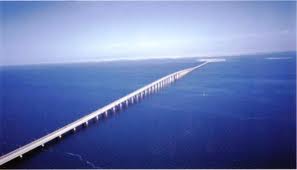
The only way to drive off the island is to cross the causeway into Saudi Arabia.  Unless you hold a GCC passport, you need a visa to get in there.  If the Saudis do allow you in, you have to cut through miles of desert to end up in the same desert under a different government.

We could take a boat.

A successful water escape requires a knowledgeable captain otherwise we might be like the first Bahraini sailboat to participate in an international regatta.  A couple of years ago as Team Pindar maneuvered their brand-spanking new “Kingdom of Bahrain” yacht towards Dubai, they cut too far east and ended up getting arrested by the Iranian Revolutionary Guard.  After being held for a week, the government negotiated their release but the team missed the race.

Even if we didn’t have “evil intentions” to infiltrate Iran, a spyglass is a top ten necessity to scan the sea for pirates.  And we don’t have one.

So generally an island vacation requires a flight.

Should we fly one hour and still find ourselves in the Gulf? Different place, same flies.

Should we fly three hours and find ourselves in a regional skirmish?

Should we fly seven hours and find ourselves in freezing cold Europe?

ABOUT BETWEEN TWO SEAS

Photographer Andrew Weaver published a gorgeous coffee table book with many inspired and humorous photos about Bahrain.  Between Two Seas can be purchased in the large bookshops or at the Bin Matar House in Muharraq.  The great news is it was printed in different sizes so you can tuck one in your handbag for a gift or use it to decorate your coffee table and make your friends at home jealous.

Sleeping on the Job

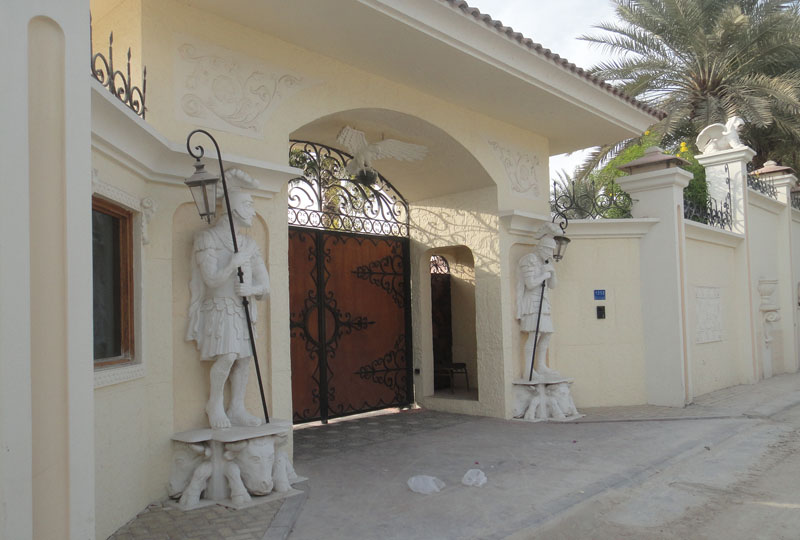
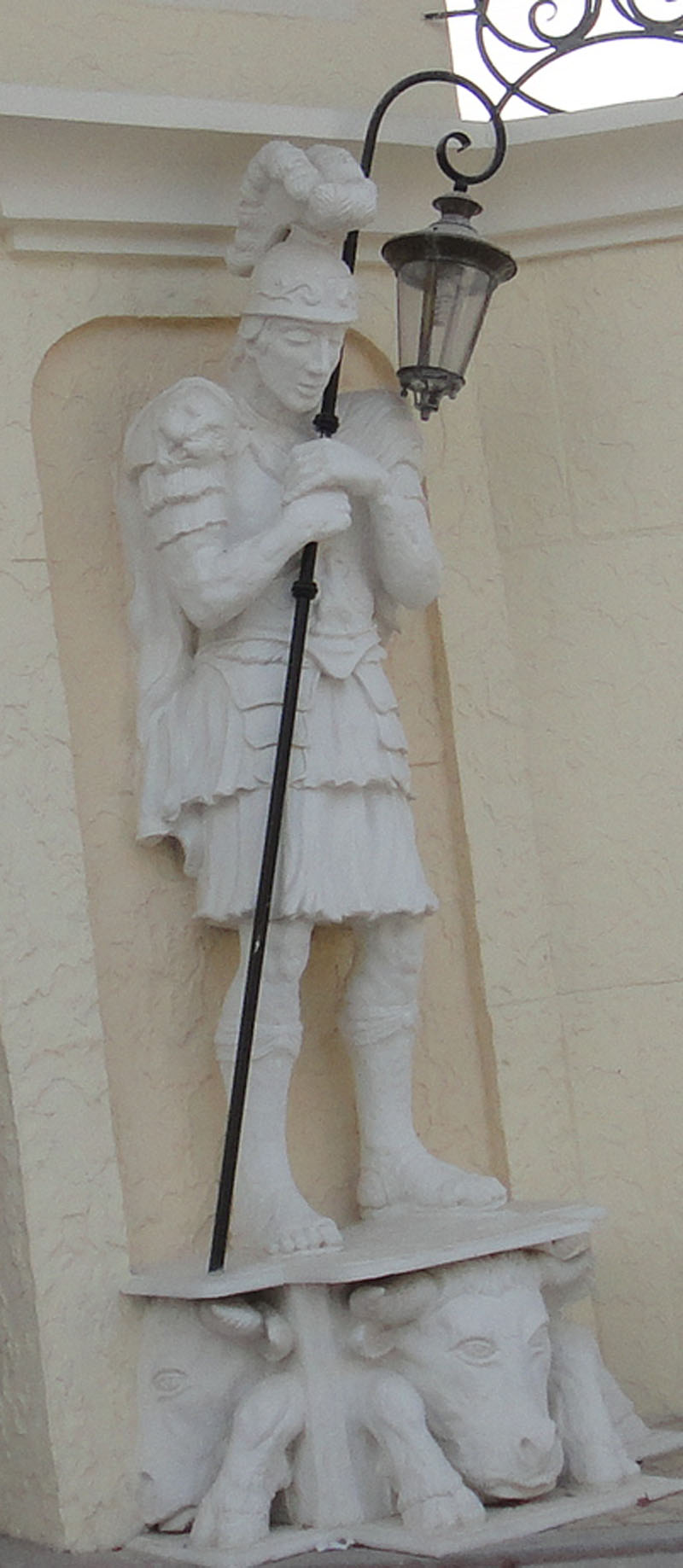
It is the customary in the Middle East to build high concrete walls around a house.  The walls help keep the desert outside and give women privacy to walk around their homes without having to be covered.  Even though guards are employed to open and shut the gate, I think, generally, security is not an issue.

Which is good – since some of the guards are sleeping.

Scenes from Zamalek in Cairo

View of Zamalek

Zamalek is located on the 4 kilometer long and 1 kilometer wide Gezira island in the middle of Cairo.  On the map, The Gezira Palace (Marriott-Zamalek) is the pink building just south of the 15th of May Bridge.  It is across the street from the Gezira Sporting Club, aka The Nadi, similar to New York’s Central Park.  The Nadi is a featured venue in many Egyptian movies so is well known throughout the Arab world.

Fifteen of May Bridge over Nile River

View of 15th of May Bridge over the Nile, opposite of Zamalek.

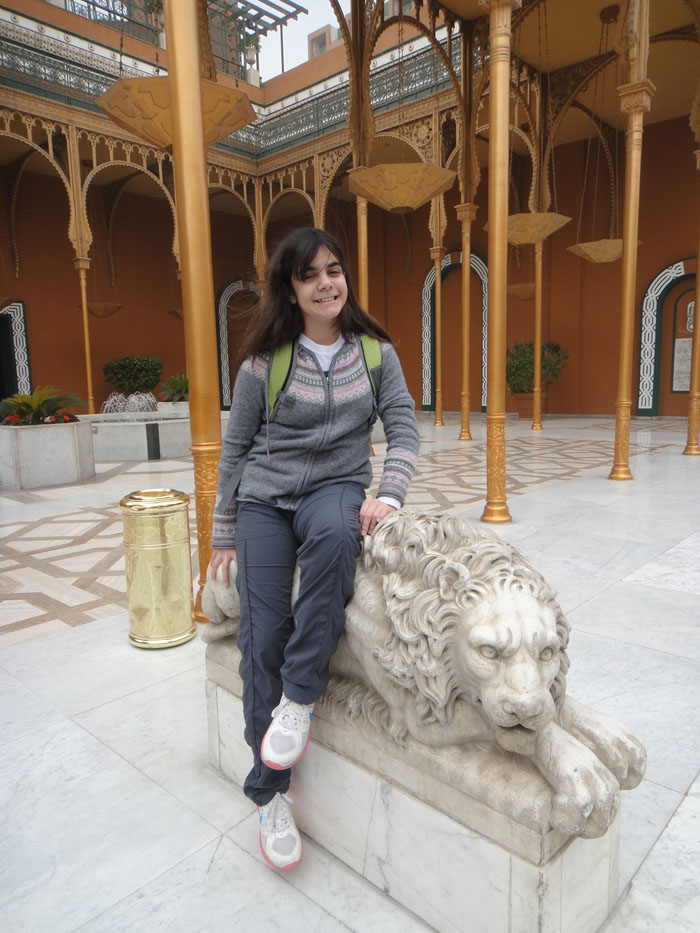
Arriving at the Gezira Palace in Zamalek, the children again remarked about much smaller the lions were than they remembered.  And Ace thought they were gold, not marble.

Ace blending in with the Egyptian royalty to welcome Empress Eugenia

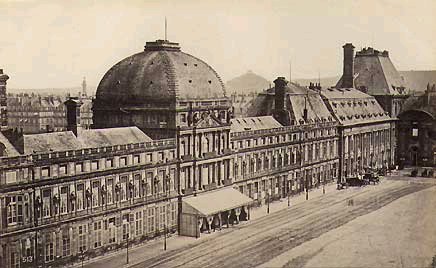
I wonder whether the Empress Eugenie of France felt the same way when she arrived in 1869. Her guest bedroom in the palace was designed to be identical to her own in Tulleries, France.  But with a full name of  María Eugenia Ignacia Augustina de Palafox-Portocarrero de Guzmán y Kirkpatrick I can only imagine despite the Khedive Ismail’s attempt to impress her, the Gezira Palace looked small compared to the renovated Tulleries Palace.

Les Tuileries before 1871 when it was burnt down.

This visit it was too cold to while away the hours sitting in the palace garden.  Instead, Mojo and I spent a little time walking around the shopping district.

Azza Fahmy Store showcasing her Pharonic collection

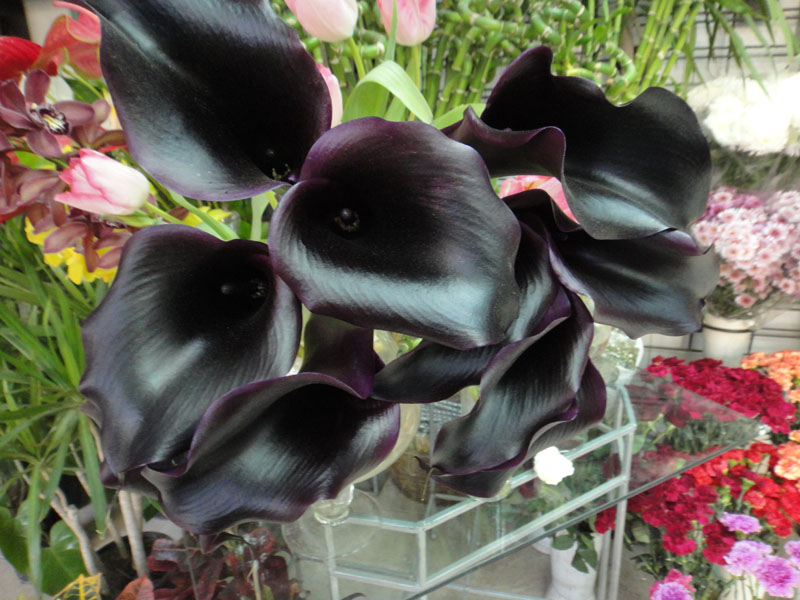
Black canna lilies

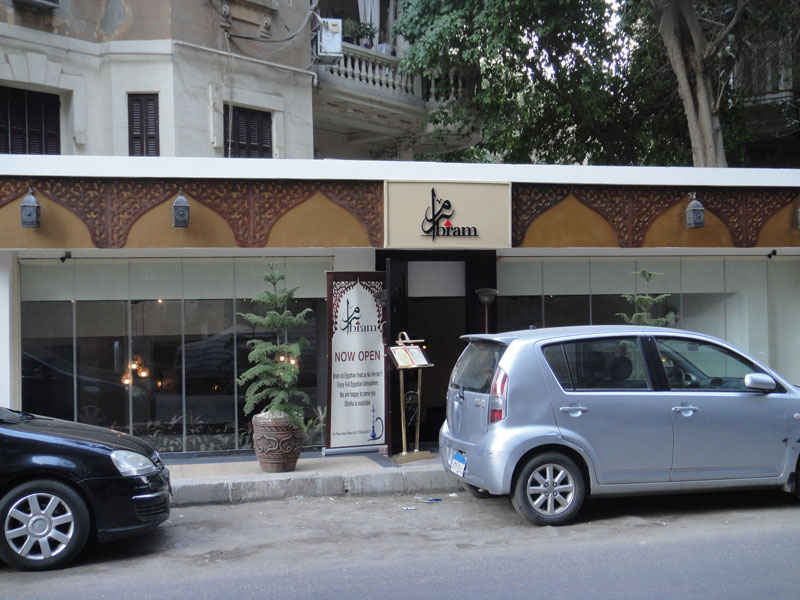
New Arabic Restaurant in Zamalek

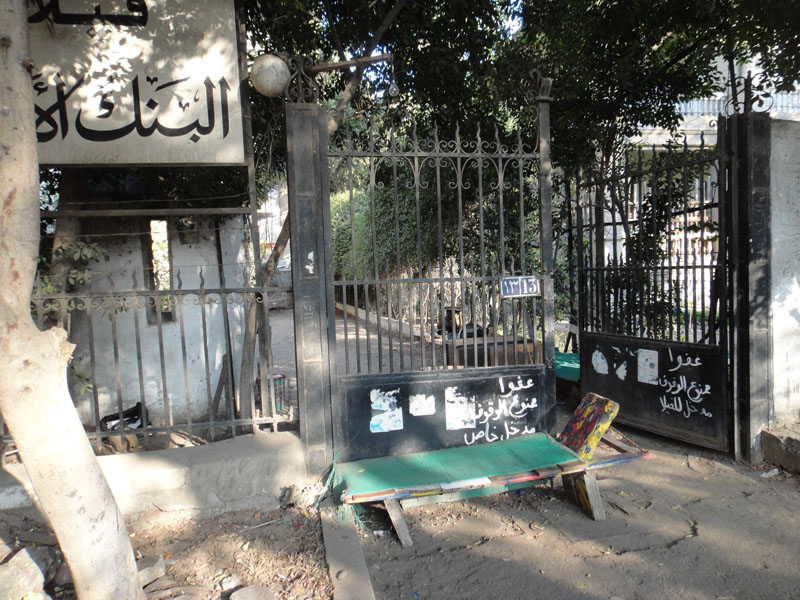
Residence in Zamalek

Even in Zamalek the buildings’ exteriors suffer from neglect.

But people are still walking around, buying their bread from the street vendors and having coffee with their friends.

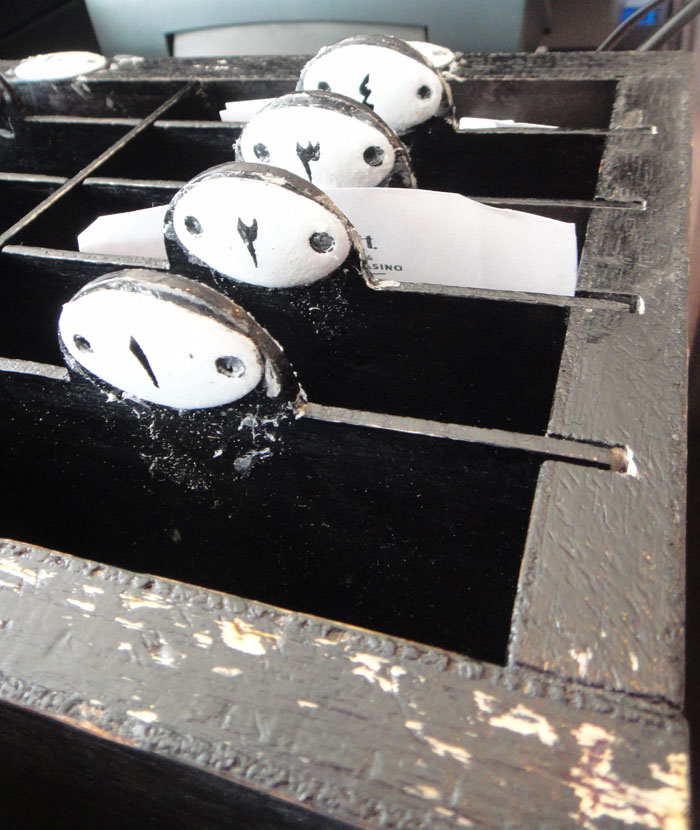
Coffee Shop Receipt Holder in Cairo

It’s Still Egypt but…

Egyptian Taxi

A year after the Egyptian revolution, it hardly looks like things have changed.  The decrepit taxis still run and negotiate for every pound they can.

The streets are still crumbing.

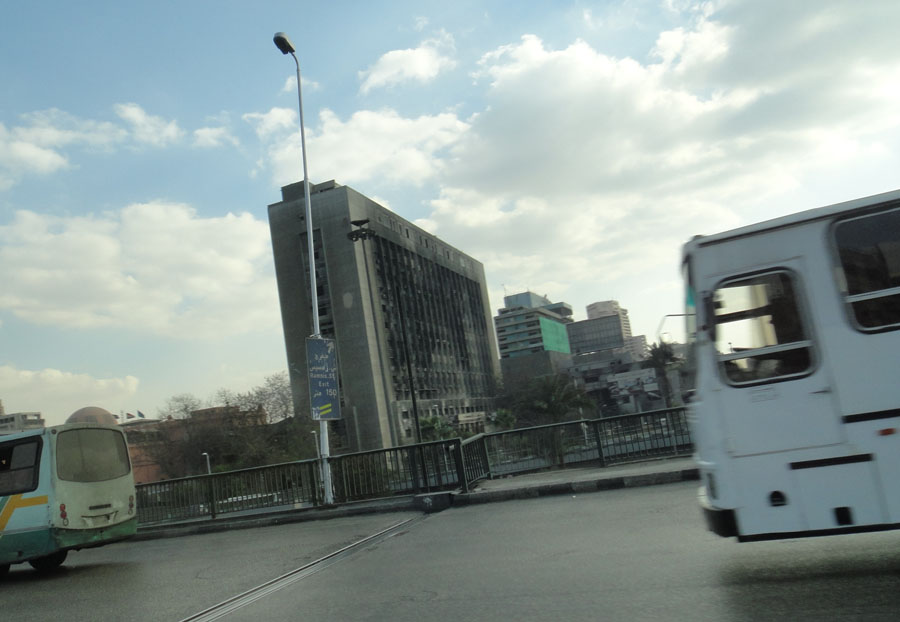
Ministry of Interior Building off the 5th of May Bridge

The burned out Ministry of Internal Affairs Building, a monument of the Arab Spring, like the other old buildings, temples and monuments, still graces the banks of the Nile.

Laid off Egyptian Refinery Workers protesting January 22 2012

People continue to protest.

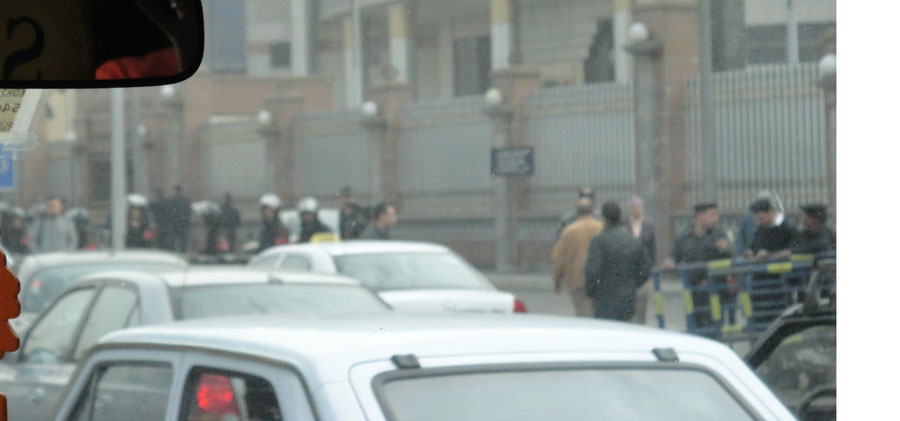
Outside Prime Minister's office

The men in power surround themselves with soldiers.

Egyptian mosque and blue sky

Still – while driving through the Cairo, I was surprised to feel a lightness in the air.  I felt hope not darkness.

The young keep living and dancing.

It’s still a place where the sweet potato street vendor can leave his cart in the middle of the intersection under the peace cranes.

And still some Egyptians believe the Americans understand their cause and their desire for democracy.

Flying Into Cairo – Views from the Air

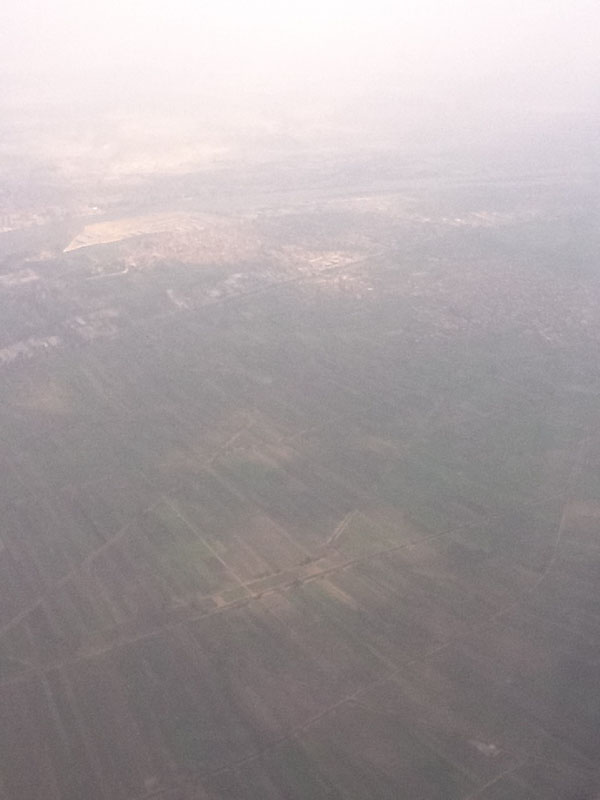
The fields watered by the life-giving Nile River surround the crowded communities on its shores.

This view was south of Cairo as we flew towards the airport which is east of Cairo.

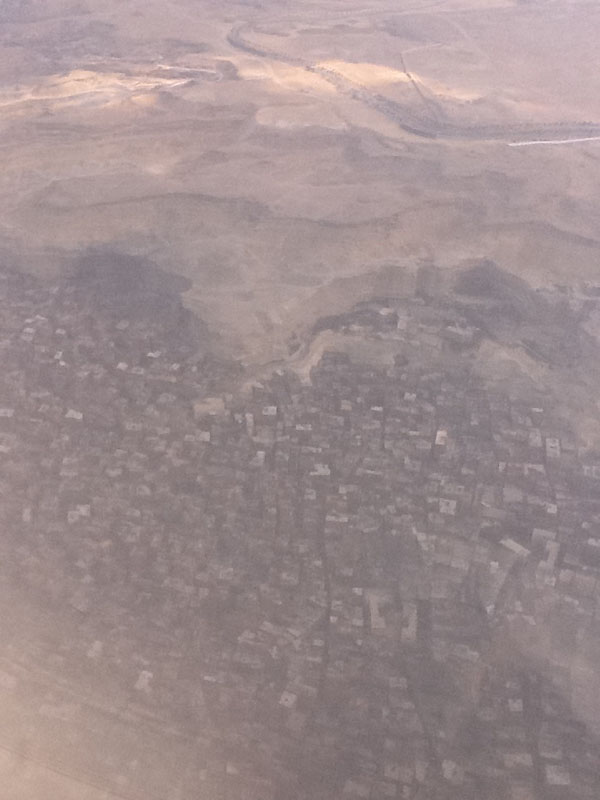
Shanties are holding their ground on the desert cliffs surrounding the city.

With 17 million people living in Cairo and the suburbs immediately surrounding the city center, from the air Cairo’s high-rise apartments resemble a Monopoly board in overdrive.

View of Cairo’s famous traffic along main arteries around the airport.

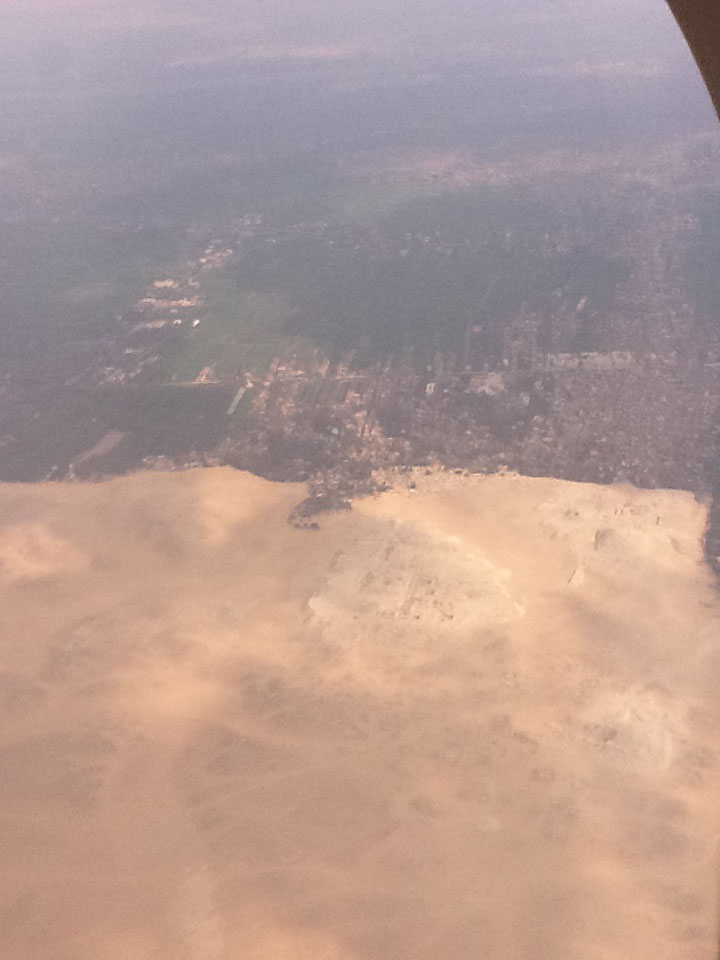
Do You Know the Way to Nearest Pyramid?

Do you know what this is?

Flying during the day has its advantages.  Looking out the window I knew the Gulf Air pilot was going the right direction because there were several very visible landmarks.

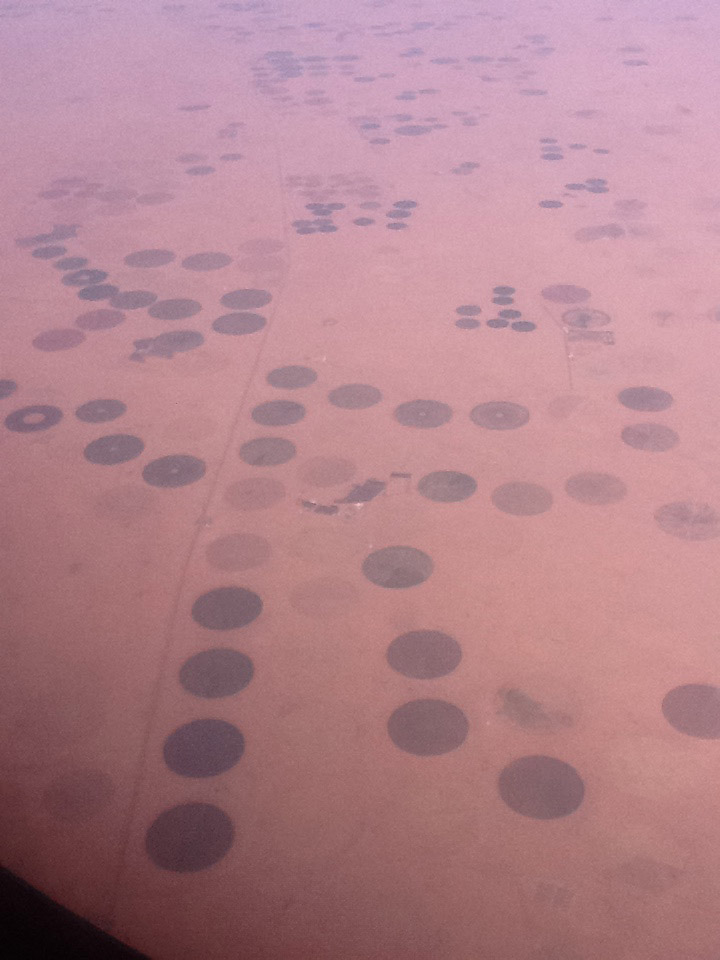
North of Riyadh were the crop circles.

Crop Circles North of Riyadh

When I was growing up in Saudi Arabia I never really questioned where they grew the fresh alfalfa we fed to our Arabian horses.  It was so green, it had to be dried in the sun before the horses could eat it.  The Saudis grow wheat and alfalfa using water from ancient water reserves created during the Pleistocene era – after the dinosaurs but just as homo erectus started wandering around.  It was quite amazing to see this green in the desert.

Obviously the water will not last forever. My father used to be involved in figuring out ways to bring water to the desert.  During a family dinner he told us about an idea to tote an iceberg from Antarctica.  That was never done.

Sarawat Mountains

As we turned west we flew over the Sarawat Mountains.  These look like mini volcanoes with something hiding in the center.   I think it was sand but maybe inside are secret UFO landing sites.  Supposedly millions saw UFOs over Riyadh in 2009.

Saudi Arabia Meets the Red Sea

The Red Sea looked extremely blue next to the brown desert.

Over the Red Sea

I enjoyed how the land and the sea intertwined creating a beautiful view that can only be seen from above.

Importance of the Nile

Over Egypt the Nile’s water keeps the desert at bay.  The human settlements are only within the areas the water reaches.

Pyramid of Djoser at Saqqara

Outside of Cairo we flew over the oldest pyramid in Egypt – the Djoser at Saqqara.    It is a step pyramid built around 2,700 BC about 300 years after the stone pyramid in Peru.  Imhotep the founder of medicine was the architect who designed the pyramid.  In artwork he was associated with the Goddess Hathor.

Click on the photo to enlarge it.  The pyramid is at the top of the photo.

All the photos were taken with my Ipad.  I will start using a better camera soon but I can only learn so much technology at a time.

Tomorrow Cairo!

Previous Older Entries Next Newer Entries

Archives

Tales by Chapter